How to Style a Bookshelf Like an Interior Designer


Your bookcase does more than hold books. It’s a vertical canvas, and most people don’t treat it that way — they shove things in until there’s no room left and wonder why the room feels heavy.
There’s a better way, and it’s more systematic than it sounds.
You’ll empty the shelves, edit what goes back, and arrange things with some visual logic.
No professional needed. A single weekend is enough.
Why You Must Start with the Clean Slate Rule
The most common mistake is trying to reorganize a full shelf. Your brain works around existing clutter instead of seeing past it.
You have to take everything off first.
Removing every item lets you actually see the furniture. You can tell where natural light hits and where it doesn’t.
Gather these items before you start styling:
- Books
- Art pieces
- Trailing plants
- Sculptural objects
Grab a tape measure and check shelf clearance in inches before you begin. This tells you where taller hardcovers can actually fit.
Rule of thumb: take every single item off the shelf before you touch anything else.
🛠️ The Weekend Starter Kit
Before you begin, ensure you have these essentials ready:
- Tape measure
- Microfiber cloth for dusting
- A “Keep,” “Donate,” and “Relocate” box
- Your favorite music playlist
How to Embrace the Bookshelf Wealth Trend
Buying books because the spines match your rug is out. So is sterile minimalism.
What’s replaced it is something called Book Drenching — the idea that shelves should reflect genuine reading, not a curated color palette.
This is the heart of the bookshelf wealth trend 2026: lived-in charm over decorator perfection.
Designer Meg McSherry has described keeping shelves relaxed so the eye keeps moving instead of stopping somewhere deliberate.
One extension of this is building what I call a Growth Library — mixing children’s books in with your adult titles.
I keep my daughter’s storybooks next to my large design books, held apart by bookends. It serves the whole family without looking chaotic.
There’s research worth knowing here too. Kids who grow up in homes with at least 80 books show measurable long-term improvements in literacy and math.
Rule of thumb: never buy fake books just for the color.
The 80-Book Advantage
Research shows that homes with at least 80 books correlate with significant long-term improvements in a child’s literacy and numeracy skills.
Use the Mathematics of Visual Weight
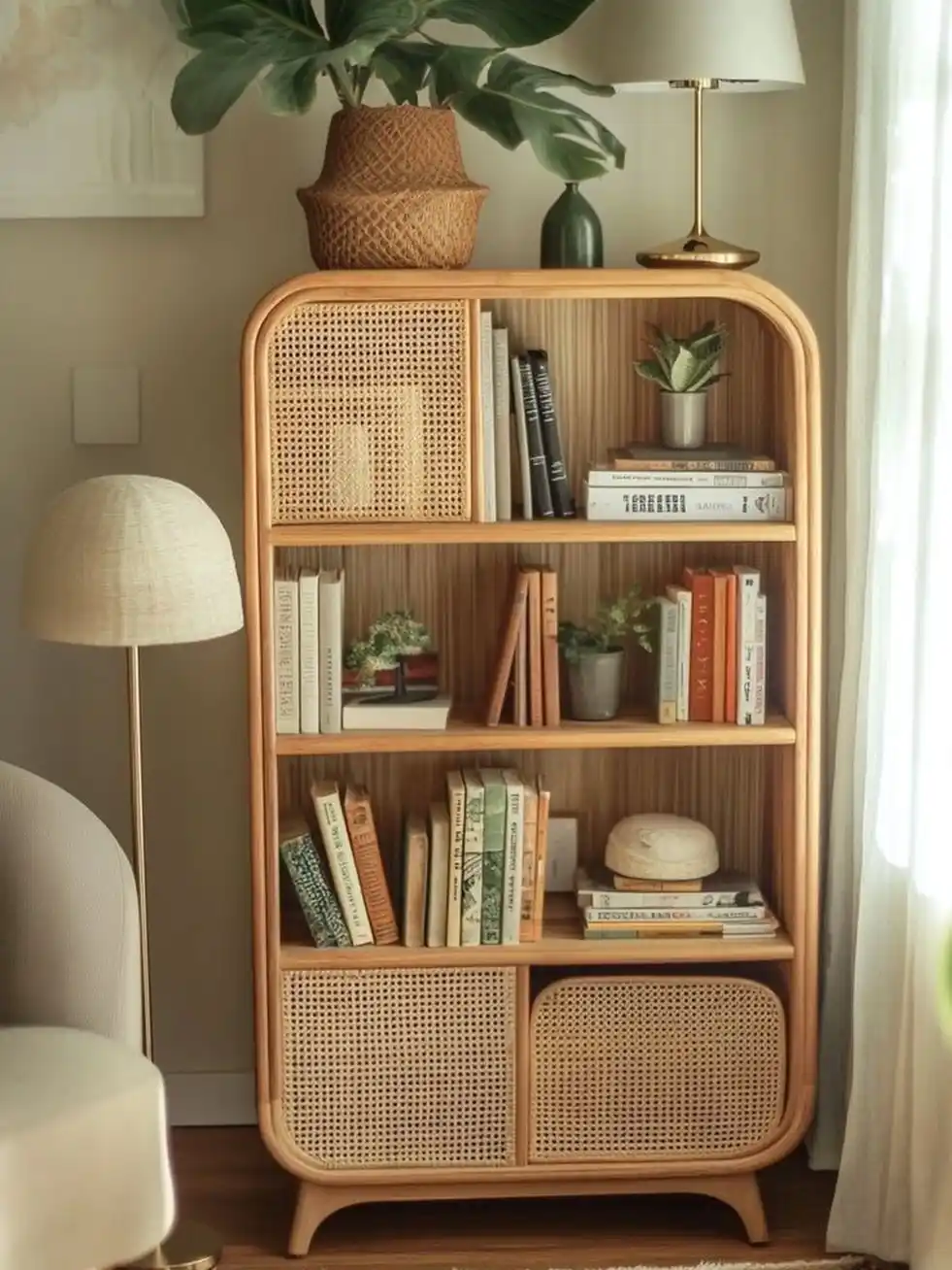
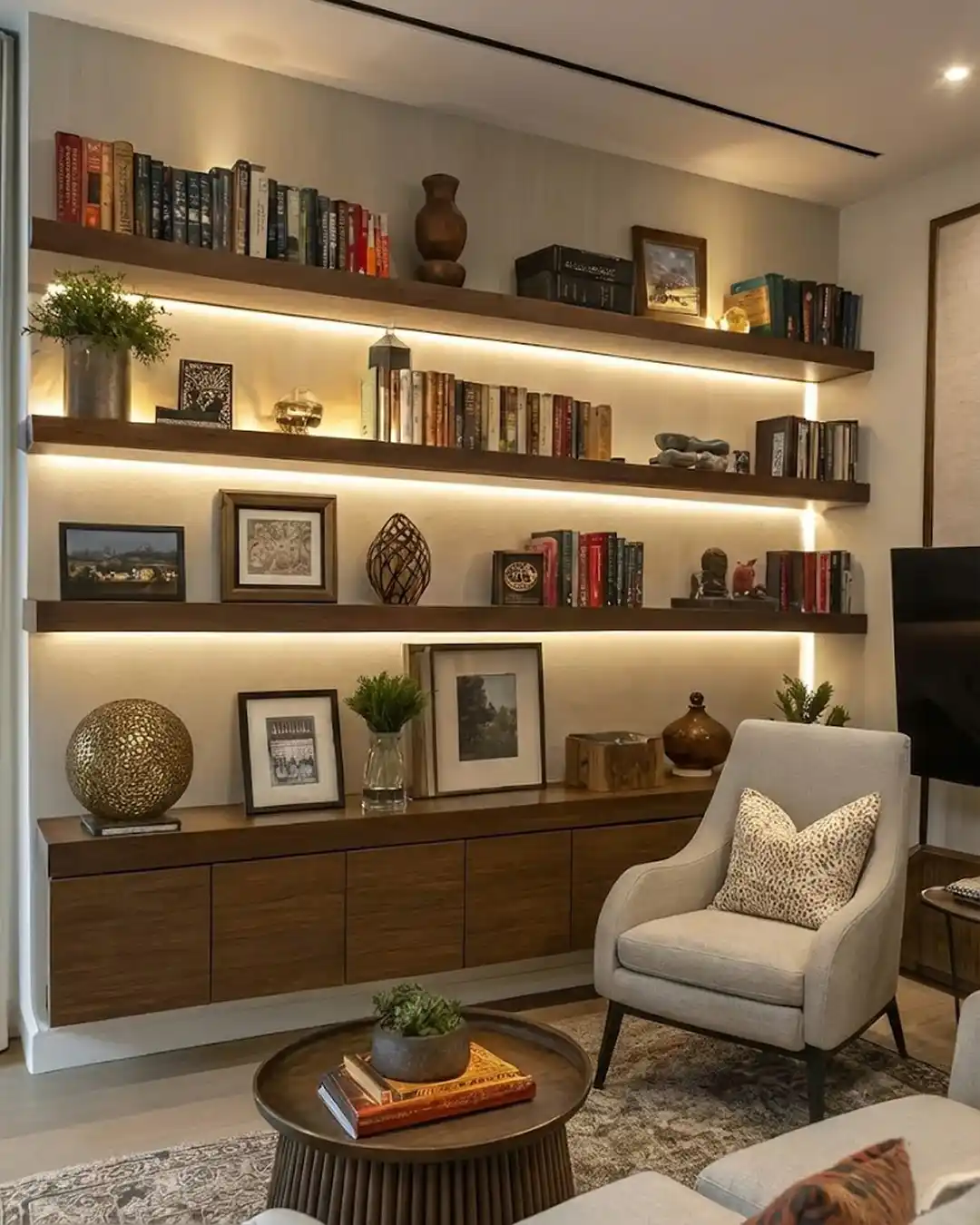
A top-heavy bookcase looks like it might tip. Dark and visually dense objects belong on the bottom shelves.
Large baskets and oversized art books work well here. Keep the top shelves lighter and more open.
A Durham University study found that people who use a styled bookcase as their video call background are rated as more trustworthy and professionally competent than those who don’t. A small thing worth knowing.
Good bookshelf styling uses odd-number groupings. Three objects at varying heights read as intentional without much effort.
| Shelf Level | Best Items To Place |
|---|---|
| Bottom | Heavy books, large baskets, storage bins. |
| Middle | Eye-level decor, sculptural objects, framed art. |
| Top | Trailing plants, lighter ceramics, open air. |
A budget-friendly starting trio: a $15 ceramic vase, a $20 brass object, and a small stack of books.
Once the heavy pieces anchor the bottom, work your way up.
Rule of thumb: put your heaviest pieces on the bottom shelf first.
How to Mix the Vertical and Horizontal
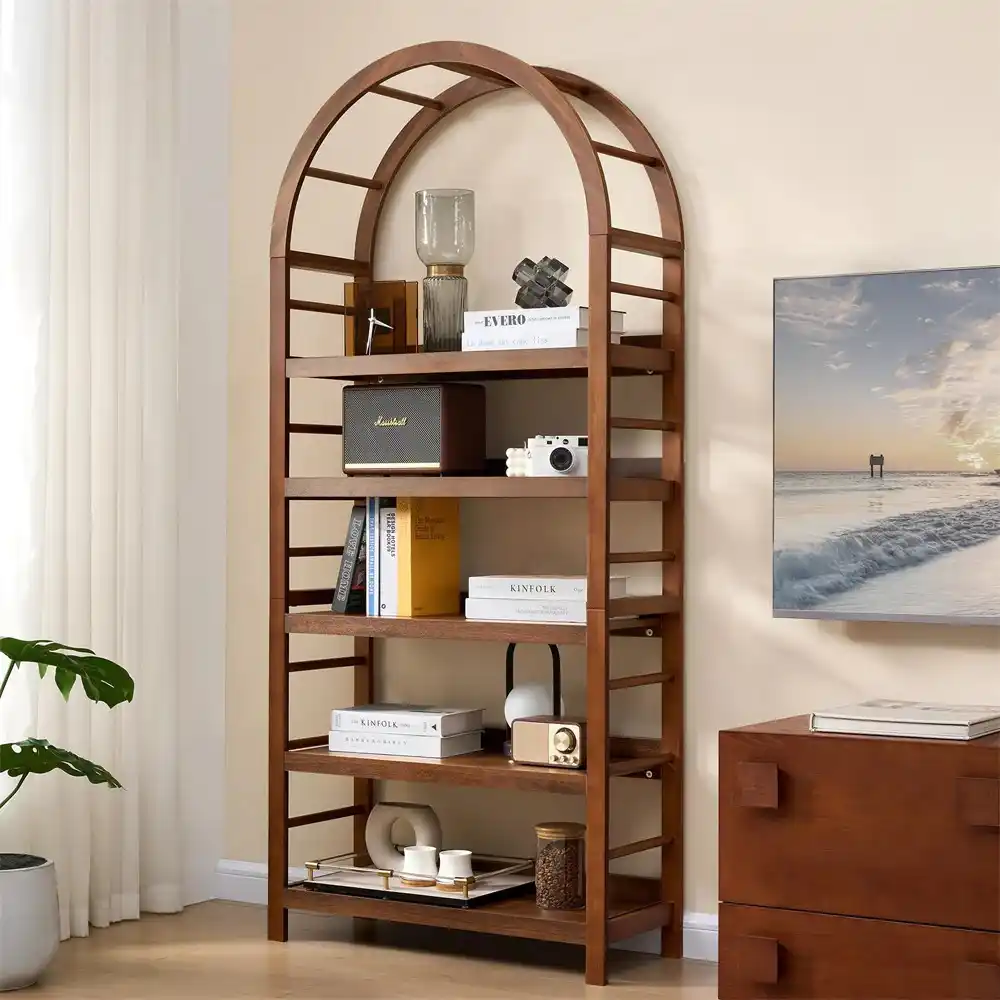
A wall of vertical spines looks like a library aisle. You need to break it up.
Here’s the process:
- Empty the shelf.
- Anchor the bottom with heavy items.
- Stack three to five books flat to create small platforms.
- Set a decorative object on top of each platform.
Push books back toward the wall and leave a consistent two-inch gap at the front edge. It’s a small thing that makes the whole shelf read cleaner.
Design blog Chris Loves Julia uses a smart trick: grouping similar objects together to create the illusion of larger, more intentional pieces.
The horizontal stacks should never be taller than the vertical books beside them — that hierarchy matters.
The Neutral Spine Trick
Turning books page-out creates a stunning, neutral aesthetic, but it renders your library unusable. Reserve this technique strictly for styling-only shelves, not your go-to reading collection.
Rule of thumb: mix upright books with flat stacks on every shelf level.
3 Ways to Add Life with Organic Elements and Art
Wood and metal shelves can look cold. Trailing plants fix that.
This falls under Biophilic Design — bringing outdoor elements inside. Pothos and Philodendron are good choices.
They drape naturally over shelf edges and don’t need much attention.
Lean artwork at the back of a shelf rather than hanging it. This creates depth behind your objects and keeps things from reading flat.
Aim to leave 20 to 30 percent of each shelf empty.
These open areas give the eye somewhere to rest and keep the whole thing from tipping back into clutter — which is the whole interior design shelf idea worth remembering.
Rule of thumb: leave at least 20 percent of each shelf completely clear.
Conclusion
Good bookshelf styling is about rhythm. You mix orientations. You place things with some intention.
You leave room for the eye to breathe. Done right, it shifts the whole feel of a room from chaotic to considered.
Save this for your next weekend project. Pin the vertical images to your Pinterest decor boards.
There’s also a downloadable Excel budget calculator if you want to track costs as you source new pieces.