How to Make Your Rental Feel Like Home (Without Losing Your Deposit)


Walking into a new rental can feel like checking into a hospital room. Blinding overhead lighting. Bare cream walls. Carpet in a shade of beige that has no name because no one would choose it on purpose. The whole place smells faintly of fresh paint and disappointment.
You want to make it feel like home. But with security deposits averaging nearly $800, driving a single nail into that drywall feels like financial roulette. Do you live in a space that looks like a waiting room for the next two years, or do you risk losing hundreds of dollars when you move out?
Neither. There is a third option. This guide walks you through renter-friendly home decor that looks genuinely good, costs real money to pull off well, and leaves zero evidence behind when you go.
The Financial Reality of Security Deposits
Your security deposit is not a fee. It is your money sitting in your landlord’s account. You want it back.
That sounds obvious. But a striking 59% of renters do not expect to get their full deposit returned when they move out, according to the Roost Renter Financial Health Index.
The Harvard Joint Center for Housing Studies puts the median upfront deposit at $795. That is not a rounding error. That is a car repair, a month of groceries, or the start of a real emergency fund.
Here is the part that makes it worse: 23% of tenants face deductions they believe are completely unjustified, often for cleaning fees and wall damage, according to the Generation Rent Policy Review.
Most of those disputes come down to one question: did you cause damage, or is this just normal wear and tear?
Normal wear and tear means the minor stuff that happens from ordinary, careful use. Small scuff marks. Tiny pinholes from a single picture nail. Faded paint after three years. Landlords cannot legally charge you for those in most places.
Actual damage is something different. Large anchor holes. Stains you left. Wallpaper you installed and tore off wrong. That is on you.
✓ Normal Wear and Tear
- Small scuff marks on floors or walls
- Tiny pinholes from a single picture nail
- Faded paint after several years
- Minor carpet flattening from furniture
✕ Chargeable Damage
- Large anchor or drill holes
- Stains from spills or leaks
- Torn wallpaper or paint pulled off
- Broken fixtures or hardware
The line between the two is where most deposit fights happen. Property compliance experts consistently point to one thing that resolves 90% of deposit disputes before they start: timestamped photos taken on day one.
Walk every room. Open every cabinet. Document every existing scuff, stain, and scratch before you put a single box down. Send those photos to your landlord by email so you have a date stamp.
That documentation is your insurance policy. Now you can actually decorate.
To keep that money in your bank account, your decorating methods need to shift from structural to strategic.
How to Use Design Trends Without Touching a Single Wall
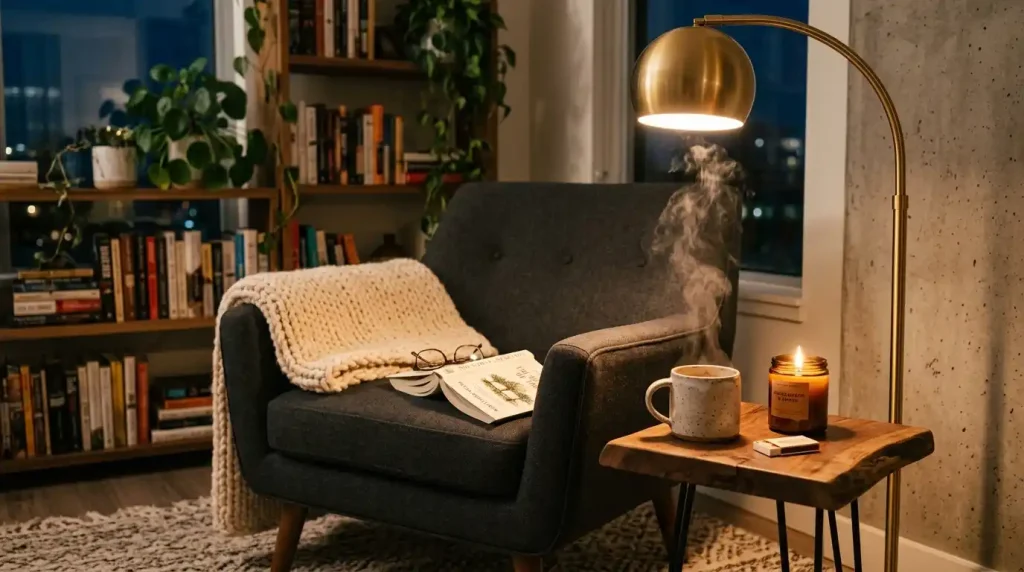
The best thing about 2026’s biggest interior design trends is that they were practically written for renters.
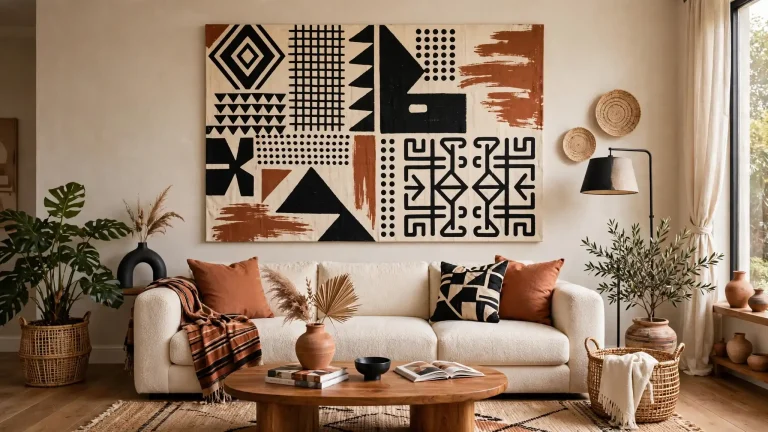
Warm Minimalism is the dominant aesthetic right now. It favors soft textures, natural wood tones, organic curves, and layered materials. What it does not favor is painted accent walls or built-in shelving.
Almost everything in this style is freestanding, portable, and personal. It fits a rental perfectly.
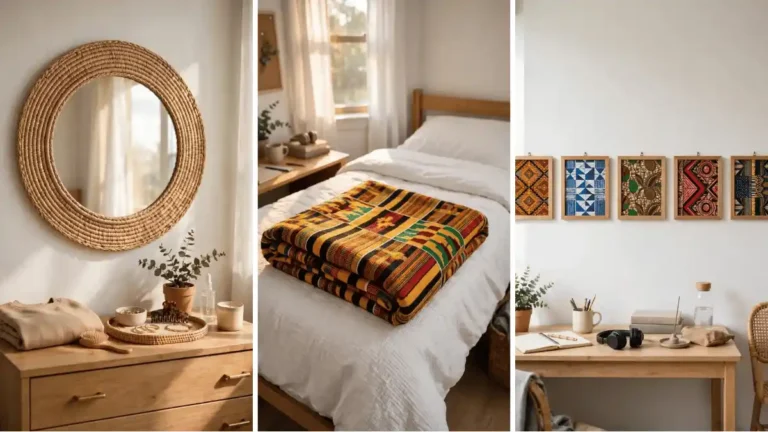
Start with your floors. Rental flooring is usually the first thing that kills a space. Scuffed laminate, cold tile, and worn carpet all share one fix: a large area rug. Go bigger than you think you need.
An oversized jute or wool rug can visually anchor an entire living room, hide dated flooring entirely, and soften an echo-y space at the same time.
Circular rugs are especially useful in boxy apartments because they break up the rigid geometry without any installation required.
Next, look at your windows. Standard rental blinds are functional and terrible. Replace them with curtains hung on a tension rod that fits inside the window frame, no drilling needed.
Long, floor-to-ceiling curtains make ceilings feel taller and rooms feel more finished than almost anything else you can do.
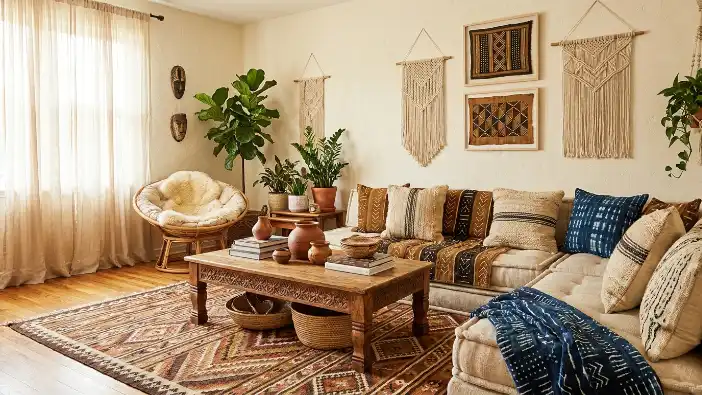
For color, try Color Drenching on your furniture instead of your walls. This means committing fully to a palette through your soft goods.
Choose one warm earthy tone, terracotta, warm ochre, or olive, and repeat it across your throw pillows, blanket, curtains, and rug.
The effect reads as intentional and cohesive. Your walls can stay beige and they will look like a backdrop instead of a failure.
Which renter-friendly upgrade will you try first?
The shift from large floor items to the next logical plane is your walls. And yes, you can do something about those too.
Damage-Free Decorating Hacks for Empty Rental Walls
Bare walls are not a requirement. They just feel like one.
The myth is that you cannot put anything on rental walls without risking your deposit. That was true before peel-and-stick technology got genuinely good. It is not true now.
Peel-and-stick wallpaper has changed more in the last three years than in the previous decade. Brands like Tempaper and Rifle Paper Co. use non-woven materials with clean-peel acrylic adhesives.
When removed properly, they pull cleanly away from drywall without lifting paint or leaving residue. Market research from Glimpse shows search volume for “renter-friendly wallpaper” has surged sharply, tracking a wider move away from permanent home renovations among younger renters.
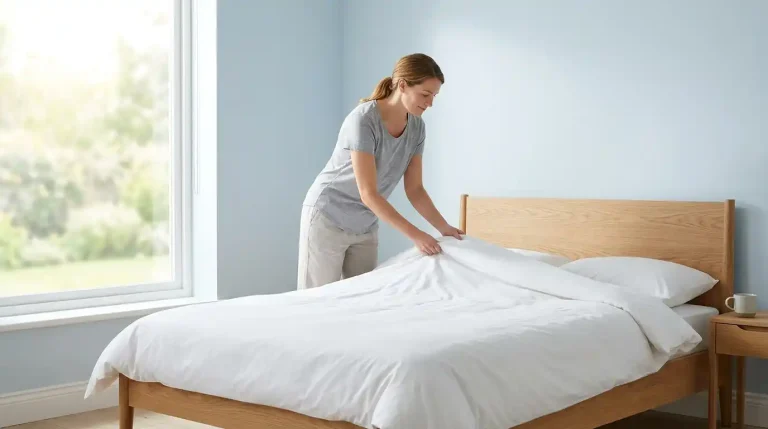
To remove peel-and-stick wallpaper without damage, follow this sequence:
Removing Peel-and-Stick Without Damage
For artwork and frames, Command Picture Hanging Strips are the standard. The hook-and-loop pairs hold real weight.
The key detail most people miss: removal requires pulling the tab straight down along the wall, slowly and steadily, not yanking it outward.
The instructions on the back of the package are worth reading. They work when followed.
Two other quick wins for dead wall space: lean-to mirrors and freestanding ladder shelves.
A large leaning mirror adds depth and light. A ladder shelf creates vertical storage and visual interest. Neither requires a drill, a stud finder, or a single hole.
For lighting, the boob lamp bolted to your ceiling does not have to be the only light in the room. Stick-on wall sconces like Poplights are rechargeable, adhesive-mounted, and dimmable.
Add them on either side of a bed or flanking a mirror and your space suddenly looks designed rather than rented.
The Hardware Swap: The Fastest Upgrade Most Renters Skip
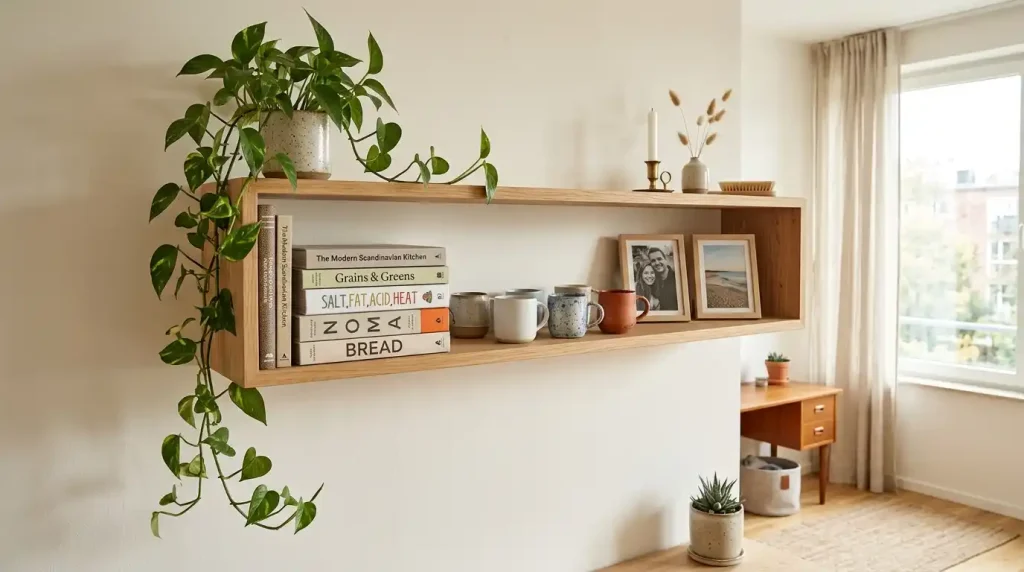
Nothing ages a kitchen faster than cheap plastic cabinet pulls. Nothing makes it look better faster than replacing them.
This is the most underused renter upgrade because it feels permanent. It is not. Swapping hardware is completely reversible if you do one thing correctly from the start: save every single original piece.
Before you unscrew a single pull, grab a sandwich bag and a marker. As you remove each original handle and screw, drop them into the bag immediately. Label it: “Kitchen pulls, original, move-out box.”
Put that bag somewhere you will actually find it in two years. A shoebox at the back of the closet works fine. The top shelf of a linen closet works better because you will see it when you pack.
Then replace. Modern brass pulls, matte black bar handles, and ceramic knobs are all easy to find at hardware stores for a few dollars each.
A cabinet with updated hardware reads as a completely different piece of furniture. The whole kitchen shifts.
The same swap works in bathrooms. Standard rental showerheads are low-pressure, chrome, and visually depressing. A rain shower attachment from any hardware store costs between $30 and $80, screws onto the same fitting in under five minutes, and transforms your daily experience. When you move out, the original goes back on. Keep it in that same shoebox.
The rule for every hardware swap is identical: label, bag, store, restore. It takes two extra minutes at the start and saves a deduction conversation at the end.
How to Walk Out With Your Full Deposit
Personalizing a rental does not require a fight with your property manager. It requires a plan.
Rugs cover the floors. Curtains frame the windows. Peel-and-stick paper and adhesive strips handle the walls.
Hardware swaps and portable lighting handle everything else. None of it requires a single permanent alteration to the property. All of it looks intentional.
The renter-friendly home decor toolkit is genuinely good. The products work. The techniques are tested.
The only thing standing between you and an apartment that looks like it belongs to you is the decision to start.
Before you move out, do one final walkthrough with your move-in photos open on your phone. Compare every room side by side.
Reverse every swap. Patch any pinholes with the white spackling paste from any hardware store, let it dry, and sand it smooth. Most landlords will not blink.