How to Mix Afrocentric and Scandinavian Decor Without It Clashing


You found a mudcloth throw you love. You also love the clean, airy feel of Scandinavian rooms. Now the two are sitting in your cart, and you are not sure if they belong in the same room at all. This is the exact spot where most people give up and pick just one style.
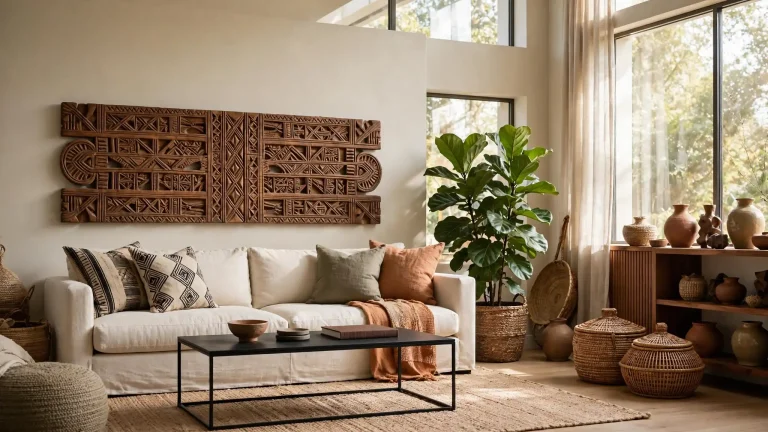
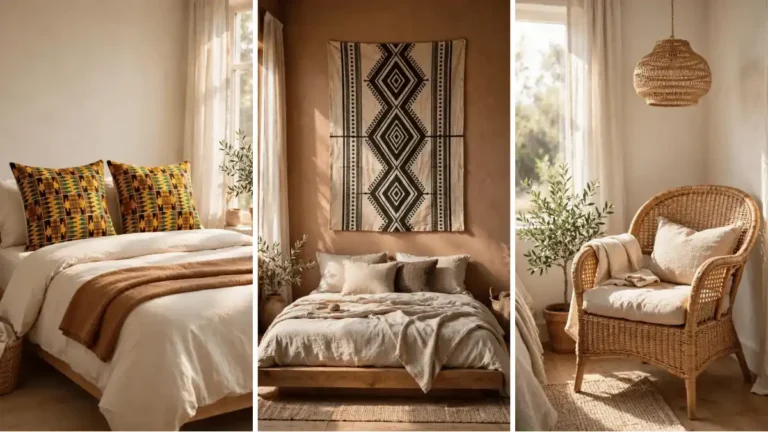
Learning how to mix Afrocentric and Scandinavian decor comes down to one idea: let one style set the mood, and let the other add the soul. Scandinavian design gives you calm, light, and breathing room.
Afrocentric design gives you pattern, warmth, and story. When you balance the two on purpose, instead of by accident, the room feels collected, not chaotic.
This guide walks you through picking your base, layering in bold pieces, and stepping back before you overdo it. You do not need to buy a whole new room.
Most of this works with what you already own, plus a few intentional additions. Expect to spend one weekend gathering pieces and about 2 hours actually arranging them.
By the end, you will have a room that holds both styles without either one fighting for attention. Grab your throw, your favorite mug, and let’s get your space looking like it was always meant to look this way.
What You Need
- Neutral sofa cover or slipcover
- 1–2 Afrocentric statement pieces (mudcloth throw, carved stool)
- Natural wood furniture or shelving
- Jute or sisal area rug
- Black metal accents (lamp, frames, hardware)
- Ankara or kente-inspired throw pillow
- Woven basket or storage piece
- 2–3 potted plants
- Warm white light bulbs
- Simple gallery frames
At a Glance
- Pick one dominant style and one supporting style
- Choose a shared color thread to tie both styles together
- Start with a neutral Scandinavian base layer
- Layer in one bold Afrocentric statement piece
- Add texture with natural materials
- Introduce pattern through textiles, not furniture
- Balance negative space so the room can breathe
- Group your Afrocentric accents in odd numbers
- Add wood tones that bridge both aesthetics
- Step back and edit out anything that fights for attention
1. Pick one dominant style and one supporting style
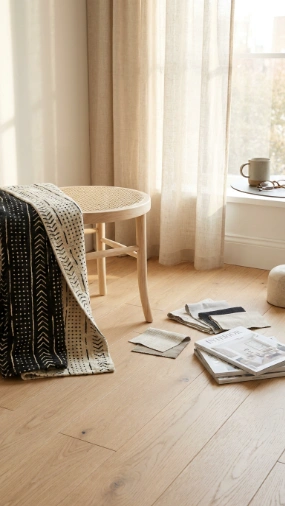
A 70/30 split works well for most rooms. Decide if the space will read as mostly Scandinavian with Afrocentric accents, or the reverse.
Without this decision, every purchase becomes a guess, and the room ends up looking like two separate ideas pushed together.
Walk through your space now and name the split out loud before you buy anything else.
2. Choose a shared color thread to tie both styles together

Both styles already share a natural palette. Scandinavian rooms lean on warm whites and soft wood.
Afrocentric pieces often carry rust, ochre, and deep browns. Find the overlap.
Pick one warm tone — terracotta, mustard, or clay — and repeat it in at least three spots: a pillow, a vase, and a piece of art.
That repetition is what makes the two styles feel like they were chosen together.
3. Start with a neutral Scandinavian base layer
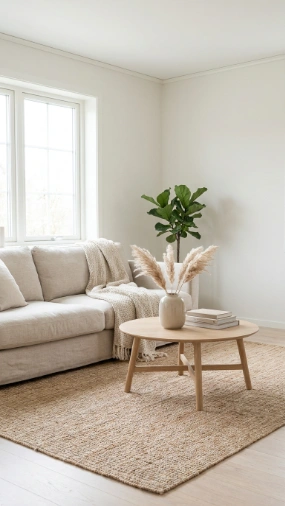
Your walls, sofa, and largest rug should stay calm. Think off-white, oatmeal, or light gray.
This base gives your bolder pieces somewhere to stand out instead of competing with each other.
If your sofa is already a bold color, a slipcover in a neutral tone solves this without buying new furniture.
Skip patterned wallpaper here — save pattern for the smaller, swappable pieces you will add later.
4. Layer in one bold Afrocentric statement piece
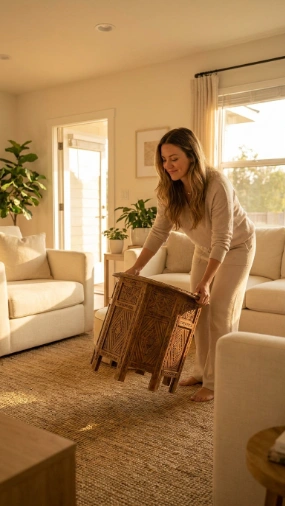
One piece carries more weight than five small ones. A carved wooden stool, a large mudcloth wall hanging, or a hand-painted vase works best as your anchor.
Place it where your eye lands first when entering the room — often across from the doorway.
Resist the urge to add a second statement piece right away. Let this one settle into the space for a full week before deciding if it needs company.
5. Add texture with natural materials
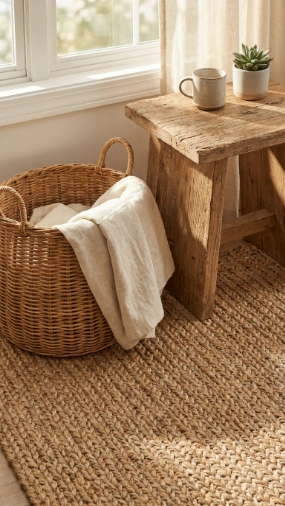
Texture is what keeps a neutral base from feeling flat. Bring in a few raw, tactile materials so the room has depth even before color enters the picture:
- A jute or sisal rug underfoot
- A rattan chair or pendant light
- A raw wood side table
- A woven basket for storage
- A wicker tray on your coffee table
Three of these are usually enough for a living room. More than that starts to feel busy rather than warm.
6. Introduce pattern through textiles, not furniture
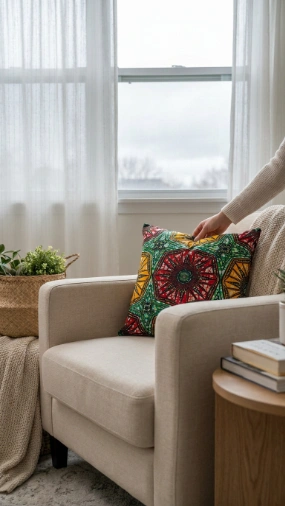
Pattern belongs on things you can swap easily, not on things you are stuck with.
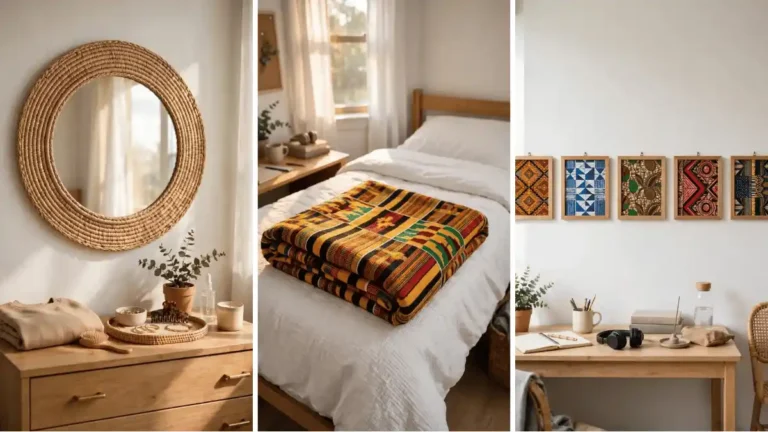
Keep bold Ankara or kente prints on throw pillows, a table runner, or a single accent chair cushion. Two to three patterned pieces is the sweet spot for most rooms.
Anything patterned and expensive, like a sofa or a large rug, is much harder to undo if the look feels off later.
7. Balance negative space so the room can breathe
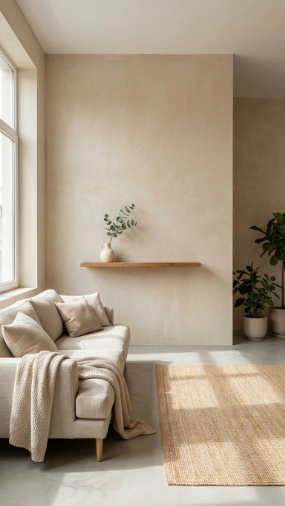
Empty space is not wasted space here — it is doing real work. Scandinavian design depends on open, uncluttered surfaces to feel calm.
Leave at least one wall, one shelf section, and one corner completely bare. If a surface has more than three objects on it, remove one.
Fewer objects, spaced out well, will always read as more intentional than a full shelf.
8. Group your Afrocentric accents in odd numbers

Three carved figures look styled. Two look accidental, and four start to look like clutter.
This is a simple design rule that makes a real difference: odd numbers create visual interest, while even numbers tend to feel too symmetrical and stiff.
Try grouping small pieces — baskets, sculptures, pottery — in clusters of three on a shelf or console table.
9. Add wood tones that bridge both aesthetics

Wood is the quiet connector between these two styles. Scandinavian design favors pale, blonde woods like birch and ash.
Afrocentric design often features darker, richer woods like mahogany and ebony. Rather than picking one, use both in the same room, just in different roles.
Let pale wood carry your larger furniture, and let dark wood show up in smaller pieces, like a stool, a bowl, or a picture frame.
10. Step back and edit out anything that fights for attention
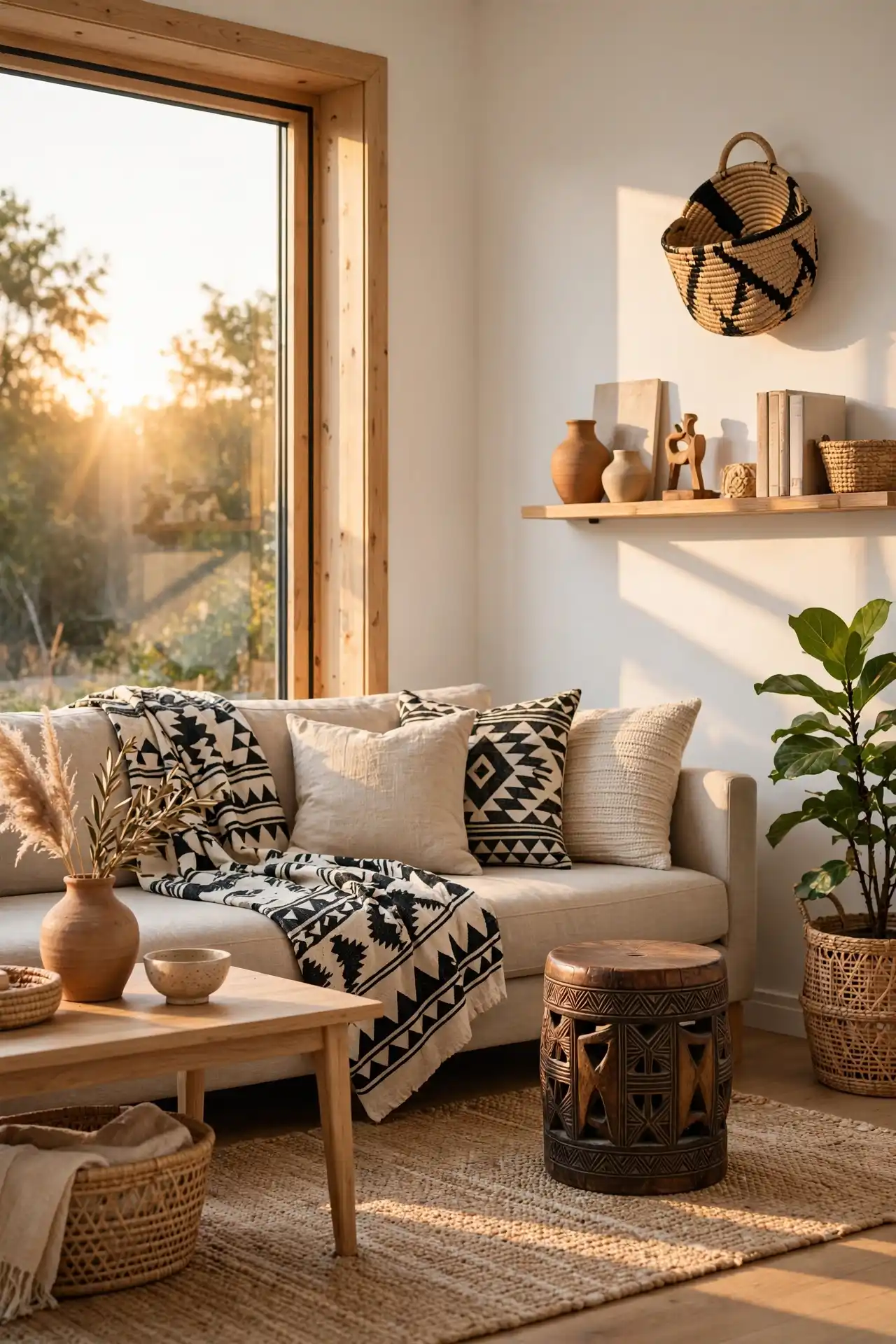
Stand in the doorway and look at the room as a whole, not piece by piece. Squint slightly. The items that jump out too fast, before your eye settles anywhere, are usually the ones causing the clash.
Remove one thing at a time, waiting a full day between each change, and notice what the room feels like without it.
Most rooms need less editing than people expect — often just one or two pieces removed makes everything else click into place.
Common Mistakes to Avoid
Frequently Asked Questions
Quick Reference Card
- Pick your dominant and supporting style
- Choose one shared color thread
- Build a neutral Scandinavian base
- Add one bold Afrocentric statement piece
- Layer in natural texture
- Add pattern through textiles only
- Leave real negative space
- Group accents in odd numbers
- Mix pale and dark wood tones
- Step back and edit
Conclusion
Your room now has a clear voice instead of two styles talking over each other. You picked a base, added one bold piece, and let texture and wood tones do the quiet work of tying it all together.
The next step is simple: live in the space for a week before adding anything new. You will notice what it is actually missing, instead of guessing.
Learning how to mix Afrocentric and Scandinavian decor is really just learning to let one style lead. Save this guide to your home decor board so you can walk through it room by room.