14 Afrocentric Bedroom Ideas Built for Men


Most bedroom advice for men stops at “add a plant and a nice lamp.” That works fine for a rental you plan to leave in a year, but it does not hold up if you actually want the room to feel like yours.
Afrocentric design gives you something better: real texture, real pattern, and colors that were chosen on purpose instead of picked because they were on sale.
The tricky part is knowing where to stop. One mudcloth pillow looks intentional. Mudcloth on the bedding, the curtains, and the rug at the same time looks like a theme park.
The ideas below are built around that balance, using afrocentric bedroom ideas for men that lean on a few strong pieces instead of a lot of small ones.
Pick two or three to start, live with them for a week, then decide what the room still needs.
14 Afrocentric Bedroom Ideas Built for Men
1. Build the Headboard Wall Around a Mudcloth Pattern

A blank grey wall behind the bed reads like a hotel room, not a home. Mudcloth fixes that fast because the pattern already carries weight and texture on its own, so there is no need to stack pillows and prints just to fix a flat wall.
Look for one large mudcloth panel, a painted stripe inspired by the pattern, or a single framed textile centered above the headboard. Keep the rest of the wall quiet so it does the work.
- One large panel beats five small prints
- Centering it keeps the wall feeling grounded
- Frame delicate fabric so it lasts
Bare wall behind the bed, one small framed print off to the side, nothing to anchor the eye.
One large mudcloth panel centered above the headboard, giving the whole wall a focal point.
2. Cluster Adinkra Symbols Instead of Scattering Them

Pick three Adinkra symbols that actually mean something to you, not just ones that looked good in a search result.
Print or carve them at different sizes, then group them tightly on one wall instead of spreading single symbols across the room.
Keep the spacing close, an inch or two between pieces, so the eye reads them as one composition.
A single symbol here and another one across the room just looks unfinished, not intentional.
Choose three Adinkra symbols with real personal meaning, not random picks.
Size them differently so one leads and the others support it.
Hang them close together on one wall as a single cluster.
3. Anchor the Room in Three Earth Tones, Not Ten

Three colors is the limit for a room that still feels calm. Pick one deep tone for the walls or bedding, one warm neutral for furniture, and one accent for small objects like a vase or a frame.
Walk into the room and count the colors you see. If you land on six or seven, something needs to go.
Fewer tones is what actually lets the wood grain and the textiles stand out instead of fighting the paint for attention.
4. Bring In Kente Through Pillows, Not the Whole Bed
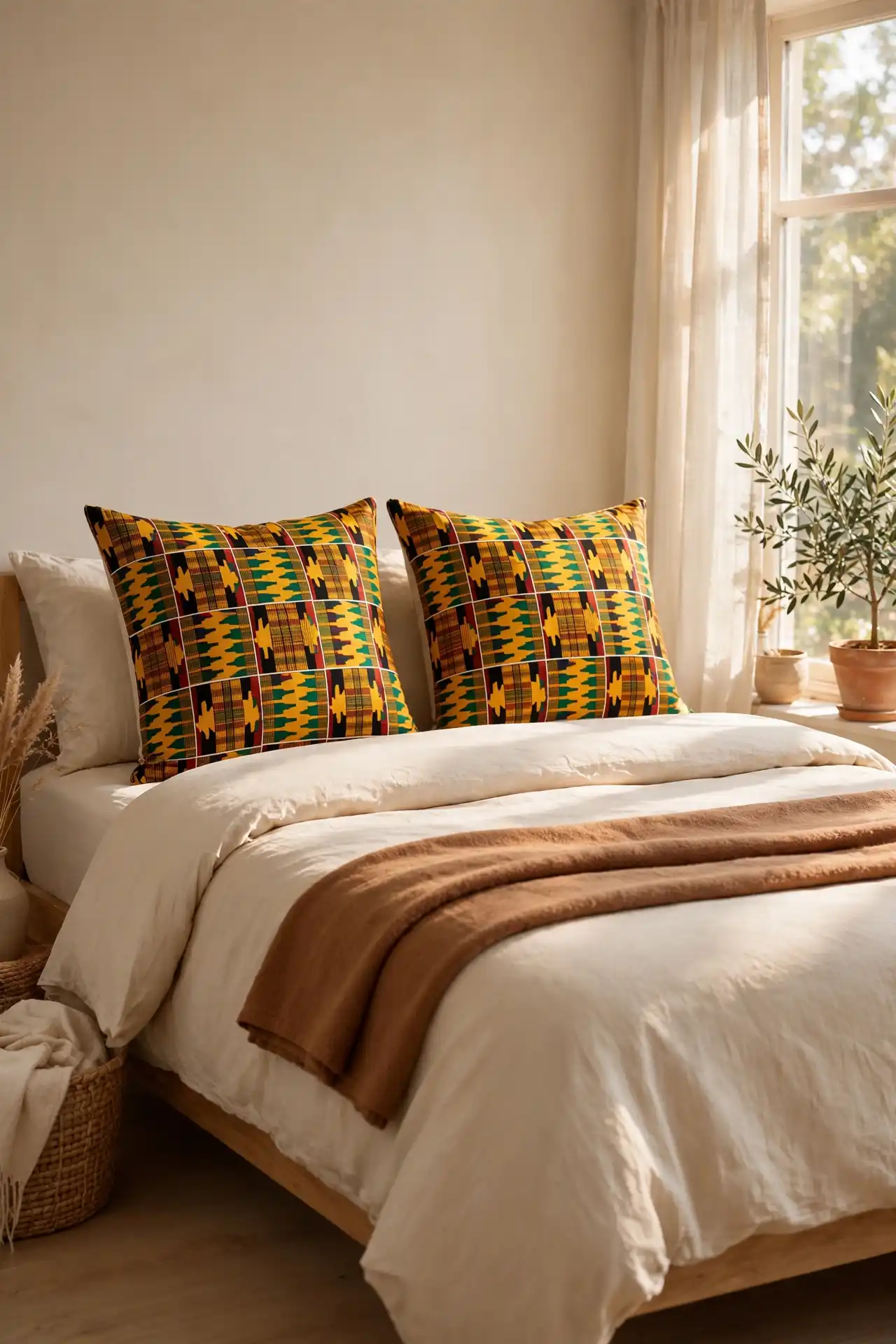
The common mistake is buying a full kente comforter set and calling the room finished.
That much pattern on the largest surface in the room fights with everything else you own, from the rug to the wall art.
Use two pillow covers instead, or a folded throw at the foot of the bed. The color still reads clearly from the doorway, but the bed itself stays calm enough to actually want to sleep in.
💡 Quick Tip
Two kente pillow covers or one folded throw gives you the color without overwhelming the bed.
5. Choose Reclaimed Wood Over Anything Flat-Pack

Reclaimed wood does not have to mean expensive antique furniture. A single reclaimed nightstand or bench, even a secondhand one, changes the entire feel of a room full of flat-pack pieces because the grain and the wear are real.
Flat-pack furniture photographs fine but feels hollow once you are standing in the room with it.
One solid wood piece next to it is usually enough to shift the whole space toward something considered instead of assembled.
Bring in one solid reclaimed wood piece near the bed.
Let the grain and wear show, do not sand it smooth.
Filling the room entirely with laminate finishes.
Mixing three different fake wood tones in one room.
6. Carve Out a Leather-and-Wood Reading Corner
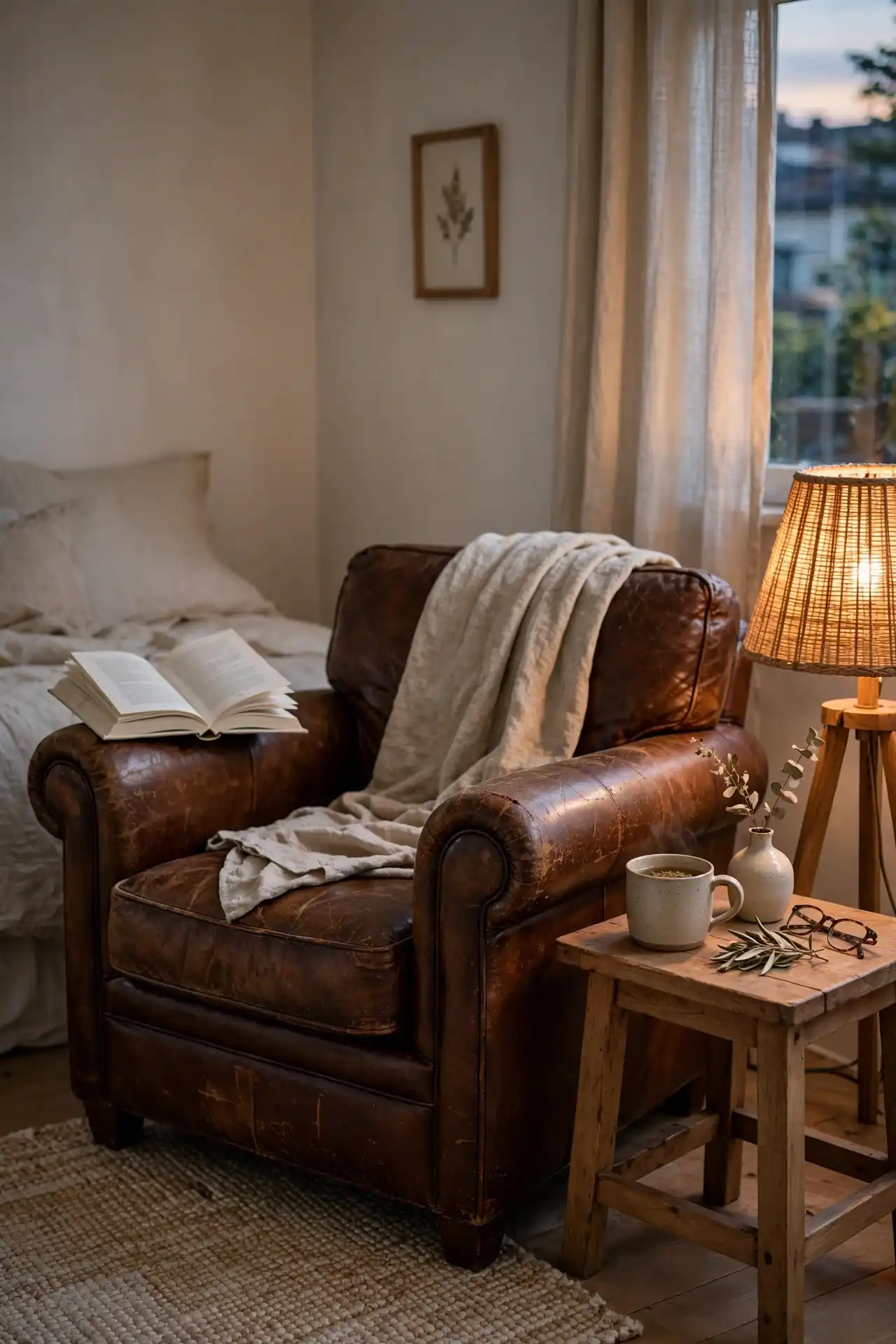
Every bedroom needs one spot that is not about sleeping. A leather chair, a small wood side table, and a reading lamp turn an empty corner into a place you actually want to sit.
This does not need to be expensive. A worn leather chair from a secondhand shop often looks better here than a new one, since the creases and slight fading only add to the texture you’re building throughout the room.
What to grab first
7. Let One Mask or Carving Be the Whole Statement

A wooden mask on its own, mounted at eye level, holds more presence than five smaller carvings scattered across shelves.
The empty wall space around it is not wasted, it’s what makes the piece read as intentional instead of crowded.
Choose a piece with real weight and craftsmanship rather than a mass produced replica.
Mount it slightly off center from the bed, not directly above it, so it reads as art rather than a headboard decoration.
8. Raffia or Rattan: Pick Based on the Room’s Light

These two materials get lumped together, but they behave differently. Raffia has a rougher, matte texture that reads warmer in low light.
Rattan is smoother and slightly reflective, so it holds up better in a room that gets strong natural light through the day.
A room facing north or with small windows usually looks better with raffia. A bright, sun filled room can handle rattan without it looking washed out.
| Raffia | Rattan |
|---|---|
| Matte, rougher texture | Smooth, slightly glossy |
| Best in low or warm light | Best in bright natural light |
9. Swap Busy Ankara Bedding for One Bold Panel
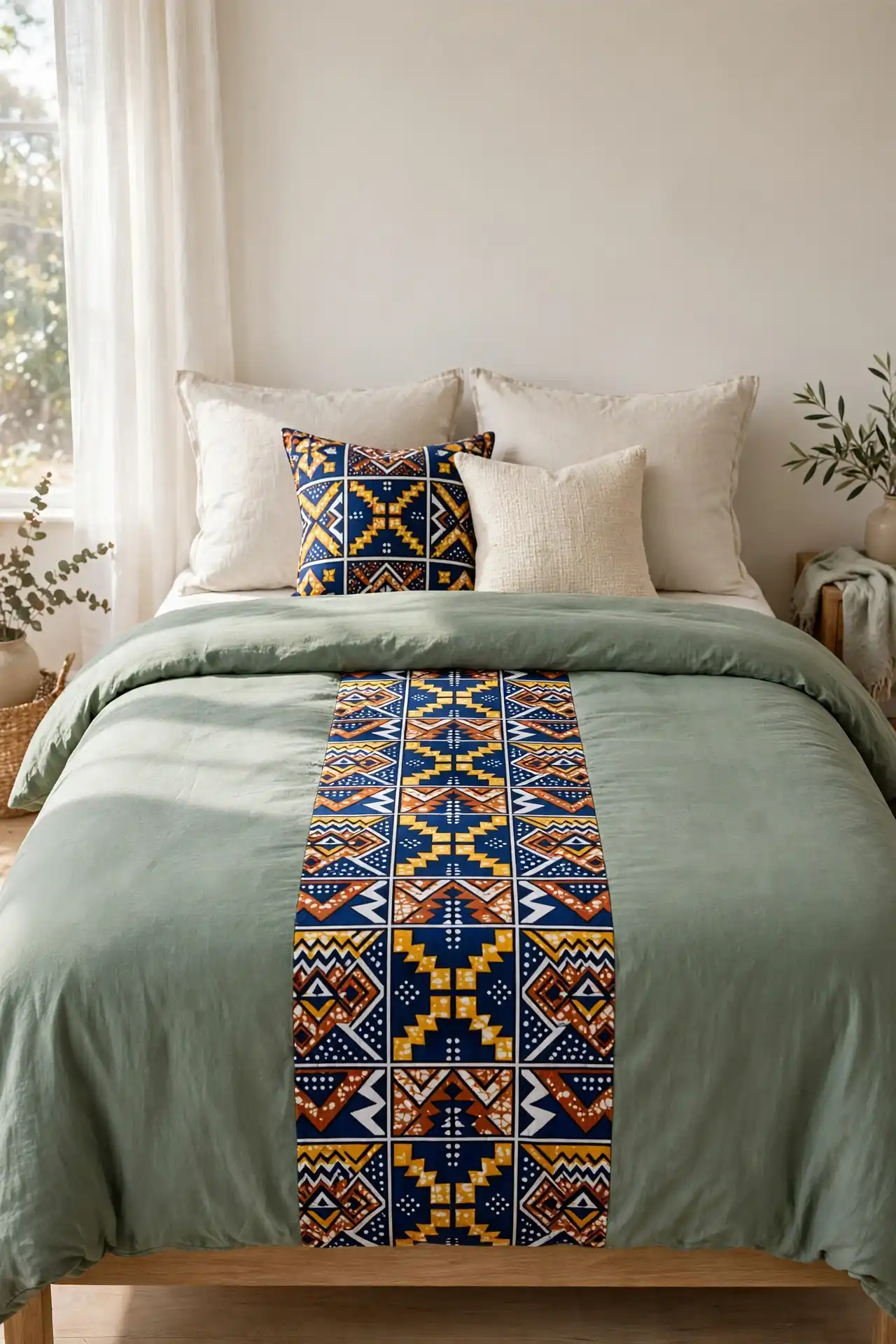
A full Ankara comforter set is a lot of pattern for a surface you look at every night before sleep.
It photographs well for five minutes, then starts to feel like too much once the novelty wears off.
Try one Ankara panel down the center of a solid comforter instead, or a single accent pillow.
The pattern still says something the moment someone walks in, but the bed itself stays restful.
Full Ankara print comforter, sheets, and shams all competing at once.
One Ankara panel over a solid comforter, calm but still clearly intentional.
10. Use Gold Fixtures Like Salt, Not Like Paint
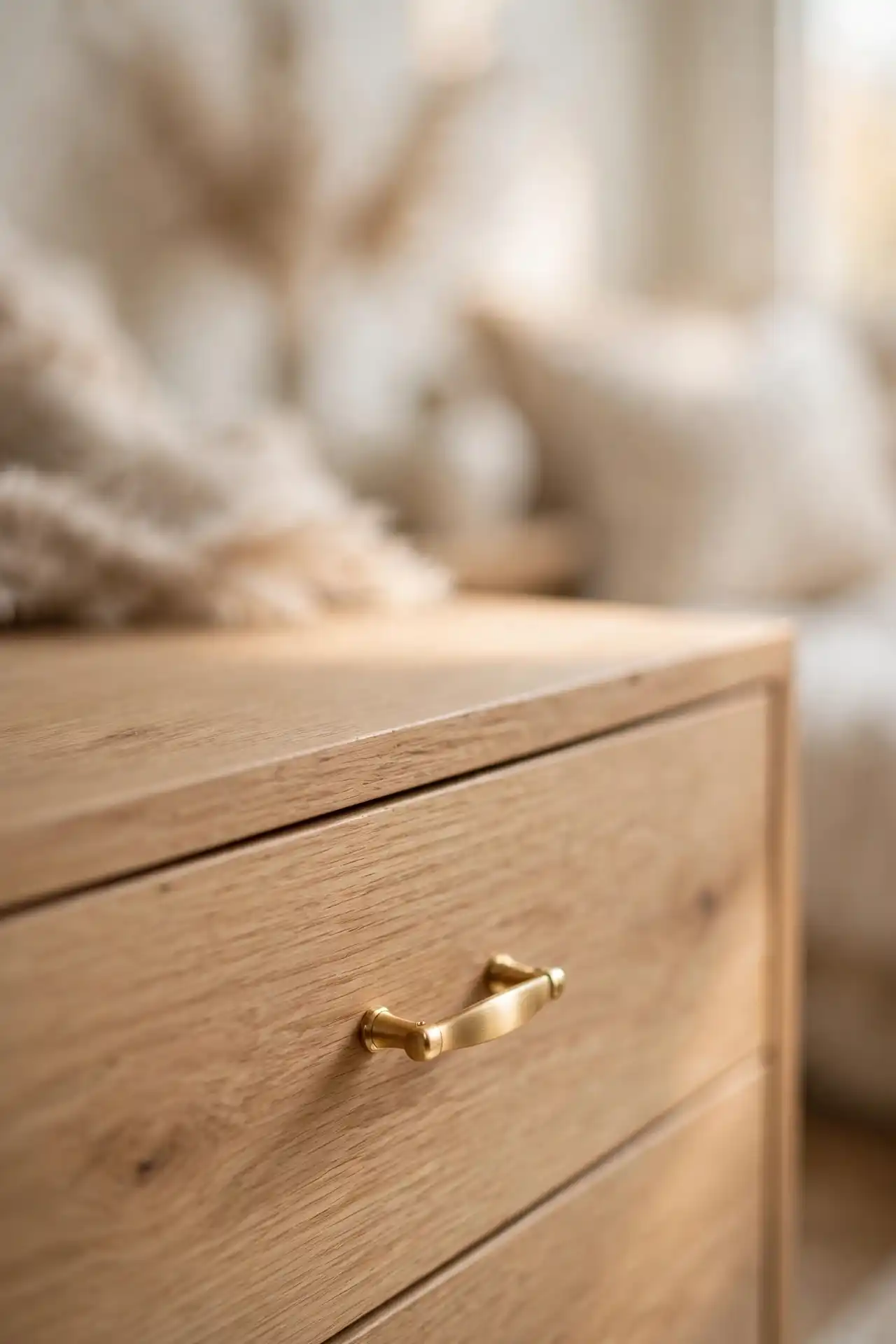
Gold works in an earth toned room, but only in small doses. A drawer pull here, a lamp base there, a picture frame edge.
The moment gold shows up on every surface, the room stops feeling grounded and starts feeling like a showroom display.
⚠️ Watch Out
If you can spot gold in more than three places from one spot in the room, pull one back.
11. Make a Map or Ancestral Print the First Thing You See
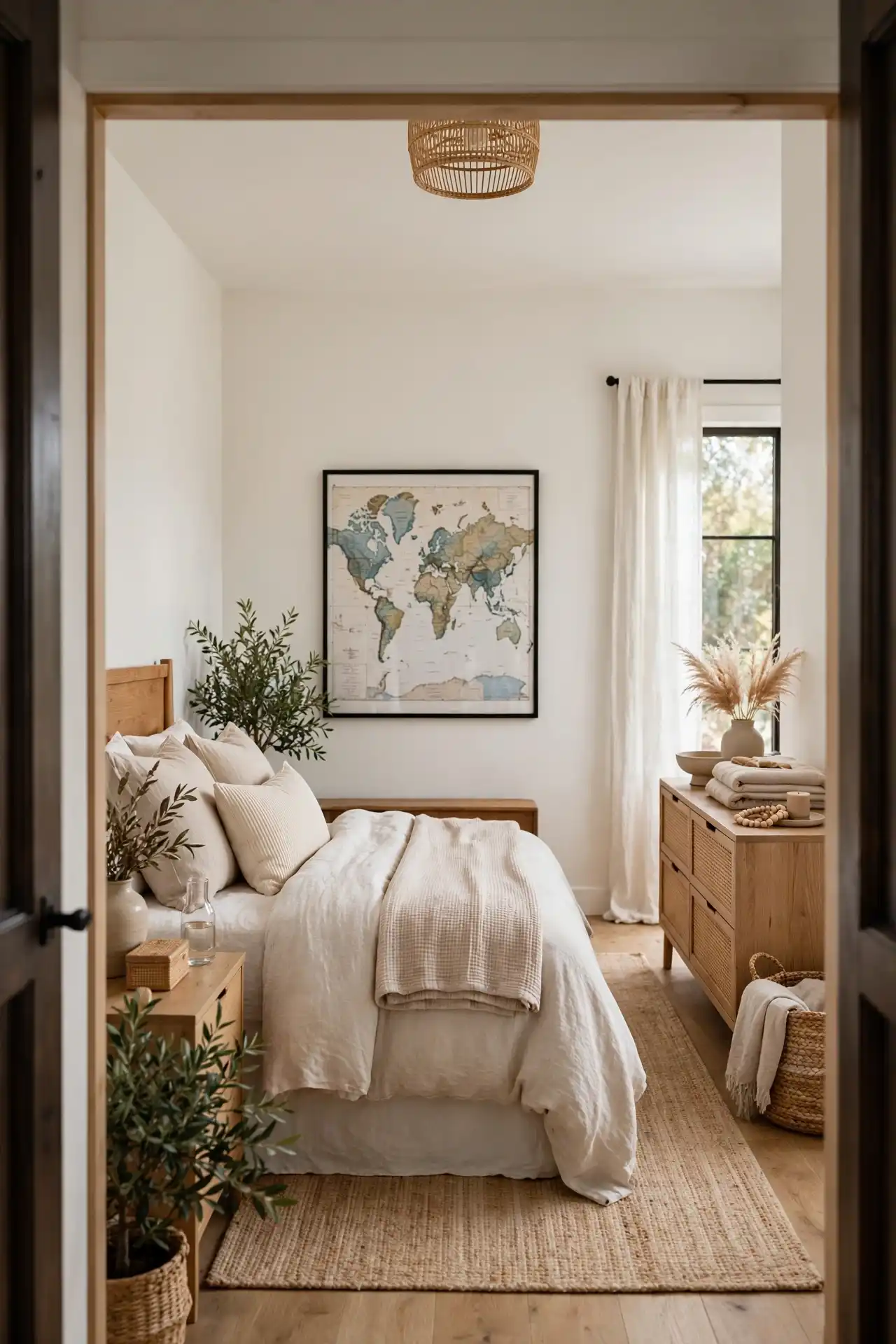
Position matters more than most people think. Whatever hangs directly across from the bedroom door is the first thing you register every time you walk in, so it should carry real meaning instead of being whatever fit that wall.
A large map print of a specific region, an ancestral portrait, or a piece tied to a personal story works well here because it sets the tone for the whole room before you even notice anything else in it.
Whatever faces the door sets the tone for the entire room, so make it count.
12. Layer a Natural Fiber Rug Over Dark Wood Flooring
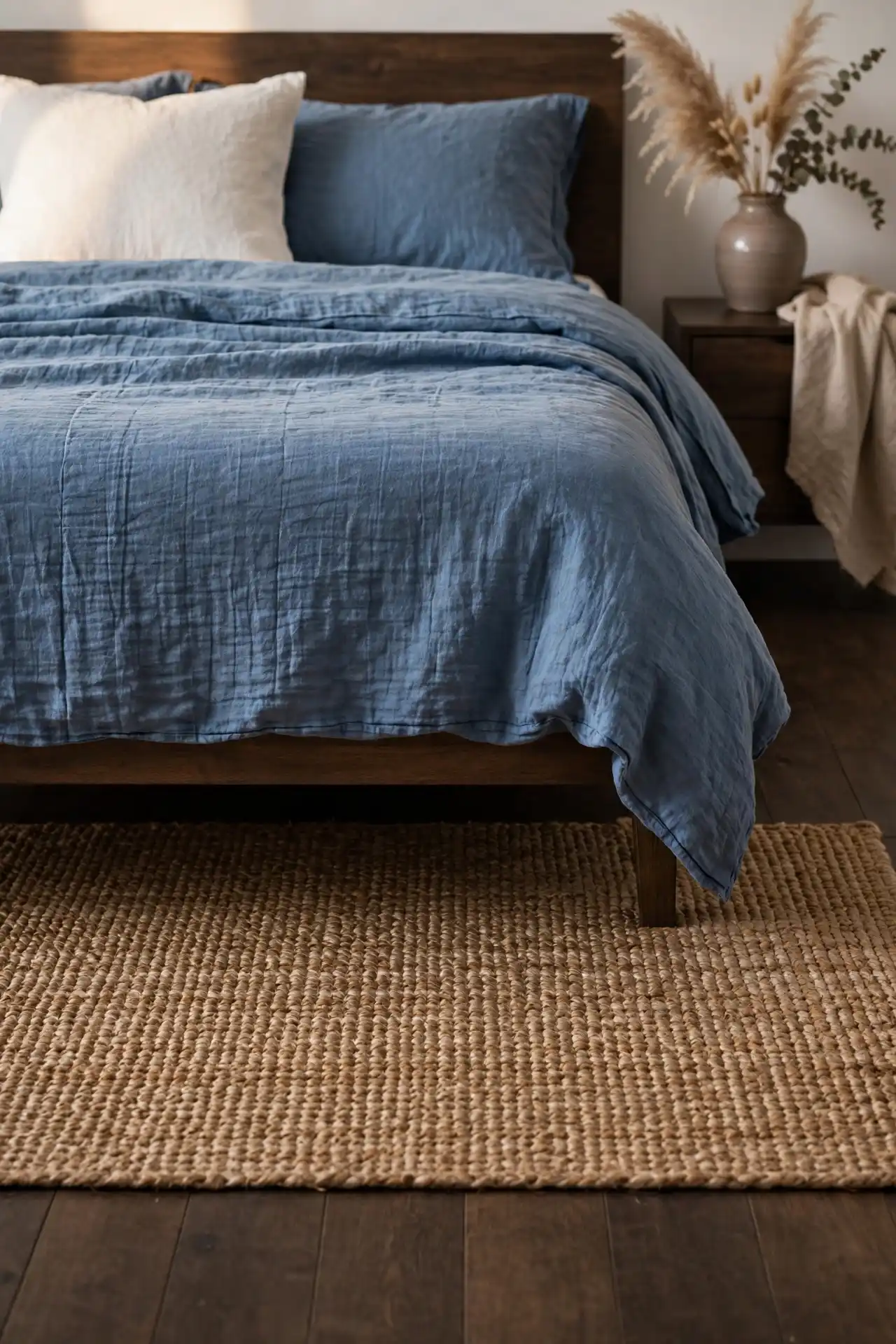
Dark wood floors look sharp but can feel a little cold and echo-y on their own. A jute or sisal rug warms the sound and the temperature of the room without competing with any of the patterns already on the walls or the bed.
The texture also does something dark floors can’t do alone, it catches light differently depending on the time of day, which adds a bit of movement to an otherwise still room.
Barefoot mornings feel noticeably better on a woven rug than on bare wood, especially in colder months.
If the room already has a lot of pattern going on through the bedding or wall art, stick to a rug with a tight, simple weave so it grounds the space instead of adding to the noise.
Measure so the rug extends at least a foot past the bed frame on each side.
Pick jute for a rougher texture or sisal for something slightly finer underfoot.
Center it under the bed rather than pushing it to one side.
13. Style One Shelf With Fewer, Better Objects
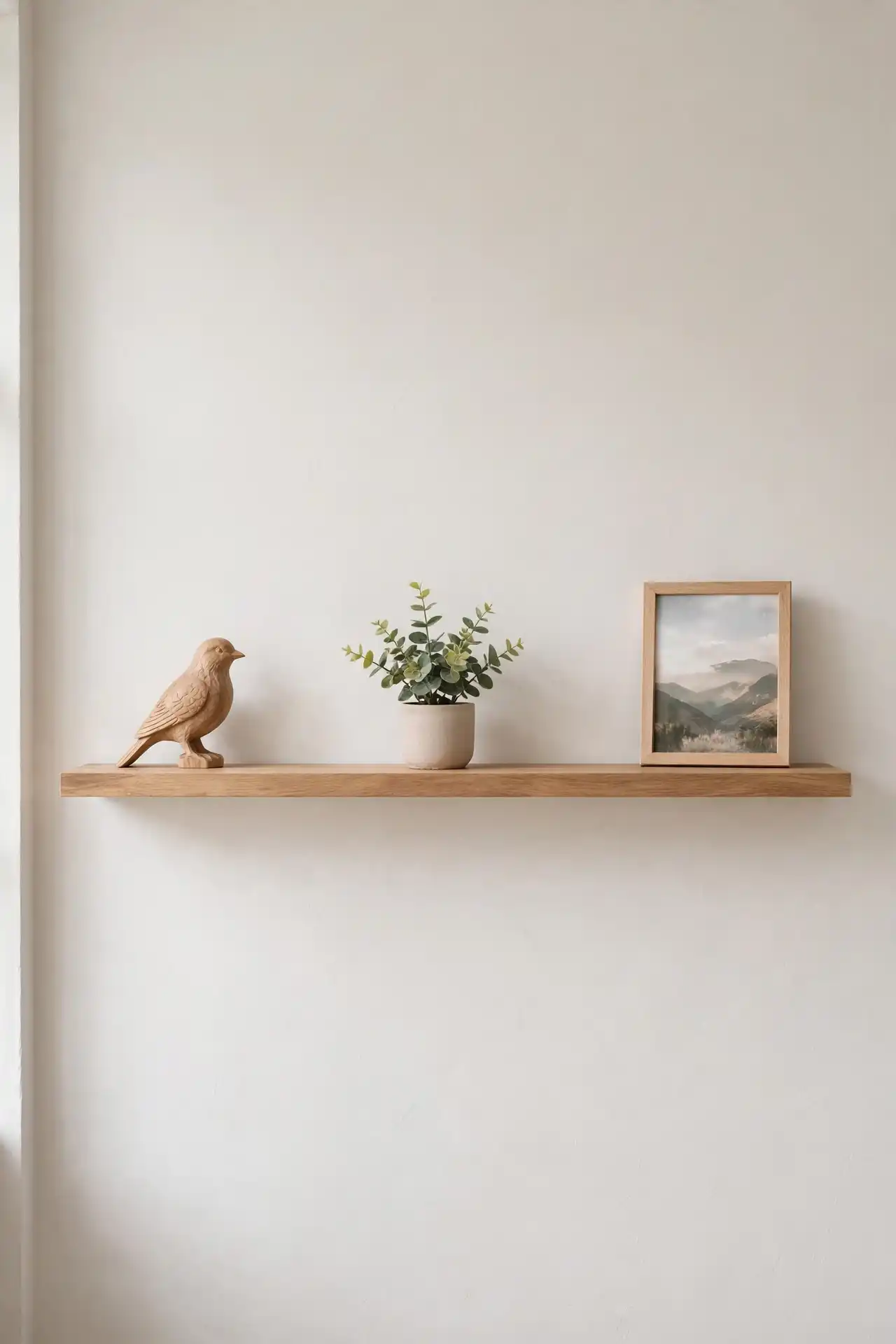
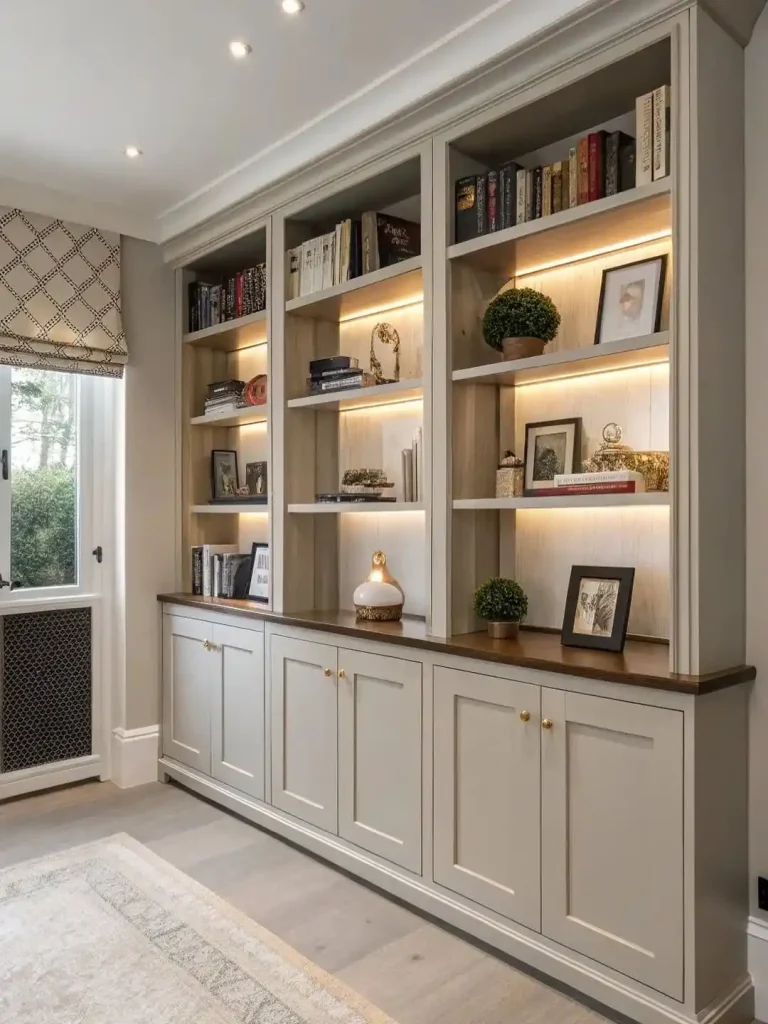
Six objects on a shelf usually reads as clutter. Three objects, spaced out with room to breathe, reads as curated.
Pick one carved piece, one plant, and one object with personal history, like a photo or a small keepsake.
The trick most people miss is height variation, not just object count. If all three pieces sit at the same height, the shelf still looks flat even with fewer things on it.
Prop the photo against something, let the plant sit slightly taller than the carved piece, and leave visible gaps rather than pushing everything to the center. A shelf like this reads as considered from across the room, not just up close.
14. Replace Plastic Bins With Handwoven Basket Storage

Plastic storage bins do their job, but they sit there looking like plastic storage bins.
Handwoven baskets hold the same folded sweaters and spare linens while adding texture instead of visual noise to the corner they occupy.
- Works for blankets, laundry, or shoes
- Stack two sizes for a layered look
- Choose tight weave for durability, loose weave for a lighter feel
- Large Basket For blankets near the foot of the bed.
- Medium Basket For laundry tucked in a corner.
- Small Basket By the door for shoes or keys.
Conclusion
None of these ideas need to happen at once. A room comes together faster when you pick two or three things, live with them, and add more once they feel right instead of trying to finish everything in a weekend.
That’s really what separates afrocentric bedroom ideas for men that look pulled together from ones that feel like a theme, restraint on the small stuff and confidence on the big pieces.
Start with whatever you already have on hand. A worn leather chair, a piece from a trip, a print you’ve been meaning to frame. The room will tell you what it needs next.
Save this list for the next time you’re ready to work on the room.