How to Style a Modern Afrocentric Living Room (Without It Looking Themed)


Most homeowners trying to embrace cultural design end up with a living room that feels like a travel gift shop.
You buy a mask here, a mudcloth pillow there, and suddenly the space feels like a museum exhibit rather than a place to relax.
If you are struggling with how to style a modern Afrocentric living room, you are not alone. The secret isn’t more decor; it is about restraint and intentional layering.
This guide moves you away from “themed” decor and toward a sophisticated, soulful aesthetic. We will strip back the clutter, establish a grounded color story, and introduce artisan elements that actually talk to each other.
You do not need to replace your furniture. By the end of this weekend, your living room will feel cohesive, intentional, and deeply personal.
It takes a shift in how you group your items, but the result is a home that feels like it has a story without shouting it at every guest who walks through the door.
Step #1: Clear your current surfaces of small, mismatched trinkets

You cannot see what a room needs when every surface is covered in tiny souvenirs.
Take every single knick-knack, candle, and small frame off your coffee table, shelves, and side tables.
Place them in a box in another room. You want a completely blank slate.
If you try to style around existing clutter, you will end up fighting the current mess instead of creating a new flow.
Empty surfaces help you see the actual scale of your furniture clearly.
The Clean Slate Checklist
Check these surfaces now:
Step #2: Establish a base palette of deep, earthy neutrals
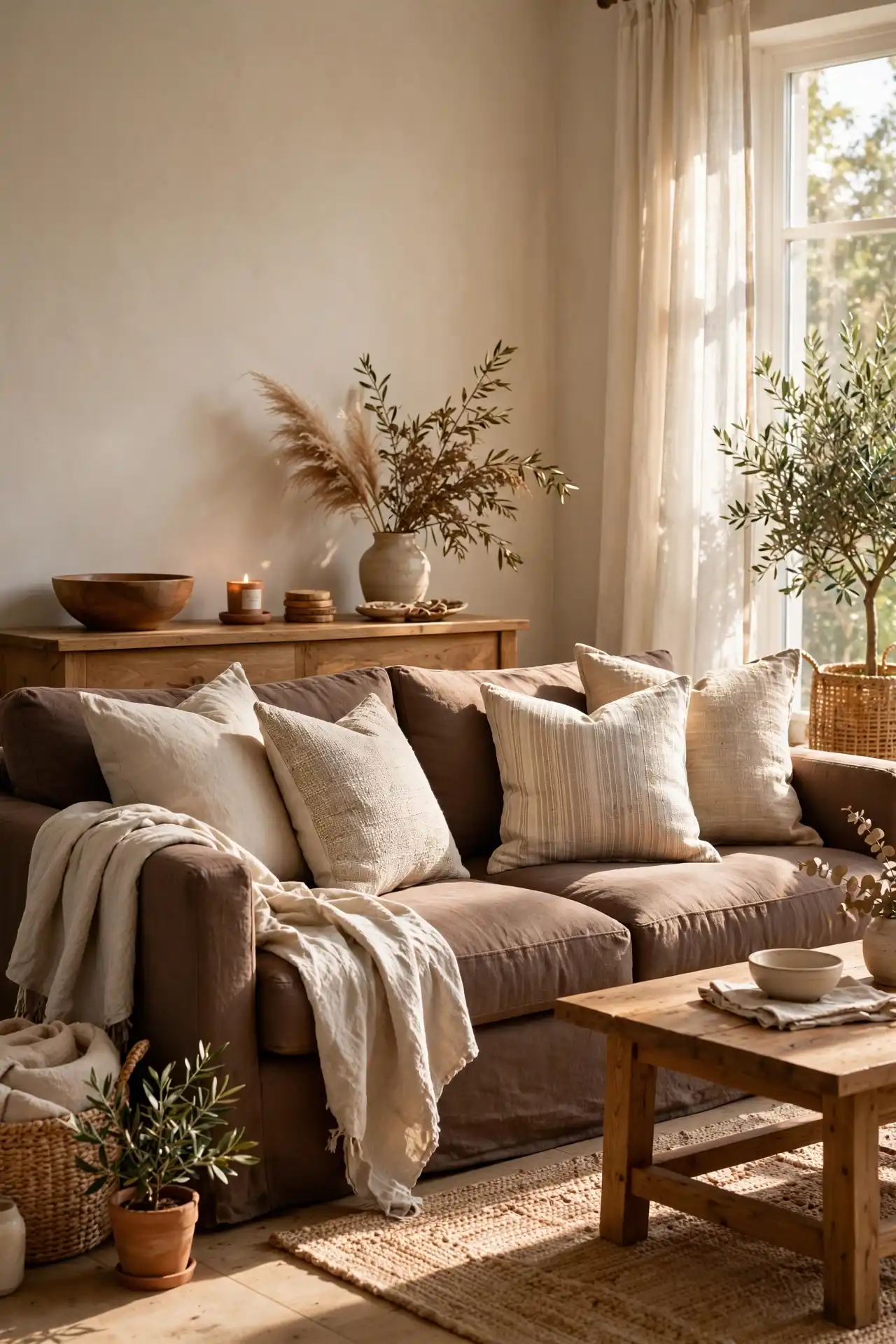
Strong cultural pieces often have bold patterns or rich textures. If your walls or sofa are also loud, the room becomes overwhelming.
Aim for tones like terracotta, warm beige, chocolate brown, or slate gray. Paint a wall or swap your slipcovers to these hues.
This provides a quiet backdrop, which is essential to ensure your statement items pop.
A neutral foundation keeps the eye moving rather than getting stuck on aggressive, clashing wall colors.
Palette Visualizer
Aim for these grounding tones:
Step #3: Anchor the room with one large statement artisan piece
Stop spreading out ten small items and start with one big one.
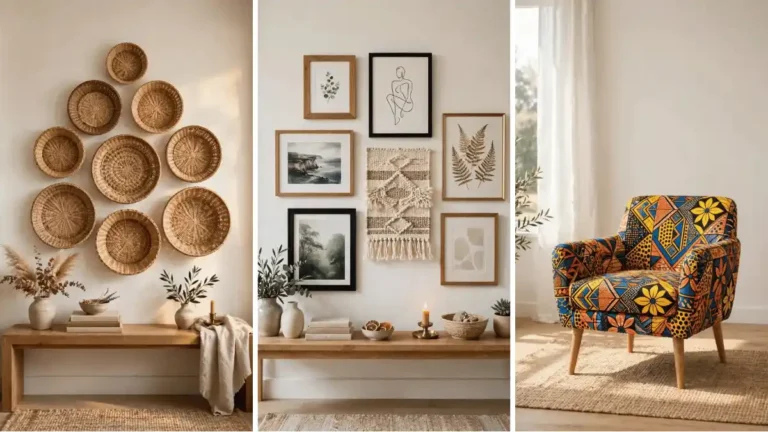
Choose a piece that acts as the heart of the room, such as a large-scale wooden carved wall hanging, a hand-woven statement basket, or an oversized piece of mudcloth textile art.
Place it in the most visible spot, like above the sofa or on the main focal wall.
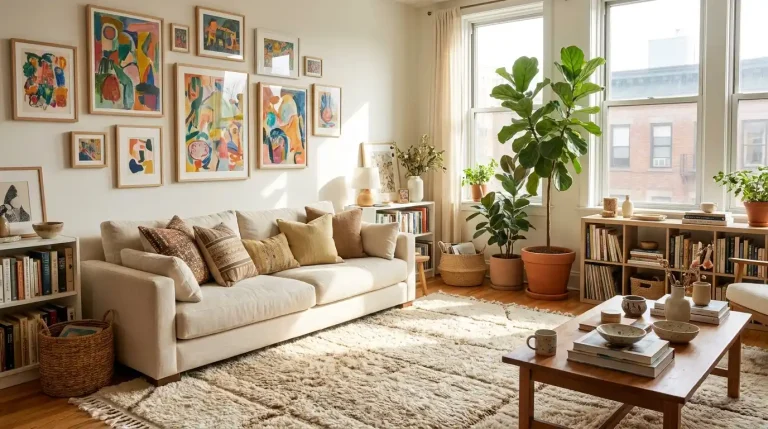
This creates a clear visual anchor, making the rest of the room feel intentional rather than scattered and messy.
Anchor Piece Spotlight
Does your piece have scale? If it looks lost on the wall, it is too small. Use a measuring tape: the piece should cover at least two-thirds of the available wall space.
Step #4: Layer textiles that prioritize texture over busy patterns
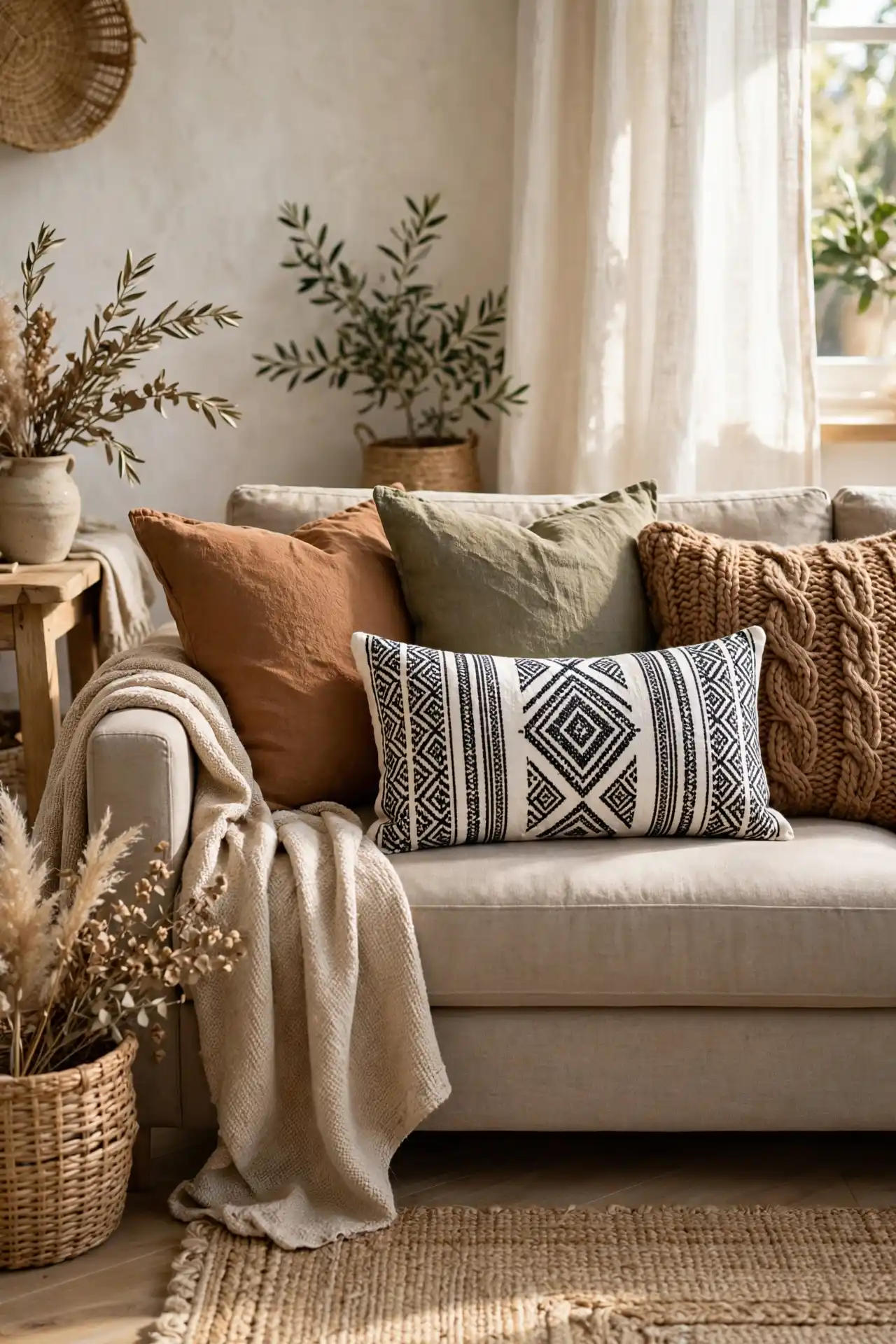
Most beginners try to mix too many prints, which creates visual chaos instead of comfort.
Instead, focus on tactile materials like heavy cotton, raw linen, jute, or chunky wool.
Buy two or three throw pillows in solid, earthy colors that match your palette but vary in fabric feel.
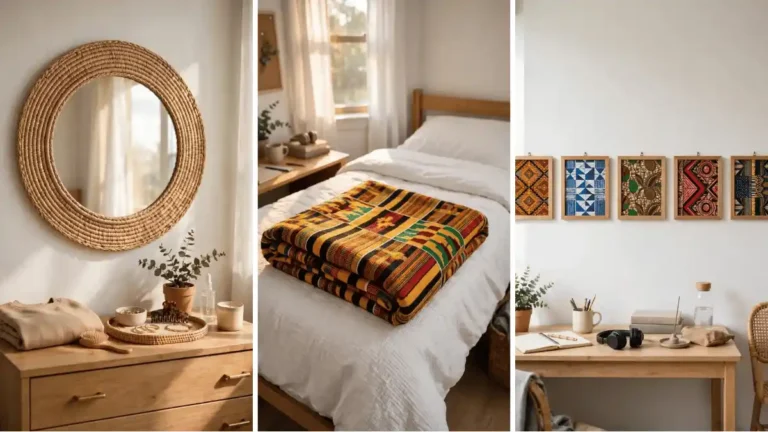
If you must use a pattern, limit it to one item, like a single mudcloth lumbar pillow.
This grounds the seating area without making it look like a fabric showroom.
Texture Check
| Material | Texture Rating |
|---|---|
| Jute | High (Rough) |
| Linen | Medium (Soft) |
Step #5: Mix modern furniture with traditional materials

Keep your actual furniture pieces clean and streamlined. Look for sofas or chairs with straight legs, sharp corners, and matte finishes.
The “modern” part of your look comes from these simple silhouettes. Use your “Afrocentric” elements as the accent, not the main structure.
Place a piece of carved wood art on a metal side table, or set a woven basket on a mid-century modern credenza.
This contrast prevents the room from feeling like a period piece or an costume set.
The Modern-Traditional Mix
For every traditional, organic piece (like a carved bowl), add one clean-lined modern piece (like a metal lamp). Aim for a 1:1 ratio.
Step #6: Style your decor in small, deliberate groupings

Stop spreading your items evenly across the entire length of the mantle or coffee table.
Take your curated accessories and arrange them into tight, intentional clusters.
Use a wooden tray to hold three items of varying heights. Keep at least 12 inches of empty space between your groupings.
Empty space is just as important as the decor itself; it gives the eye a place to rest and keeps the room from feeling crowded.
The “Triangle” Arrangement
Arrange your three items so they form an invisible triangle. This keeps the grouping feeling tight and deliberate, not scattered.
Step #7: Incorporate oversized plants to unify the space

Nature is the final layer that bridges the gap between modern furniture and traditional artisan pieces.
Plants add organic curves and height that soften sharp, contemporary lines.
Choose a floor plant that stands at least 5 to 6 feet tall, such as a Fiddle Leaf Fig or a large Monstera, and place it in a corner or near your main accent chair.
Ensure the pot is 10 to 12 inches wide to ground the plant visually. This adds literal life to the room, preventing it from feeling like a static gallery.
Quick Care Tip
Before you place that plant, check the light. If your Fiddle Leaf Fig is more than 5 feet from a window, it will likely drop leaves. Move it closer to the glass.
Wrap Up
You have successfully moved past the “souvenir” trap and created a room that feels grounded, intentional, and deeply your own.
The next step is to live in it for a week—notice how the light shifts and if you feel a specific area needs just one more touch of greenery or a different book.
If this guide helped you master how to style a modern Afrocentric living room, save it to your home decor board so you can reference it the next time you are out thrifting.