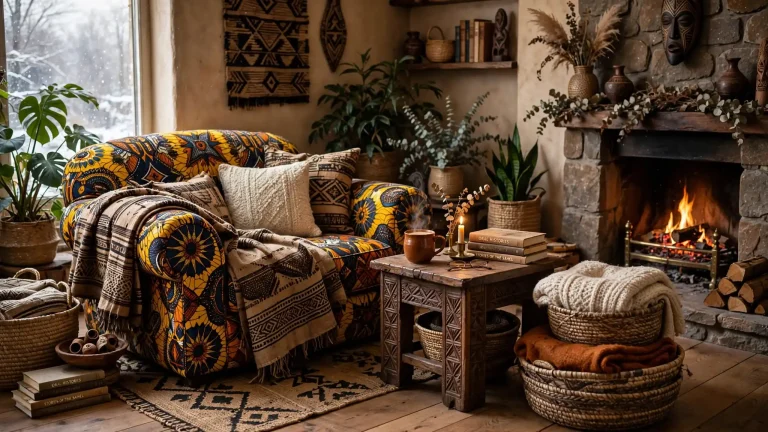
19 Afrocentric Decor Trends Taking Over in 2026

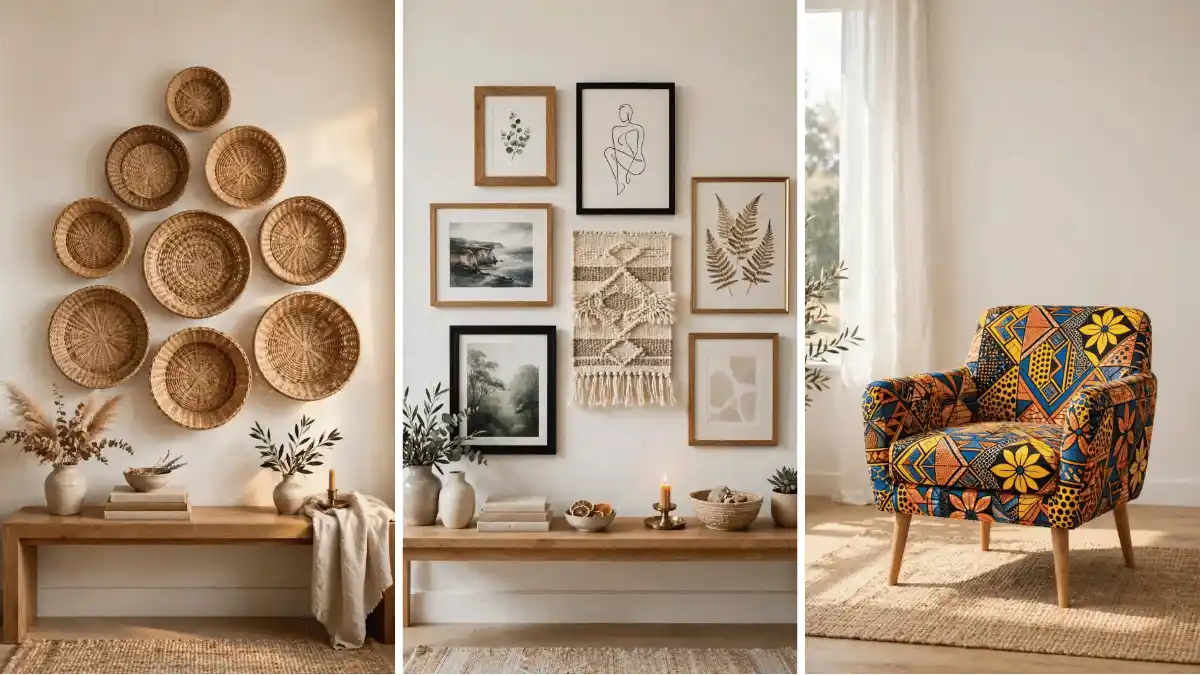
Most decor advice sticks to the same five ideas: buy a plant, add a rug, hang some art. It rarely talks about texture with meaning, or color that comes from actual heritage instead of a trend board. That gap is exactly what’s driving Afrocentric decor trends 2026 into so many living rooms and bedrooms right now.
This isn’t about filling a room with symbols. It’s about carved wood, handwoven baskets, mudcloth patterns, and warm earth tones working together the way they’re meant to, with intention behind each piece instead of one token item shoved in a corner.
The ideas below come from real rooms, not showroom photos. Some take an afternoon.
Others take a season of collecting the right pieces. Either way, you’ll walk away with specific moves you can actually use, not vague suggestions to add some culture to a space. That’s the difference between decorating and just filling shelves.
19 Afrocentric Decor Trends Taking Over in 2026
1. A Carved Stool Doing Double Duty as a Side Table
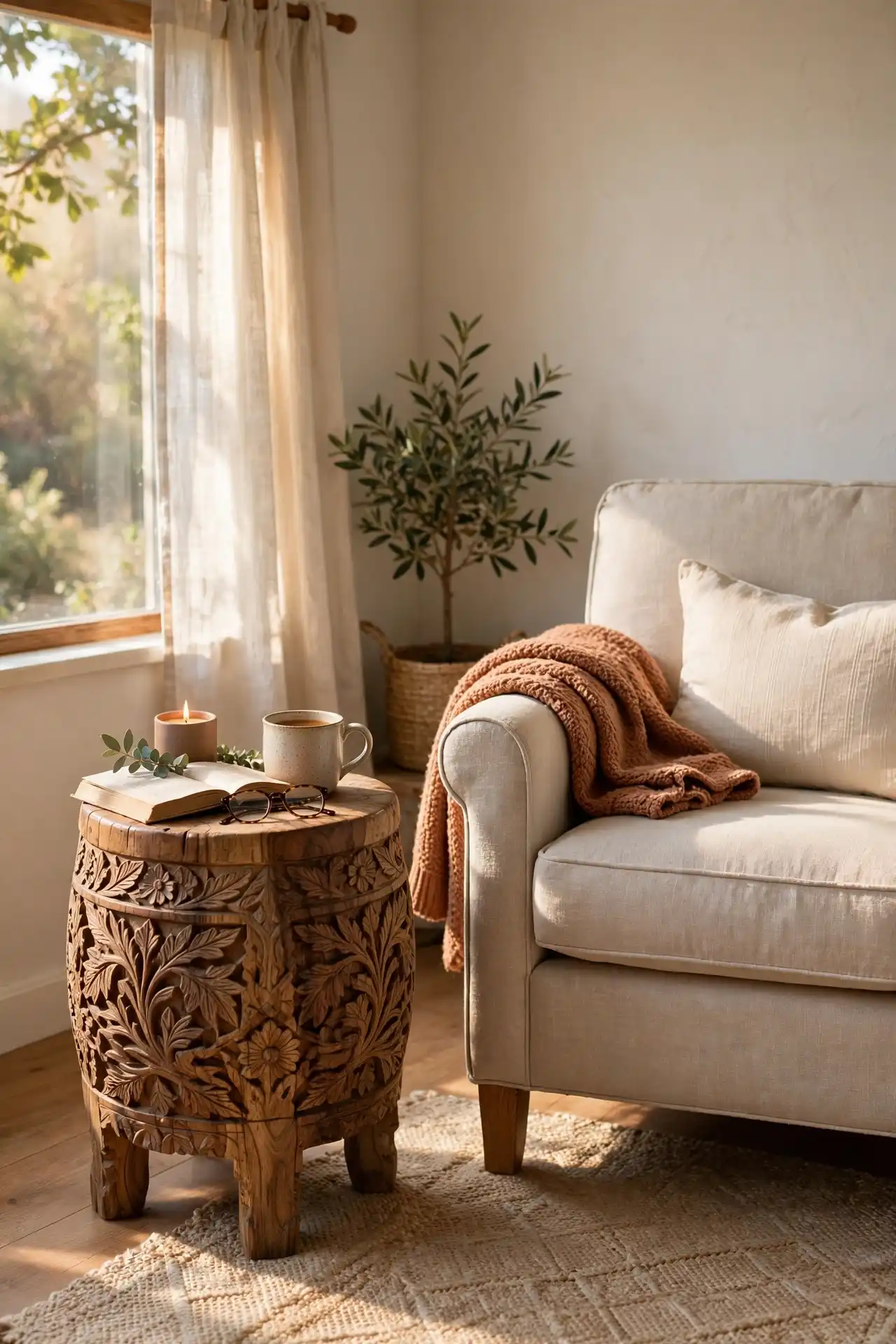
A carved wood stool next to your reading chair pulls its weight in a way a plain end table never does.
The grain, the slight asymmetry, and the worn patina all read as handmade instead of mass produced.
Most people walk past these in a home goods aisle looking for something that matches, when the whole appeal is that it doesn’t match anything perfectly.
Keep the top mostly bare. The stool is already the detail, so let it stand on its own instead of disappearing under clutter.
If you’re placing two in the same room, resist buying a matched pair. Two stools from different makers, slightly different heights, do more work visually than a boxed set ever will.
Older secondhand pieces often have deeper carving than newer reproductions, so a furniture reseller or estate sale is worth checking before a big box store.
2. Mudcloth Pillows Mixed In With Plain Neutral Ones
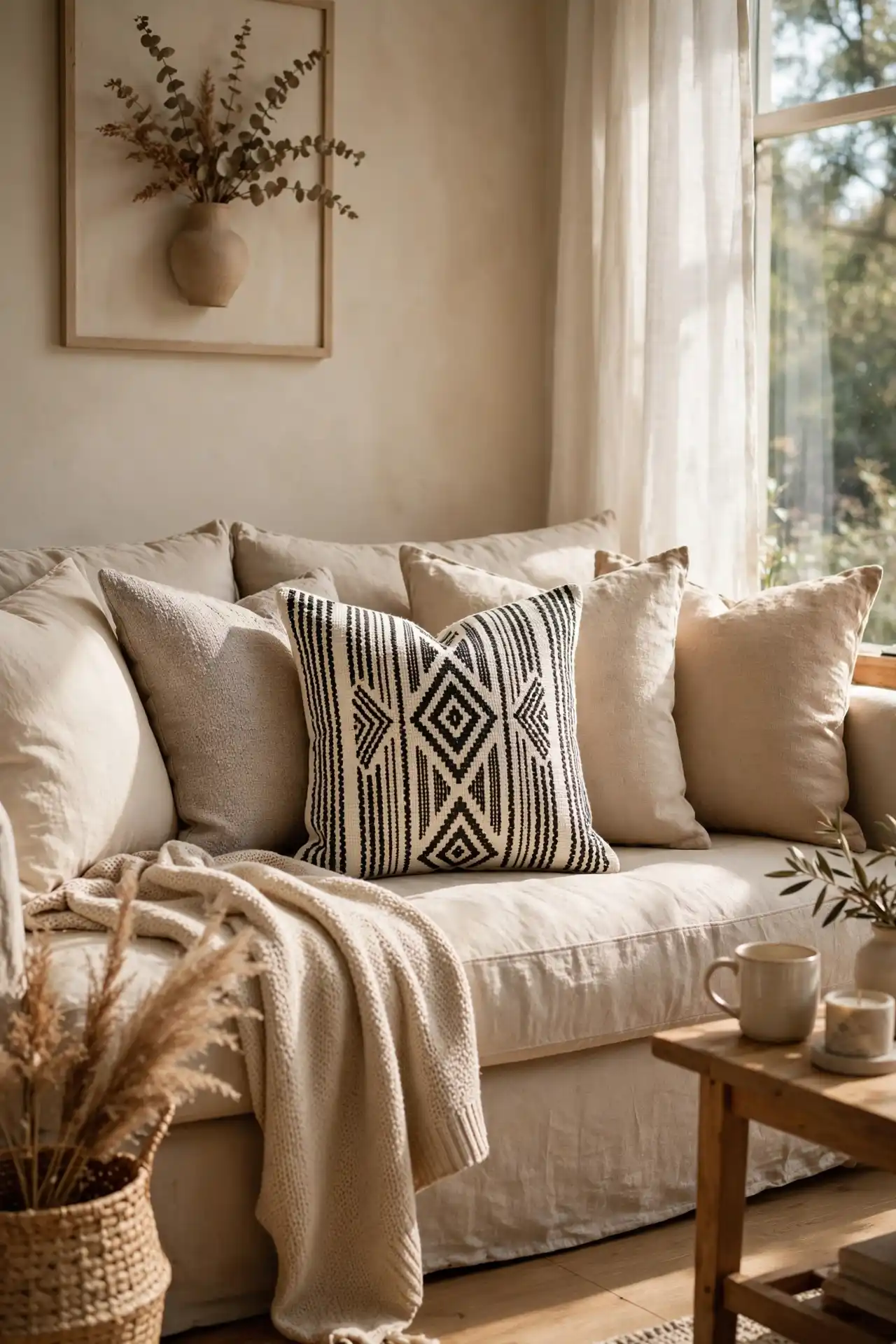
Buying five mudcloth pillows and calling it done is the fastest way to make a print feel like a costume instead of a style choice.
It works better as one voice among several plain, solid ones. The print carries more weight when it has room to breathe, and a couch stacked entirely in pattern tends to flatten out visually instead of standing out.
A simple starting ratio: one printed mudcloth pillow for every two solid pillows in a neutral or warm tone.
Swap the print pillow seasonally if you want variety without buying a full new set.
Cotton canvas or linen solids in cream, rust, or clay work especially well as the supporting pieces, since they echo the undyed background of the mudcloth itself rather than fighting it.
Wash covers separately from solids at first. Mudcloth dye can shift slightly in early washes, and you don’t want it near a light-colored linen throw.
After the second or third wash the color tends to settle, but it’s not worth the risk on a new set.
💡 Quick Tip
Aim for two solid pillows to every one printed mudcloth pillow. It keeps the pattern feeling intentional instead of like a costume.
3. Adire-Dyed Fabric Turned Into a Wall Hanging
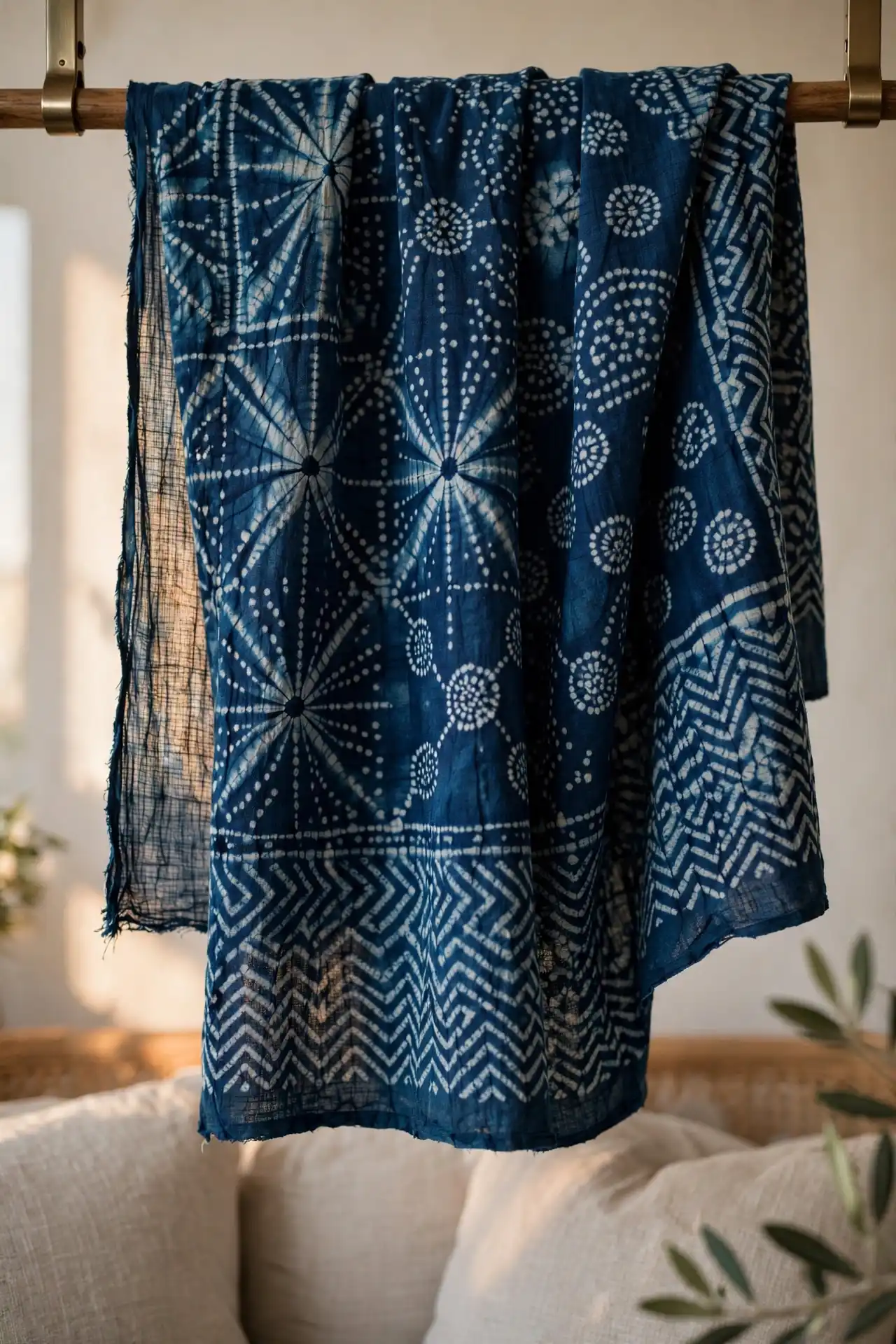
That blank stretch of wall above the couch has been empty since you moved in, mostly because framed art felt too formal for the room.
A length of adire cloth solves it without a single extra nail hole beyond what a curtain rod needs.
The indigo resist-dye patterns carry enough visual weight on their own that you don’t need to add anything else to that wall once it’s up.
Buy a rod slightly wider than the fabric, hem the top edge if it isn’t finished, and hang it the way you’d hang a curtain panel.
Let the bottom edge float a few inches above the furniture below it. If the cloth came folded for shipping, steam out the creases before hanging rather than ironing directly, since heat can sometimes dull the indigo.
Rotate it out with a second piece every few months if you collect more than one. The wall stays interesting without turning into something you have to maintain.
A second smaller adire piece can also work folded over a chair back or draped across an ottoman on the weeks the wall hanging comes down for cleaning.
A bare wall above the couch, empty since move-in day.
One length of dyed cloth on a curtain rod, filling the space with color and texture.
4. Grouping Terracotta Vessels in Odd Numbers

Cluster three terracotta vessels of different heights on a console table or windowsill instead of lining up a matching pair.
Odd numbers and mismatched heights read as collected over time, not bought as a set.
It’s the same logic a florist uses when arranging stems, the eye moves more naturally through an uneven grouping than a symmetrical one.
Start with your tallest piece, then work down in height by roughly a third each time.
Leave one vessel empty, put dried grasses or a single stem in another, and keep the last one bare. That mix of full and empty keeps the grouping from looking staged.
Unglazed terracotta with visible throw lines from the wheel tends to look more intentional here than a perfectly smooth finish, so don’t shy away from pieces with a little texture or unevenness on the surface.
Pick three vessels in noticeably different heights.
Arrange them tallest to shortest, spaced unevenly.
Fill one, leave one bare, add a single stem to the last.
5. Kente Trim on Otherwise Plain Curtain Panels

A lot of people assume working kente cloth into a room means covering a whole chair or an entire panel in the pattern.
A two-inch strip of trim along the bottom or leading edge of a plain curtain panel gets a similar effect with far less commitment.
It also means you can source authentic kente trim, which tends to be more affordable in smaller lengths than trying to find enough yardage to cover a full panel.
Iron-on trim tape works if you don’t sew. Stitched trim holds up longer through regular washing and keeps its color better over time.
If you’re new to sewing, a straight machine stitch along both edges of the trim is all you need, no special hem or finish required.
Stick to one trim color pulled from elsewhere in the room, like a pillow or a rug, so the curtain doesn’t end up competing with everything else you’ve already placed.
Curtains hang at eye level for most of the day, so even a narrow strip of pattern there does more visual work than a similar amount of pattern on a low shelf or side table.
Pull the trim color from something already in the room.
Try iron-on trim first if you’re testing the look.
Covering the whole panel in pattern.
Mixing more than one trim color per window.
6. Building a Gallery Wall Around Black-Owned Art

Most gallery walls start with whatever frames happen to be on sale that week, which is exactly why so many of them end up feeling generic.
Anchoring yours around work from Black-owned shops and independent artists gives the wall a point of view instead of just filling space.
It also means every piece has a story behind it, which matters more than people expect once guests start asking about it.
Start with one larger statement piece as your anchor, then build outward with three or four smaller pieces in a mix of sizes.
Etsy shops, local art fairs, and small print shops are usually more affordable than gallery originals and just as striking once framed well.
Don’t feel pressured to fill the entire wall in one trip, a gallery wall that grows over a year looks more collected than one bought all at once from a single catalog.
What to grab first
7. Woven Raffia Pendant Lights Over a Dining Table

Overhead lighting gets treated as an afterthought in a lot of homes, usually a builder-grade fixture nobody ever swaps out.
A woven raffia or rattan pendant changes the entire feel of a dining table just by being overhead instead of on it, and it does that without competing with anything else on the table itself.
Hang it about 30 inches above the tabletop for a standard eight-foot ceiling, adjusting down slightly for lower ceilings.
The natural fiber softens the light that comes through, which makes even a basic warm bulb look more flattering at dinner.
Pair it with a plain tablecloth or bare wood table so the fixture stays the clear focal point of the room.
A woven pendant softens light and becomes the room’s focal point, so keep the table setting simple underneath it.
8. Ankara Print on Just One Accent Chair

Reupholstering an entire sofa in Ankara print is a bigger financial and visual commitment than most rooms actually need.
One accent chair does the job instead, giving you all the color and pattern impact without overwhelming the space or locking you into a look you might tire of in a year or two.
A secondhand chair frame in good structural condition, reupholstered by a local seamstress, usually costs less than buying new Ankara-print furniture outright.
It also means you can choose your exact fabric rather than settling for whatever a retailer happens to carry that season.
| Full Sofa Reupholstery | One Accent Chair |
|---|---|
| Higher cost, harder to change later. | Lower cost, easy to swap out. |
| Print can overwhelm the whole room. | Print stays a focal accent, not the whole scene. |
9. Sculptural Carved Pieces, Used With Restraint

Carved masks and figural sculpture carry real cultural and historical weight, so they deserve more thought than being treated as generic wall filler.
The best approach is sourcing thoughtfully, buying from artisans or reputable dealers who can speak to a piece’s origin, and displaying it with intention rather than as one item among a cluttered shelf.
One well-placed carved piece on a dedicated shelf or pedestal, with space around it, reads as respected and considered.
Crowding several together in a busy corner tends to flatten their individual presence and can come across as decoration for decoration’s sake rather than genuine appreciation.
10. Basket Walls With Deliberate Sizing

A wall of woven baskets looks intentional when the sizes follow a pattern and falls apart visually when they don’t.
Random sizing scattered across a wall reads as leftover storage baskets someone decided to hang up, rather than a designed display.
Pick three or four sizes and repeat them in a rhythm, largest in the center or along one edge, tapering outward.
Hanging hardware matters more than people expect here, a basket that sags or tilts within a few weeks undoes the whole effect, so use a proper picture hook rated for the basket’s weight rather than a small nail.
⚠️ Watch Out
Skip small nails for larger baskets. Use a weight-rated picture hook so nothing sags or tilts within the first few weeks.
11. Swapping All-White Walls for One Warm Earth-Tone Wall
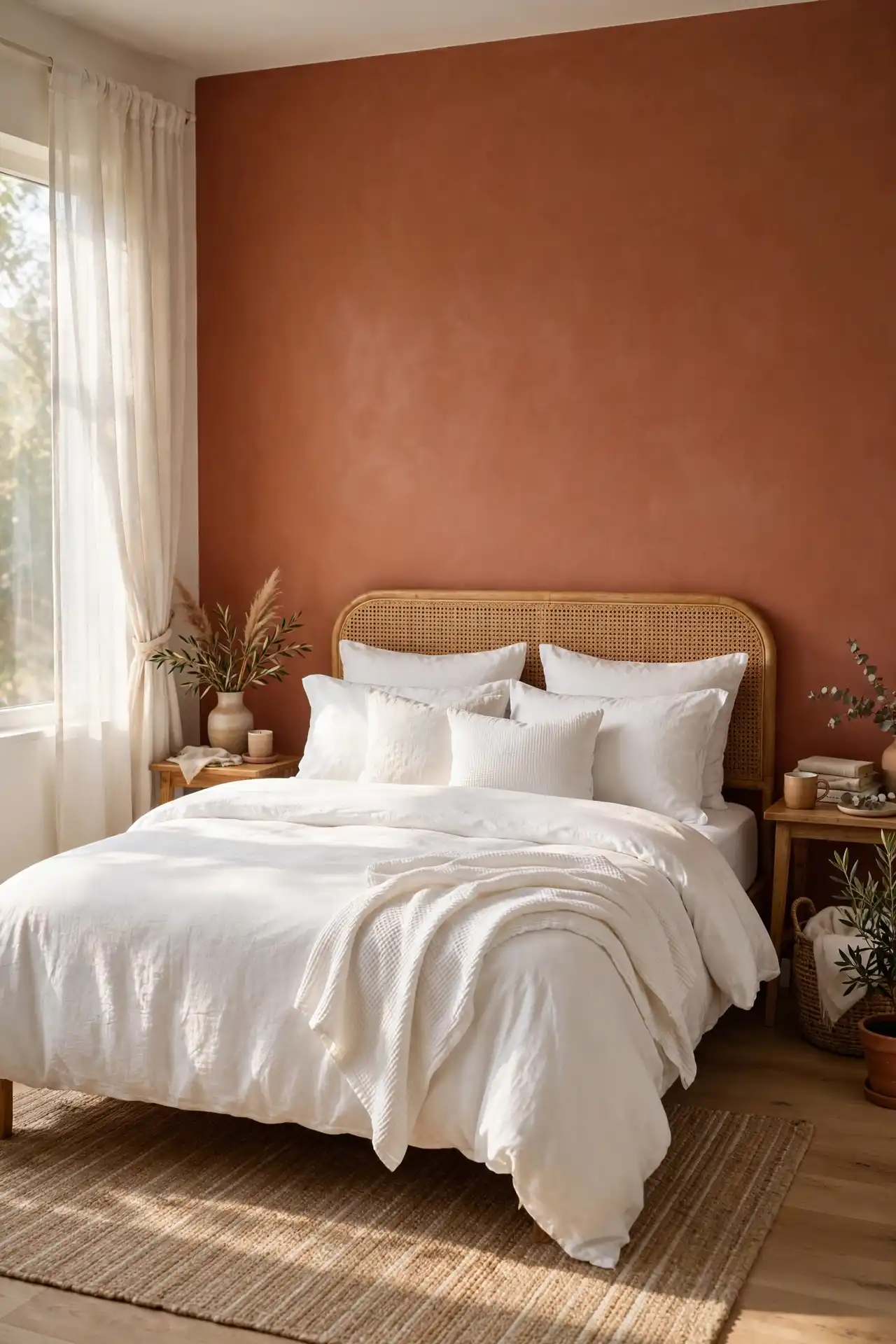
All-white walls photograph well but rarely feel lived in, especially once the furniture and art are meant to carry all the warmth on their own.
Painting just one wall in a warm terracotta, clay, or ochre tone gives the room an anchor color without the commitment of repainting the whole space.
Choose the wall that gets the least direct sunlight for the boldest color, since strong light can wash out warm tones throughout the day.
The wall behind a headboard or behind an open shelving unit works especially well, since furniture in front of it breaks up the color rather than leaving one flat block.
Flat white walls with no anchor color anywhere in the room.
One warm terracotta wall giving the whole room a grounded feel.
12. Brass and Copper Accents Layered In Slowly
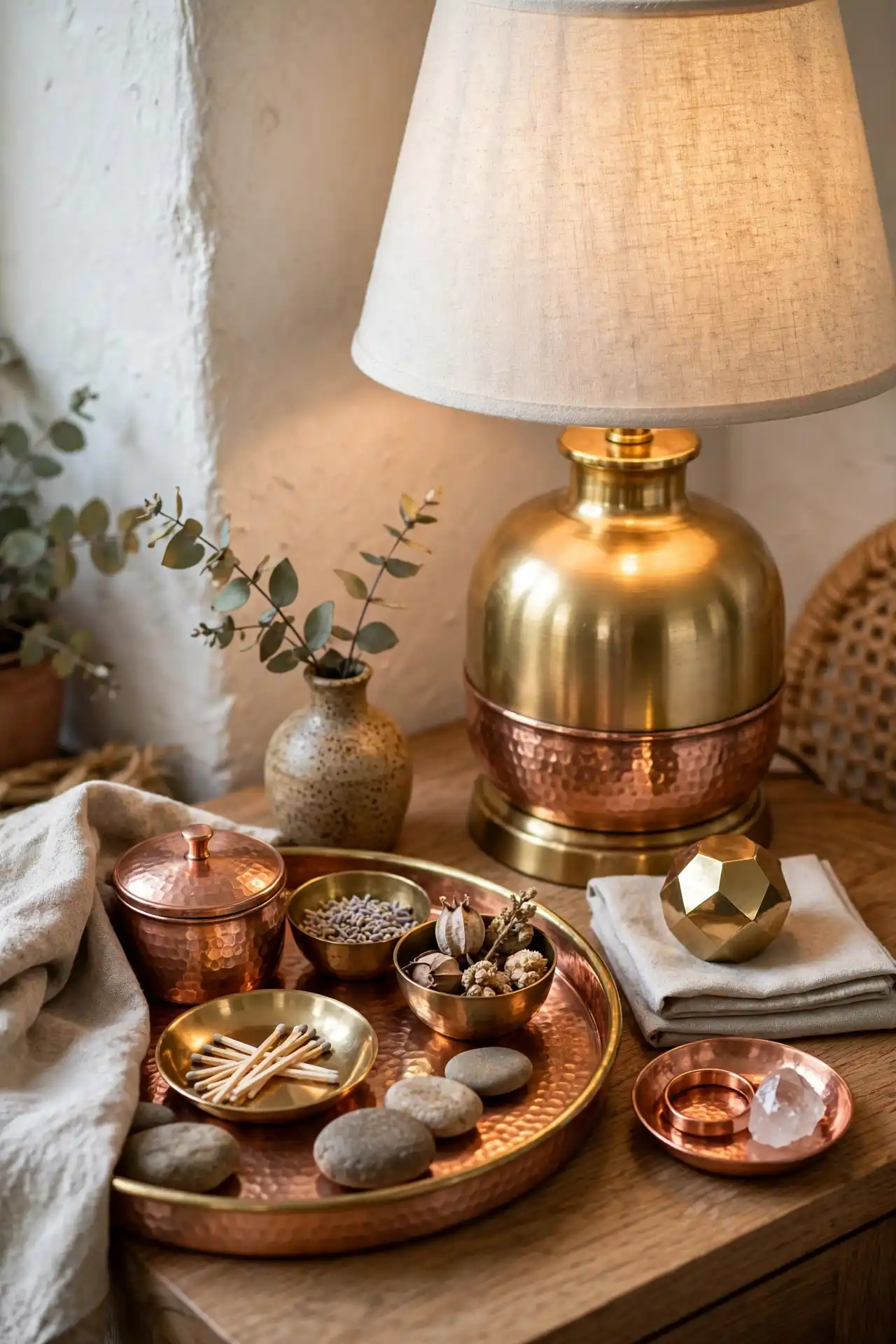
Buying every metal accent in matching brass at once tends to look like a showroom display rather than a home that’s grown over time.
Layering pieces in slowly, a lamp base here, a set of drawer pulls there, lets the metal tones vary naturally, which reads as more collected and less staged.
Mixing brass and copper in the same room actually works better than matching them exactly, since the slight tonal difference keeps things from looking too uniform.
Start with one larger piece, live with it for a few weeks, then add smaller accents once you know how the light in the room reflects off it.
Start with one larger brass or copper piece, like a lamp.
Live with it a few weeks before adding smaller accents.
Mix brass and copper rather than matching tones exactly.
13. Natural Fiber Rugs Layered Under a Patterned Throw Rug
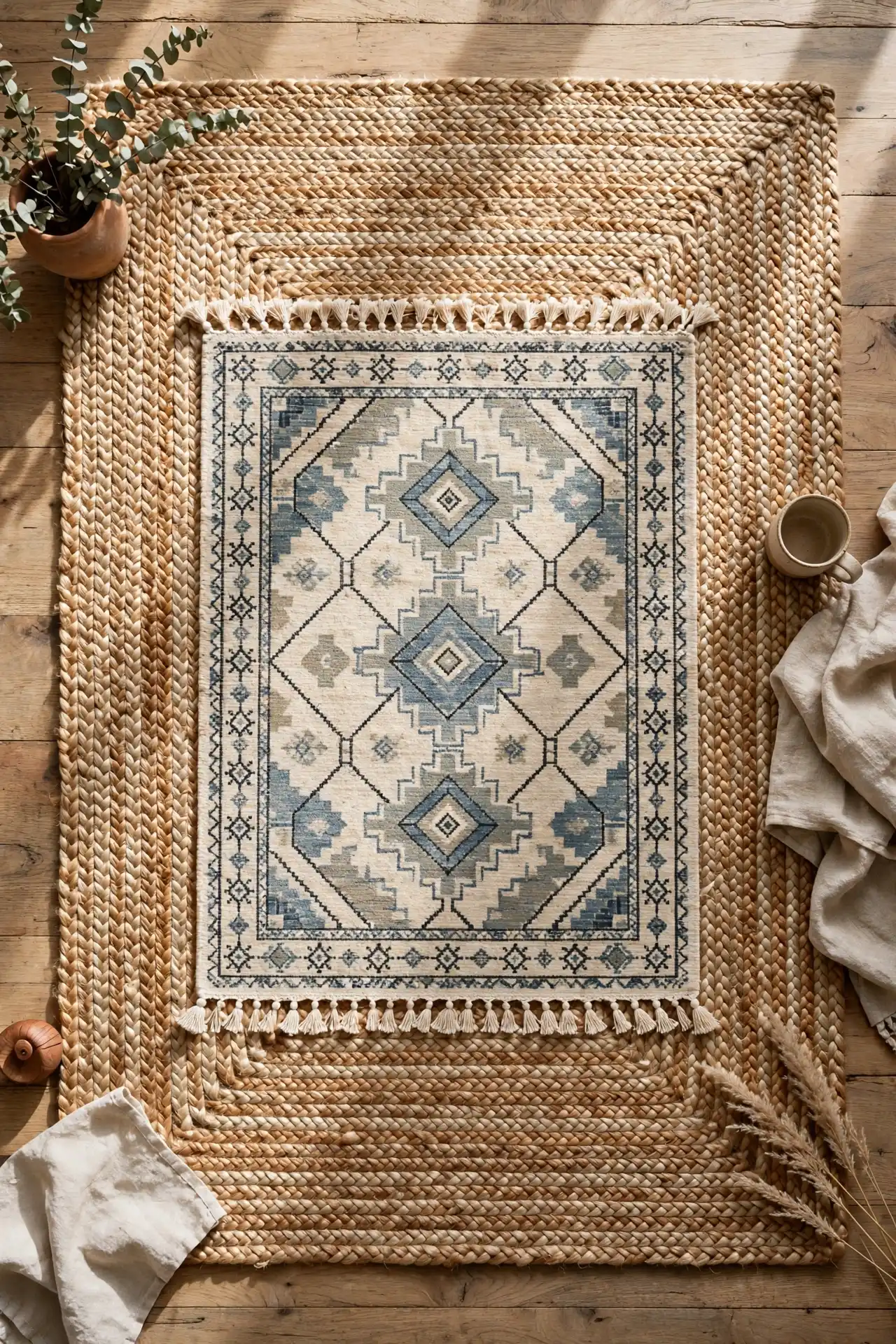
A single large patterned rug can feel heavy in a small room, especially in a rental where you can’t commit to wall-to-wall flooring changes.
Layering a smaller printed rug over a larger jute or sisal base rug solves that, giving you pattern without covering the whole floor in it.
Size the base rug to reach close to the walls, then center a smaller printed rug on top, offset slightly rather than perfectly centered.
This layered look also hides wear on a base rug that’s seen better days, since only the edges show underneath the top layer.
Size the jute base rug close to the walls.
Offset the top rug slightly instead of centering perfectly.
Matching both rugs in size exactly.
Using two heavily patterned rugs together.
14. Backing a Single Family Photo With Fabric Instead of a Mat
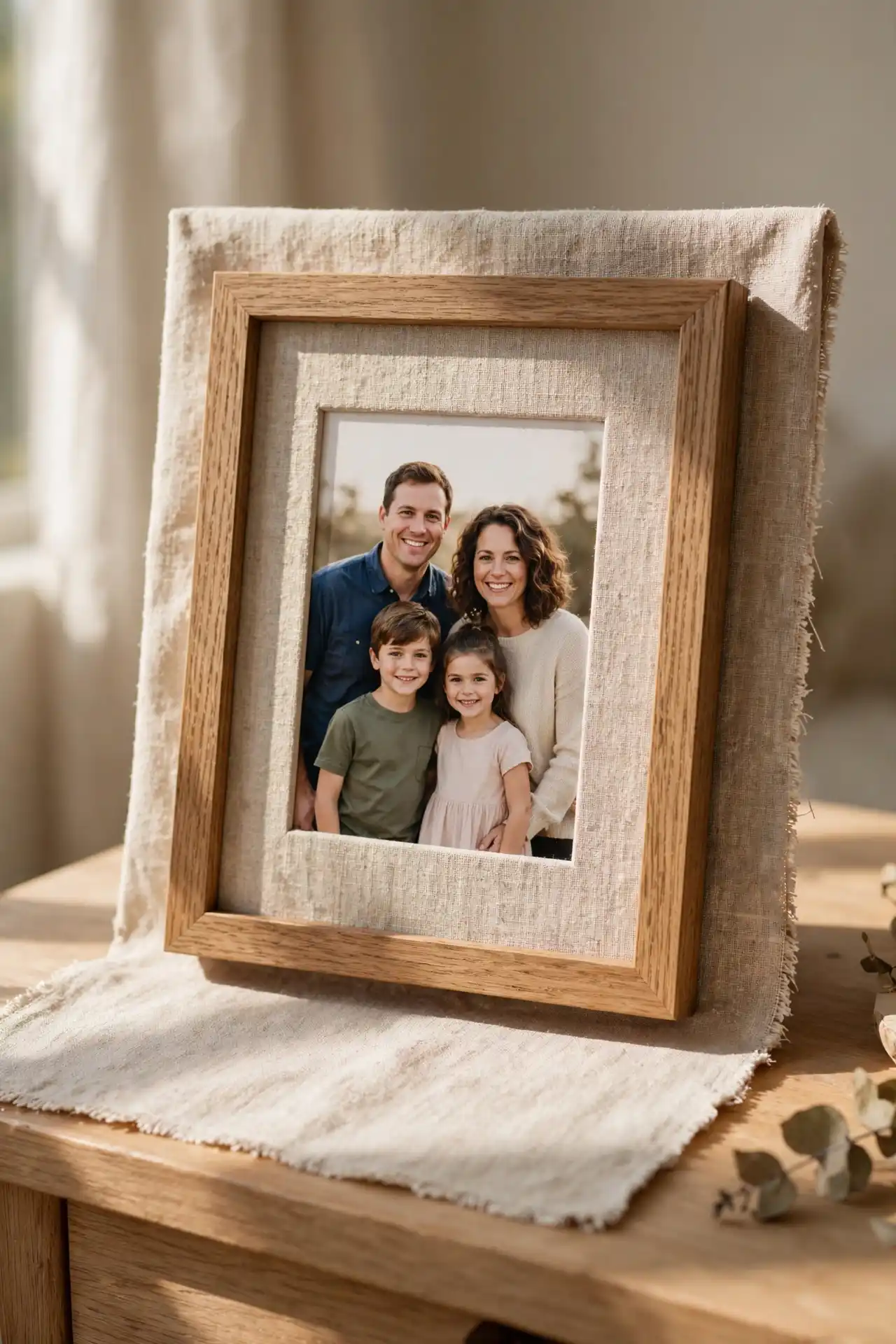
A single enlarged family photo, mounted on a textile background instead of a standard paper mat, sits differently than anything framed conventionally.
The fabric edge showing around the photo softens the whole piece and ties it into the room’s other textiles rather than making it feel like a separate framed object.
Choose a low-key print or solid weave so the fabric supports the photo rather than pulling focus from it.
A local frame shop can usually mount fabric behind glass for you if you don’t want to attempt it yourself, and the cost difference from a standard mat is often smaller than expected.
Before you take it to a frame shop
15. African-Print Planters for Everyday Houseplants
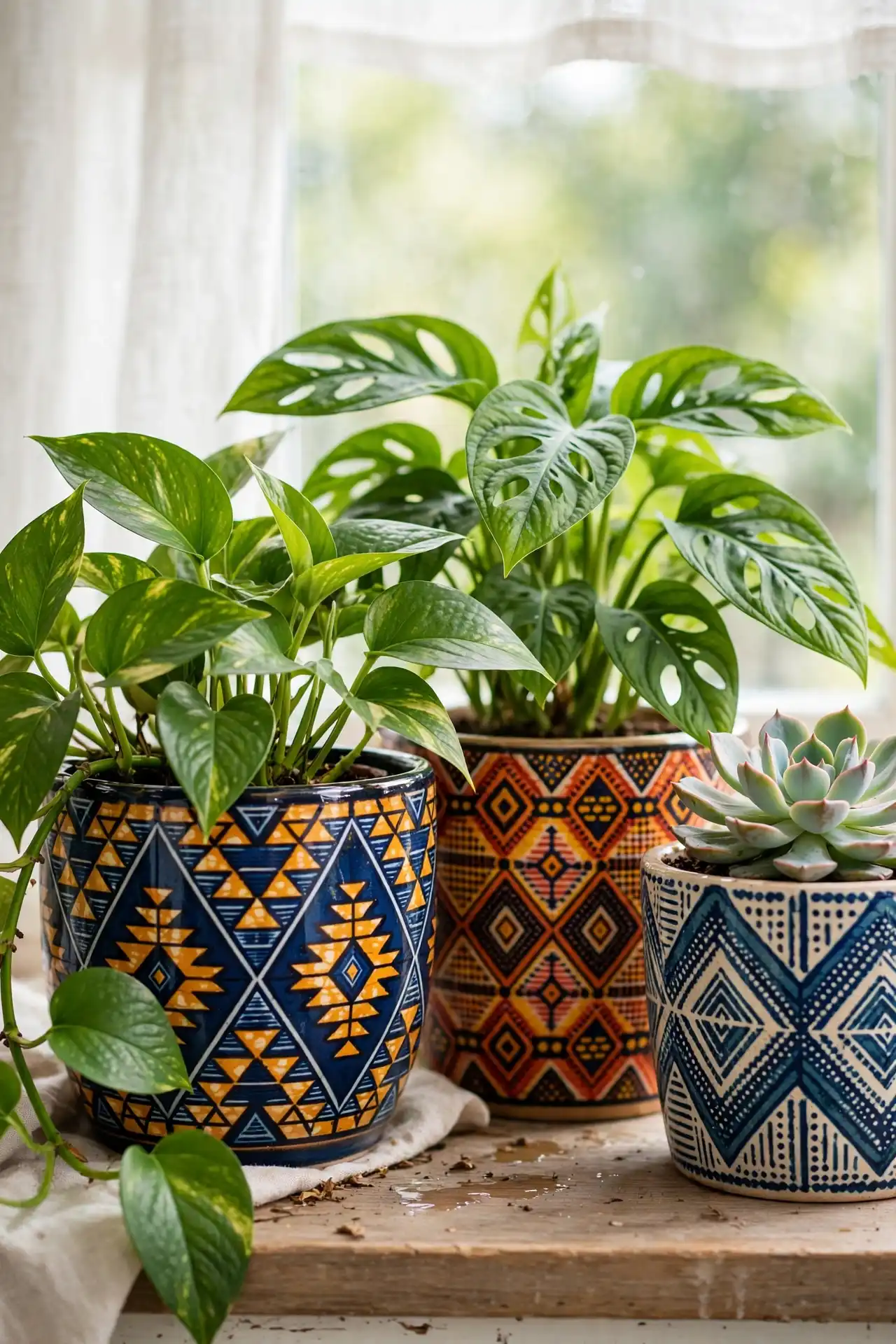
The plants you already own, the pothos on the windowsill, the snake plant in the corner, get a completely different presence just by changing what they’re sitting in.
Swapping plain plastic nursery pots for African-print ceramic or fabric-wrapped planters is one of the cheapest updates on this entire list.
Keep the plant itself in its plastic grow pot and slide that into the printed planter as a cachepot, rather than repotting directly.
It makes watering easier and means you can rotate planters between plants whenever you want a different look.
16. Swapping Solid Lampshades for Handwoven or Printed Ones

A plain white lampshade does its job but adds nothing to the room once the lamp is off during the day.
Swapping it for a handwoven raffia shade or one wrapped in printed fabric turns the lamp into a daytime piece too, not just a light source at night.
Most standard lamp bases accept a range of shade sizes, so this is usually a swap rather than a full lamp replacement.
Look for a shade with a diameter close to your current one so the proportions still look balanced against the base.
| Solid White Shade | Handwoven or Printed Shade |
|---|---|
| Blends into the room, no daytime presence. | Adds texture and color even with the lamp off. |
| Widely available, low cost. | Slightly higher cost, easy swap onto existing base. |
17. Woven Room Dividers Used as Soft Privacy Screens

Open-plan apartments rarely give you a real wall between the living area and a home office corner, which usually means everything stays visible all the time.
A woven raffia or bamboo room divider solves that without construction, adding a section-off point that still lets light and air move through the slats.
Look for a folding screen with at least three panels so it can angle slightly instead of standing flat against a wall.
It also works standing behind a reading chair, turning one open corner of a room into something that feels like its own small space.
A woven folding screen sections off a corner without blocking light, so open layouts still feel private.
18. Styling a Console Table With Three or Four Meaningful Objects

A console table covered in a dozen small items usually ends up looking cluttered rather than curated, no matter how nice each individual piece is.
Pulling it back to three or four objects, each with actual meaning, gives every piece room to be noticed instead of getting lost in the crowd.
A carved bowl, a framed photo, a single vessel, and maybe a small stack of books is plenty.
Vary the height of each object rather than lining them up at the same level, and leave visible empty space on the table itself rather than filling every inch.
📌 Good To Know
Three to four objects at varied heights, with visible empty space between them, reads as curated instead of cluttered.
19. Taking African-Print Cushions Out to the Patio or Sunroom

Printed cushions don’t have to stay confined to the living room. A patio bench or sunroom seat covered in bold African-print outdoor fabric brings the same warmth outside, and it makes an overlooked space feel just as considered as the rooms guests actually see.
Look for outdoor-rated fabric specifically, since standard cotton prints will fade and wear quickly in direct sun and weather.
Bring cushions inside during heavy rain even with weatherproof fabric, since the foam inside can hold moisture longer than the fabric itself dries.
Conclusion
None of these ideas ask you to redo a whole room in a weekend. That’s the point.
Afrocentric decor trends 2026 work best layered in slowly, a stool here, a swapped lampshade there, until the space feels collected rather than staged all at once.
The pieces that mean the most are usually the ones with a story behind them, where they came from, who made them, why you picked that one over the dozen others.
Start with whichever idea on this list already fits something you own, then build outward from there.
Save this list for whenever you’re ready to add the next piece.