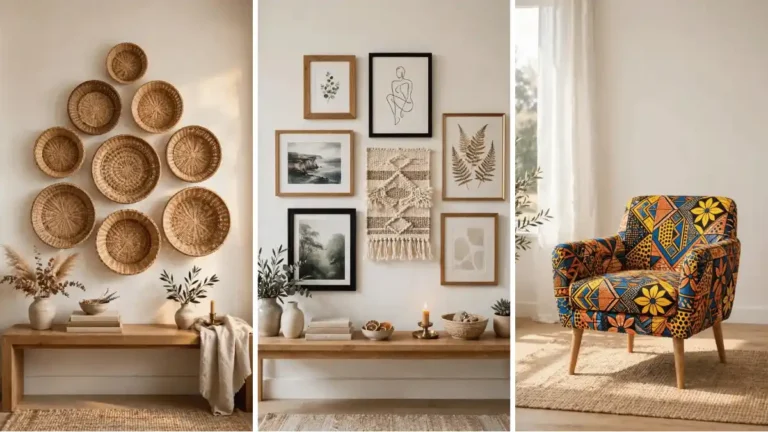
20 Afrocentric Wedding Decor Ideas for a Celebration Rooted in Heritage

Most wedding decor boards start to look the same after a few scrolls. Same eucalyptus, same fairy lights, same neutral linen. If you are planning a wedding that honors African heritage, that generic template leaves out the fabric, symbols, and traditions that actually mean something to your family.
Good afrocentric wedding decor ideas do not mean piling every pattern onto one table.
They mean choosing a few pieces on purpose: a textile that carries real history, a symbol your grandmother would recognize, a color palette pulled from a specific region instead of a Pinterest trend report.
This list walks through fifteen… actually twenty ways to bring that in, from table settings to send-off details.
Some ideas cost almost nothing. Others take a weekend of planning. All of them are things you can actually source and set up yourself, without needing a decorator who has never worked with kente, adire, or Ashanti gold before.
20 Afrocentric Wedding Decor Ideas for a Celebration Rooted in Heritage
1. Kente Cloth Runners and Sashes in Your Wedding Colors

Kente cloth carries centuries of Ghanaian weaving history, and even a narrow strip changes a plain white tablecloth in seconds.
Every pattern and color combination actually means something, so it is worth asking the seller what you are buying instead of picking based on looks alone.
Most couples make the mistake of covering the whole table in kente, which ends up looking busy instead of intentional.
Skip the pre-made bows and buy kente by the yard from a textile seller who can tell you which region the pattern comes from. Cut it into:
2. Build an Ankara-Print Ceremony Arch, Step by Step

Start with a bare metal or wood arch frame, then wrap it in Ankara fabric before adding a single flower.
Most florists default to greenery first and fabric as an afterthought, which buries the pattern under leaves and stems.
Flipping that order, fabric first, flowers second, keeps the print visible in every photo instead of hidden behind foliage.
Buy fabric in three coordinating prints so the arch has depth instead of one flat pattern.
Wrap the frame diagonally, pin the seams on the back side, then layer flowers or greenery only at the top third. This also cuts your floral budget since you are not covering the entire structure in stems.
Choose the Frame
Rent or buy an 8-foot round frame. Metal holds shape much better than PVC in the wind.
Wrap Fabric
Wrap with about 6 yards of Ankara, pinning every 12 inches on the back.
Anchor Florals
Anchor florals only at the top third, leaving the rest of the fabric bare.
3. Turn Calabash Gourds Into Centerpiece Vessels
Plastic centerpiece bowls look fine in photos and forgettable in person. They also tend to disappear once the reception ends, tossed out with the rest of the disposable decor nobody remembers a year later.
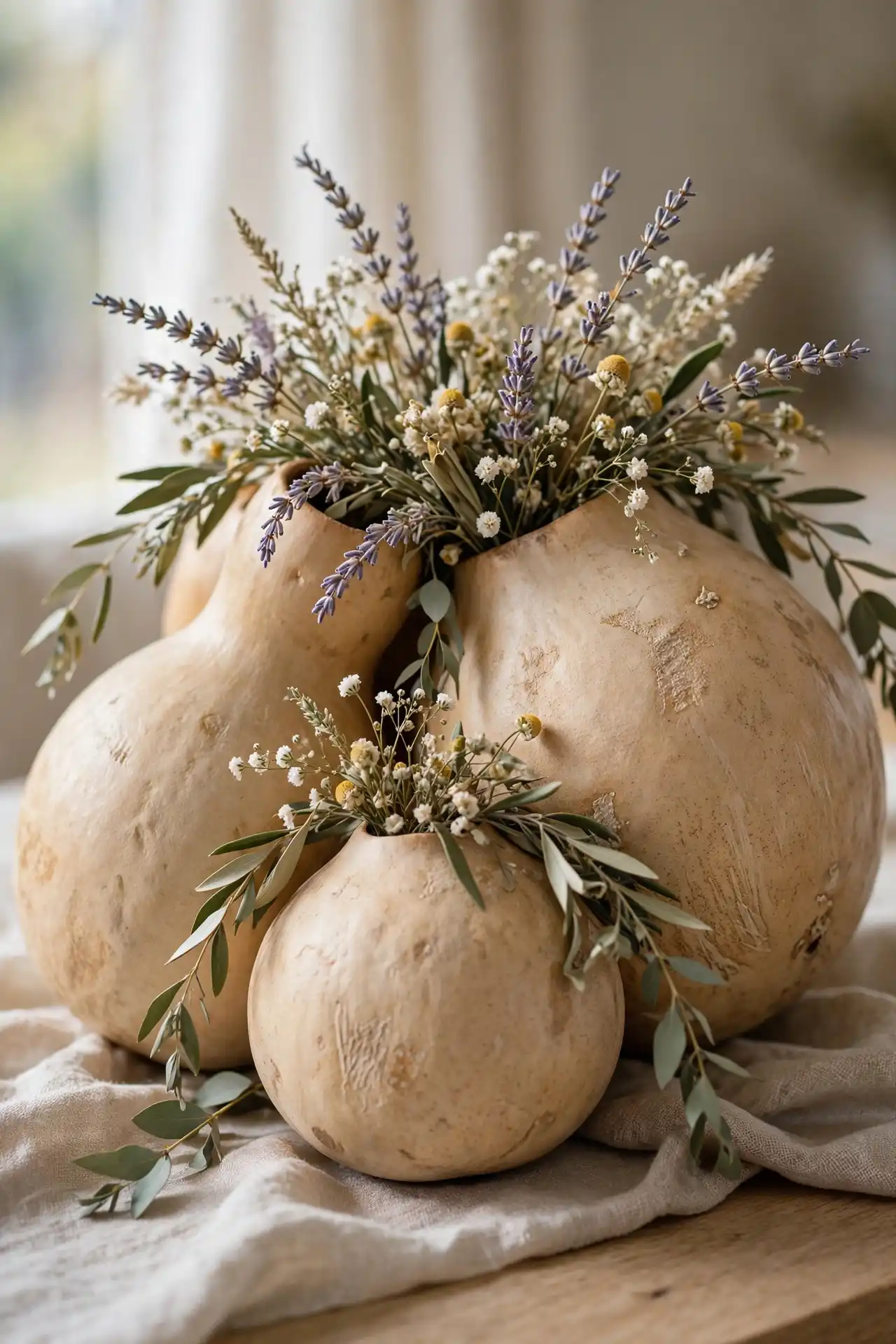
A calabash gourd, on the other hand, is something a guest or the couple can actually keep on a shelf afterward.
Dried calabash gourds, cut in half and sanded smooth, hold flowers, candles, or even small fruit without needing a liner.
Buy them unfinished from an African grocery or import shop, then seal the inside with a light coat of varnish so nothing seeps through.
Group three different sizes down the center of each table instead of one large gourd per setting, it reads as more intentional and less like a single prop.
A generic glass or plastic bowl bought last minute from a party store.
A sanded calabash gourd, sealed and grouped in three sizes down the table.
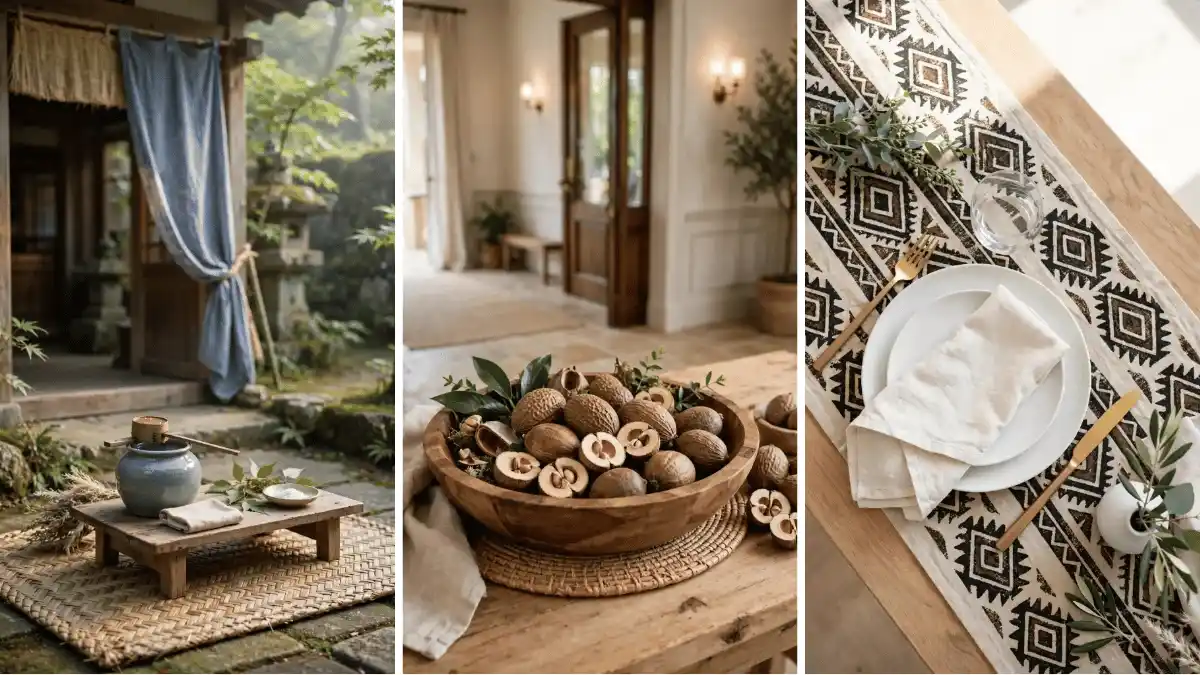
4. Set a Kola Nut Table to Honor Your Elders

Not every ceremony needs a drink station to feel formal. A kola nut table gives guests something quiet and visual to notice before the ceremony even begins, and it signals respect for the elders in a way that a flower arrangement alone cannot.
Families who skip this often say afterward they wish they had included it. A kola nut table, set near the entrance or close to the elders’ seating, gives guests something to see and touch before the ceremony starts.
Use a wide wooden bowl, split a few nuts open so the color shows, and place a small card explaining the tradition for guests who are new to it.
📌 Good To Know
Place the kola nut table where guests pass through before being seated, not tucked in a corner where it gets missed entirely.
5. Layer Mud Cloth Runners Under Modern Place Settings
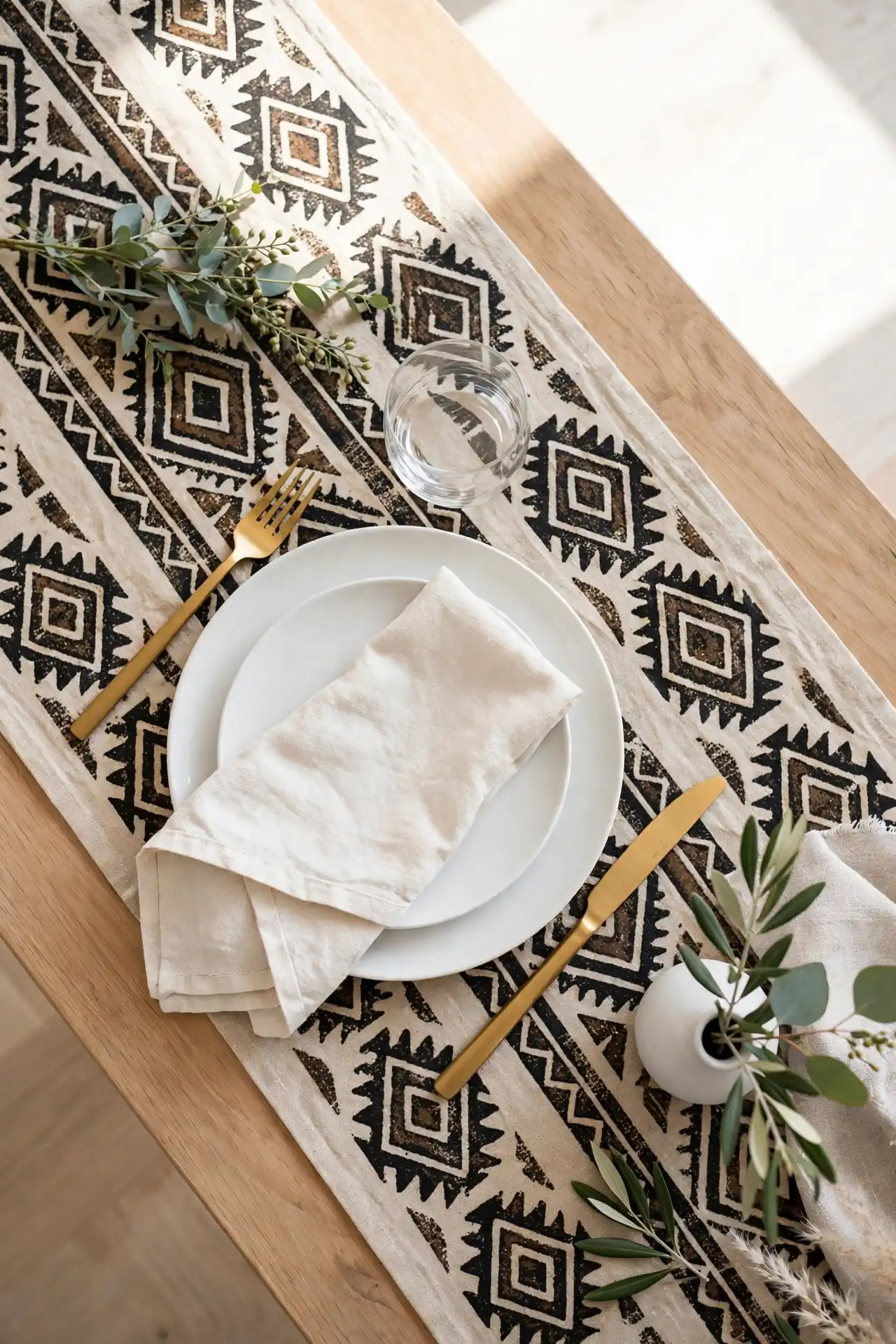
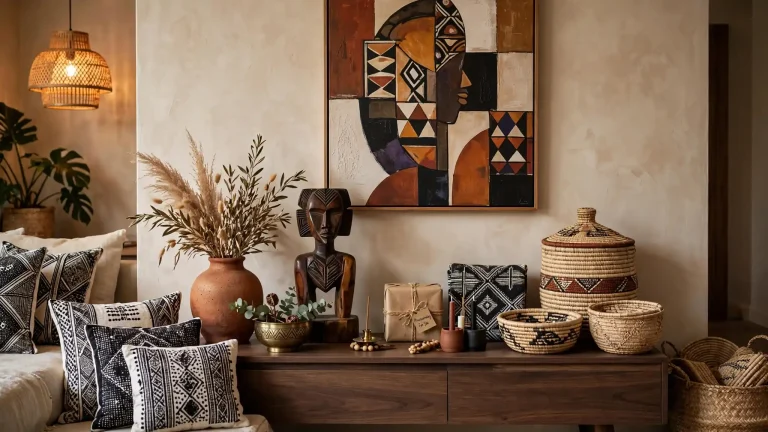
Bogolan, known outside Mali as mud cloth, reads as heavy and rustic on its own but calm and grounded under a clean white plate.
The mistake most people make is treating it like an accent piece stacked on top of everything else, when it actually works best as a quiet base layer underneath a simpler setting.
Layer a narrow mud cloth strip diagonally across a plain runner instead of covering the whole table in pattern.
Keep the flatware simple, gold or matte black, so the cloth stays the focal point instead of competing with shiny place settings. This combination photographs well in both daylight and low reception lighting.
6. Cowrie Shell Place Cards and Napkin Rings
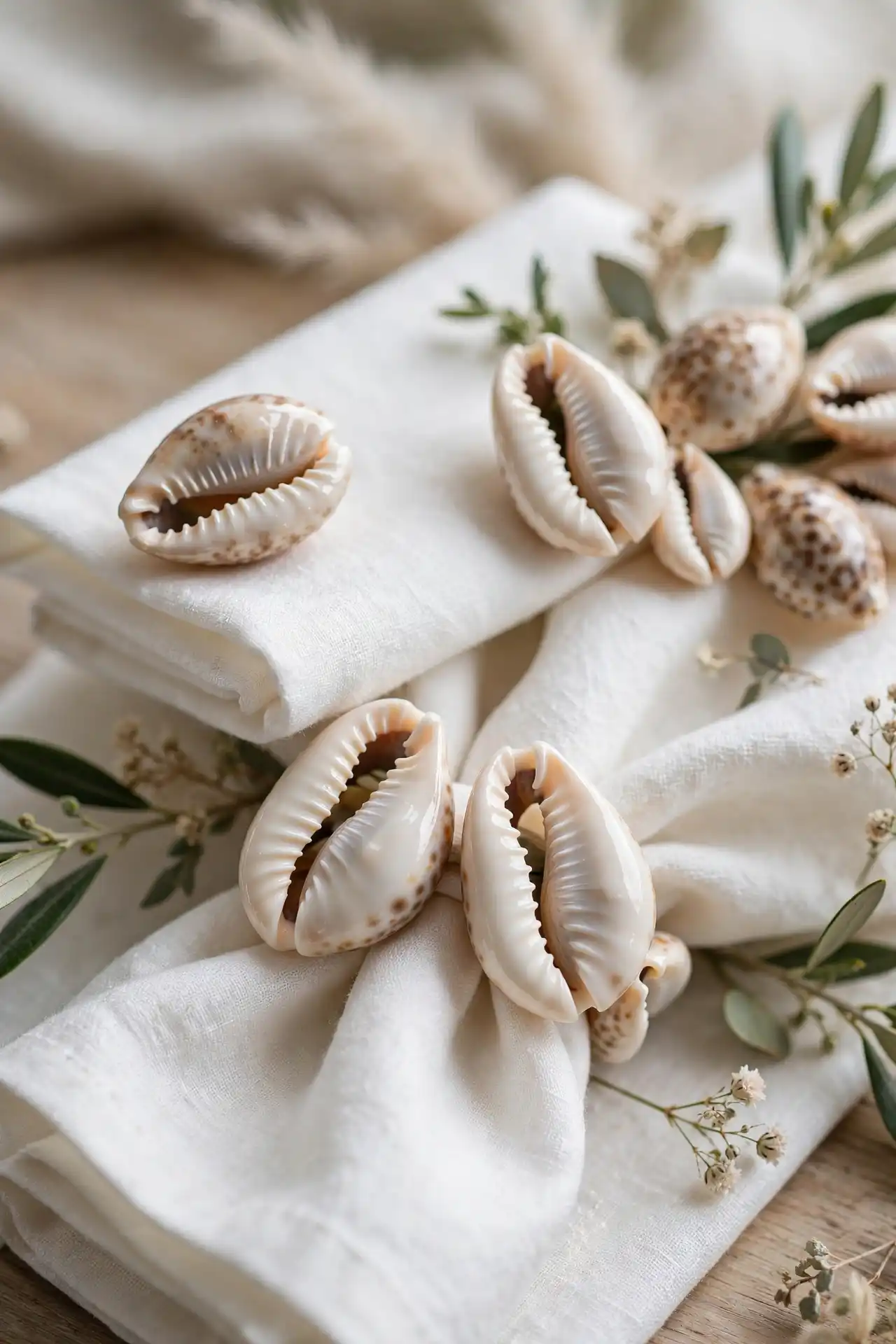
Cowrie shells carry weight across many African cultures, once used as currency and still used today as a symbol of prosperity and connection to the sea.
A few shells glued to a place card or threaded through a napkin ring turn a throwaway detail into something guests actually pick up and look at twice.
The catch is that raw shells vary a lot in size and finish, so buying pre-drilled ones saves a weekend of sanding.
If you are working with a tight timeline, pre-drilled shells cost more per piece but save hours of prep work.
Raw shells cost less but need cleaning, sanding, and a small hand drill before they are usable for napkin rings.
| Raw Shells | Pre-Drilled Shells |
|---|---|
| Cheaper per shell, needs cleaning and drilling. | Costs more, ready to use right away. |
| Better if you have a few free weekends. | Better for a tight planning timeline. |
7. Choose Adinkra Symbols for Programs and Menus On Purpose
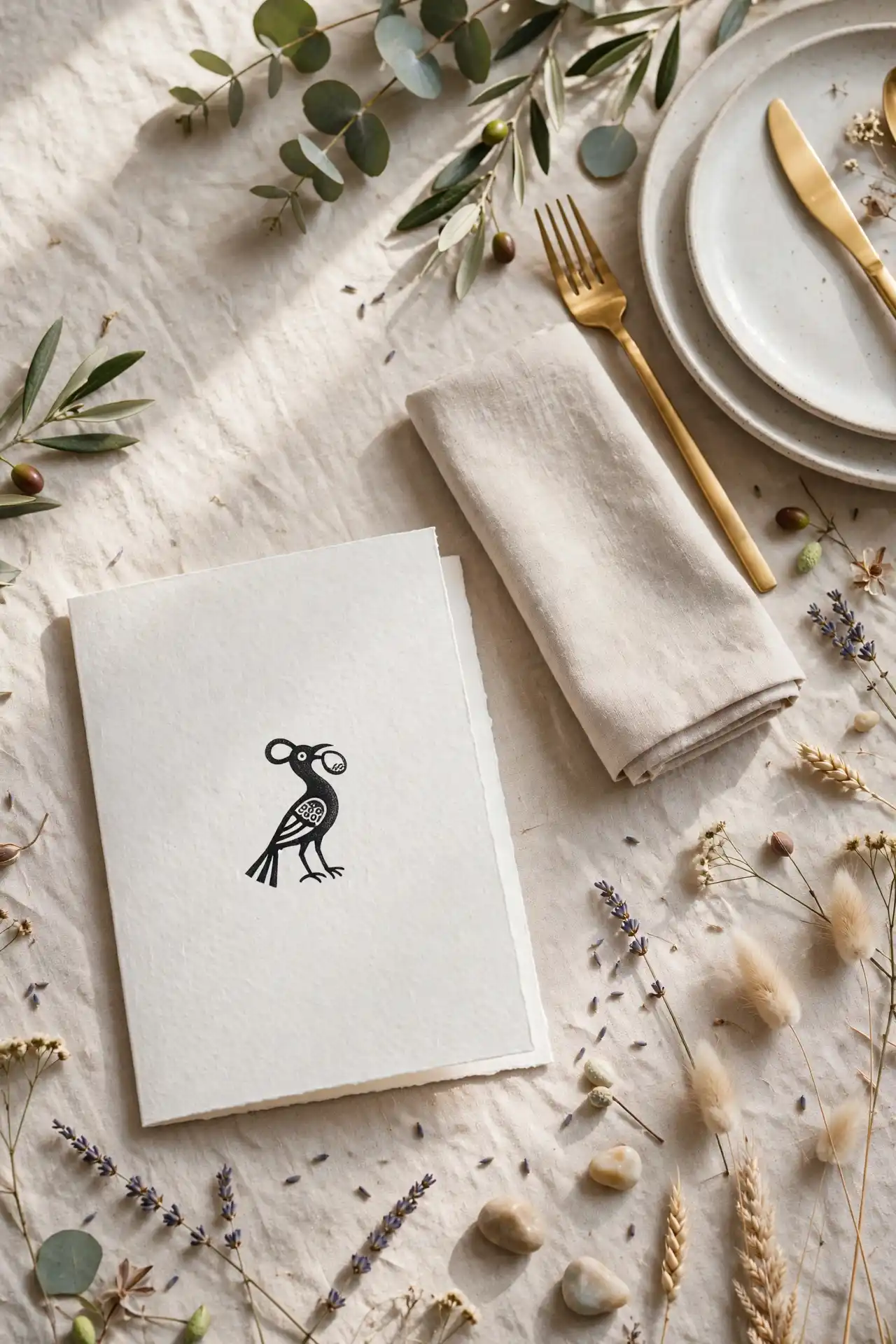
Adinkra symbols from Ghana each carry a specific meaning, from Sankofa for learning from the past to Gye Nyame for the supremacy of a higher power.
Printing one on your program without knowing what it stands for is a common misstep, and guests who recognize the symbol will notice if it does not match the tone of your day. A little research before printing goes a long way here.
Pick a symbol that actually reflects something true about your relationship or your families, then use it consistently across programs, menus, and signage instead of scattering different symbols everywhere.
Look up the meaning before you print anything.
Use one symbol consistently across all pieces.
Picking a symbol only because it looks decorative.
Mixing several unrelated symbols on one program.
8. Gather Everything You Need for a Libation Corner

A libation corner is a quiet space set aside to acknowledge ancestors before the celebration moves into full swing.
It does not need to be elaborate, but it does need a few specific pieces gathered ahead of time so nobody is scrambling ten minutes before the ceremony starts.
Talk to whichever elder or officiant will be leading it about what they actually need on hand.
Most families keep this simple and small, tucked near the entrance or just off to the side of the main ceremony space rather than front and center.
What to gather ahead of time
9. One Bold Backdrop: An Adire-Dyed Fabric Wall
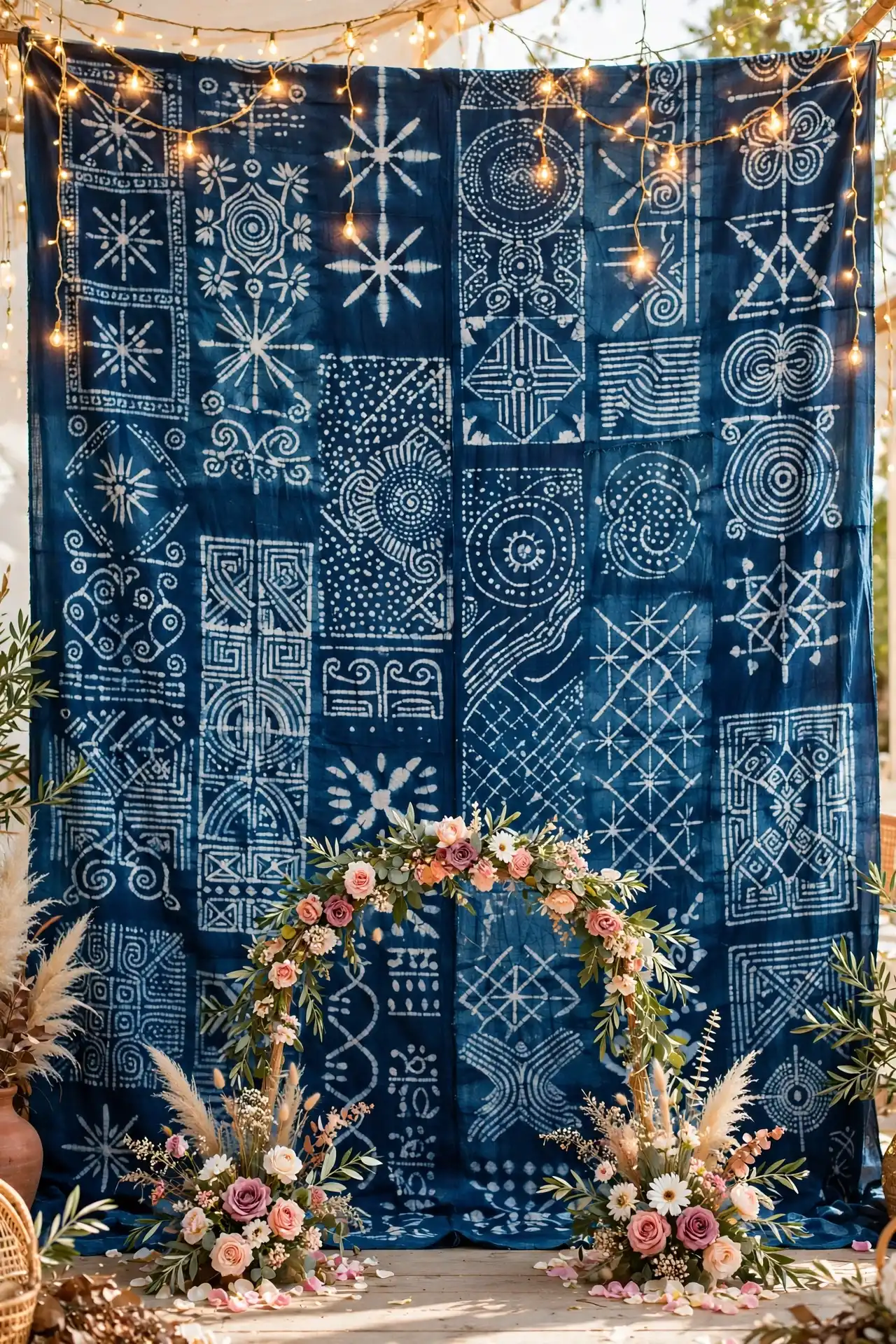
If you only splurge on one big visual moment, make it the backdrop. Adire, the resist-dyed cloth from southwestern Nigeria, has a texture and depth that photographs beautifully under both daylight and string lighting, and a full wall of it becomes the natural spot where every guest ends up taking a photo.
Smaller decor touches matter, but this is the piece that carries the whole room. Commission a few panels stitched together rather than one flat piece, the seams actually add visual interest instead of looking like a flaw.
One striking adire backdrop does more for your photos than a dozen small decor touches spread thin.
10. Basket Centerpieces Using Market-Woven Baskets
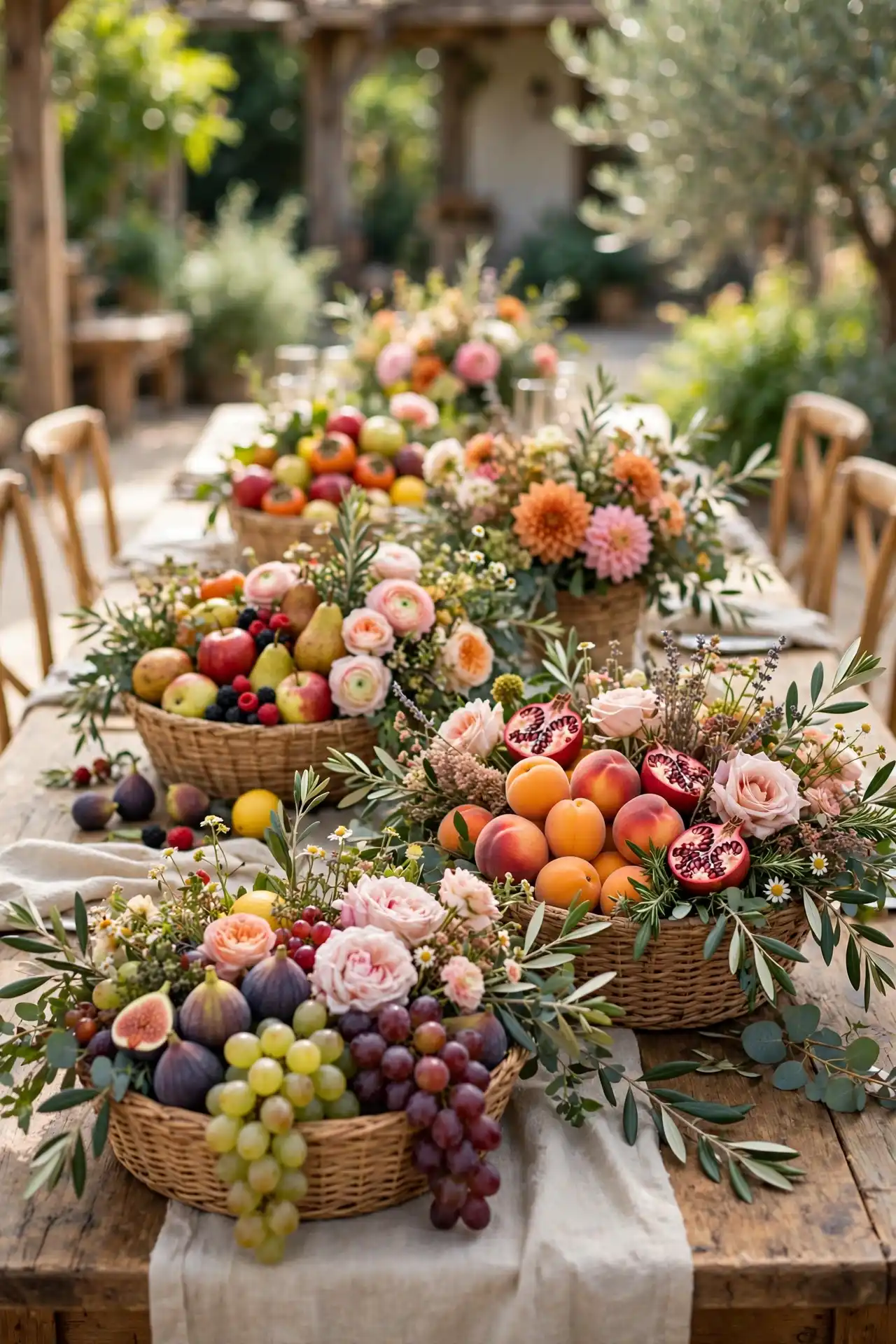
Woven baskets from West African markets, the kind used daily for carrying produce or storing grain, make surprisingly good centerpiece bases once filled with flowers or fruit.
They bring in texture without needing an extra vendor, and they hold up far better through a long reception than delicate glass containers do.
Buy a few different sizes so the tablescape has variation instead of matching bowls down every row.
- ✓ Choose baskets with tight, even weaving so they hold shape under weight.
- ✓ Line with a small bowl if adding water for fresh flowers.
- ✓ Vary the sizes across tables so nothing looks mass produced.
11. Gele-Inspired Napkin Folds for Every Place Setting
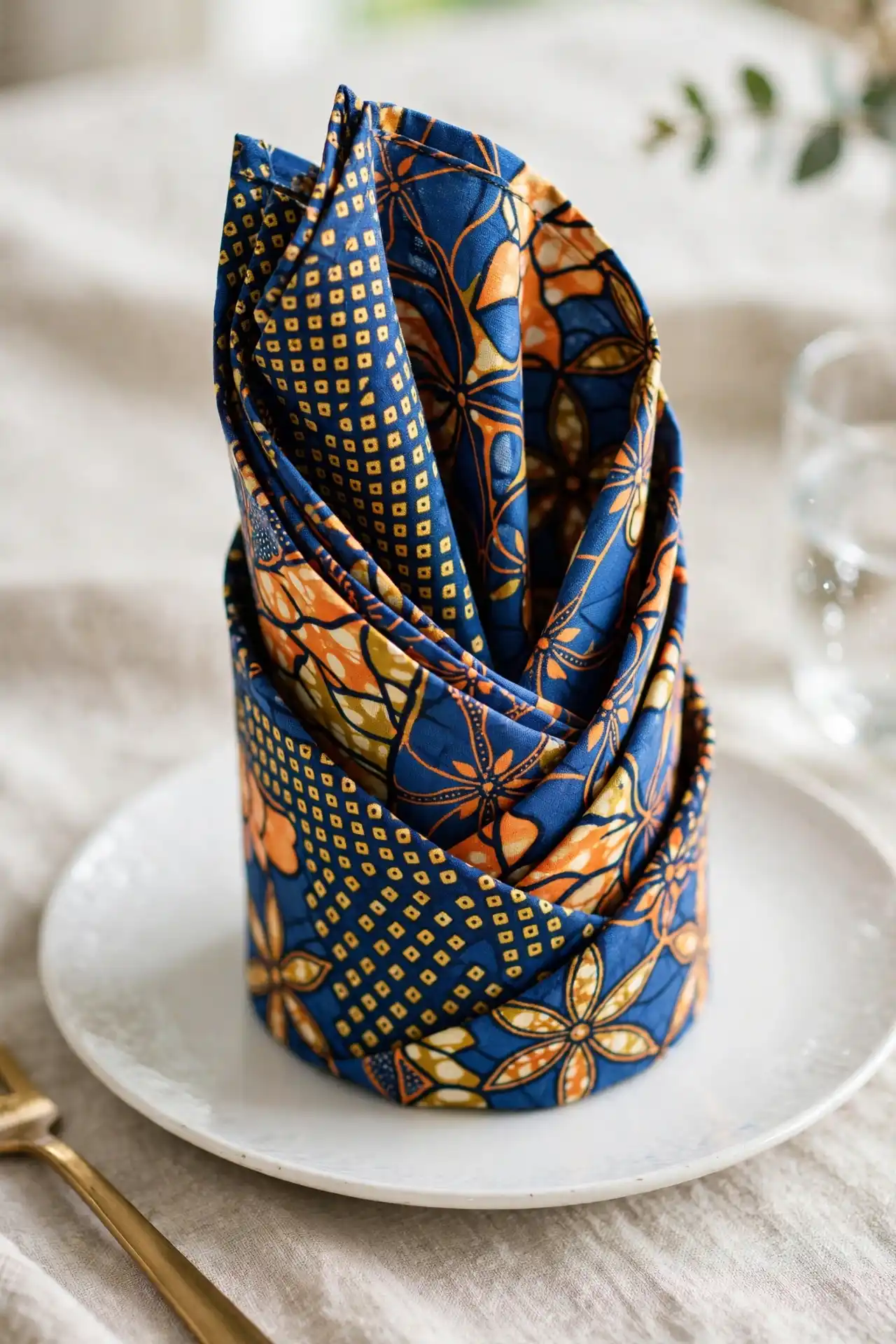
A gele is the structured head wrap worn across West Africa, tied high and dramatic for special occasions.
You cannot exactly replicate the tying technique with a napkin, but the folding principle, wrapping and tucking fabric into a tall shape, translates surprisingly well to the table.
It is a detail most guests will not name immediately but will notice looks different from a flat folded napkin.
Practice the fold on a spare napkin before the wedding day, and use a slightly stiff fabric like a linen blend so the shape holds through dinner service.
12. Set Up a Jumping Broom Display Corner
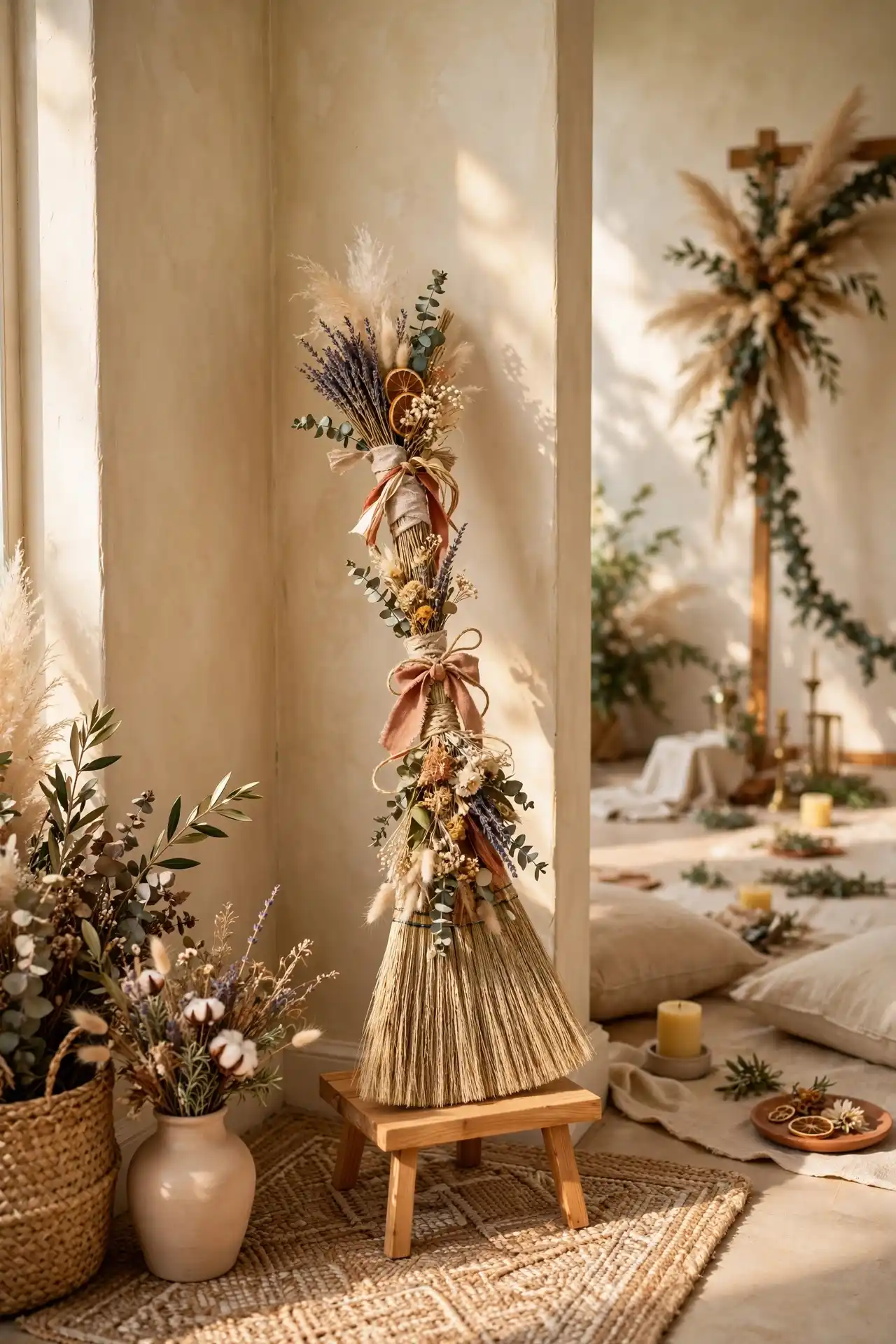
The jumping broom tradition, symbolizing a new beginning as a couple, deserves more than a broom leaned against a wall for five minutes.
A small display corner near where the ceremony happens gives it a proper place, and it doubles as a natural photo spot before and after the actual jump takes place.
Decorate the broom handle to match your color palette, then set it on a small stand where guests can see it clearly before the moment happens.
Wrap the broom handle in ribbon or fabric that matches your palette.
Set it on a small stand near the ceremony space, not off to the side.
Assign someone to move it into place right before the ceremony starts.
13. Batik Fabric Lanterns for Warm, Low Light
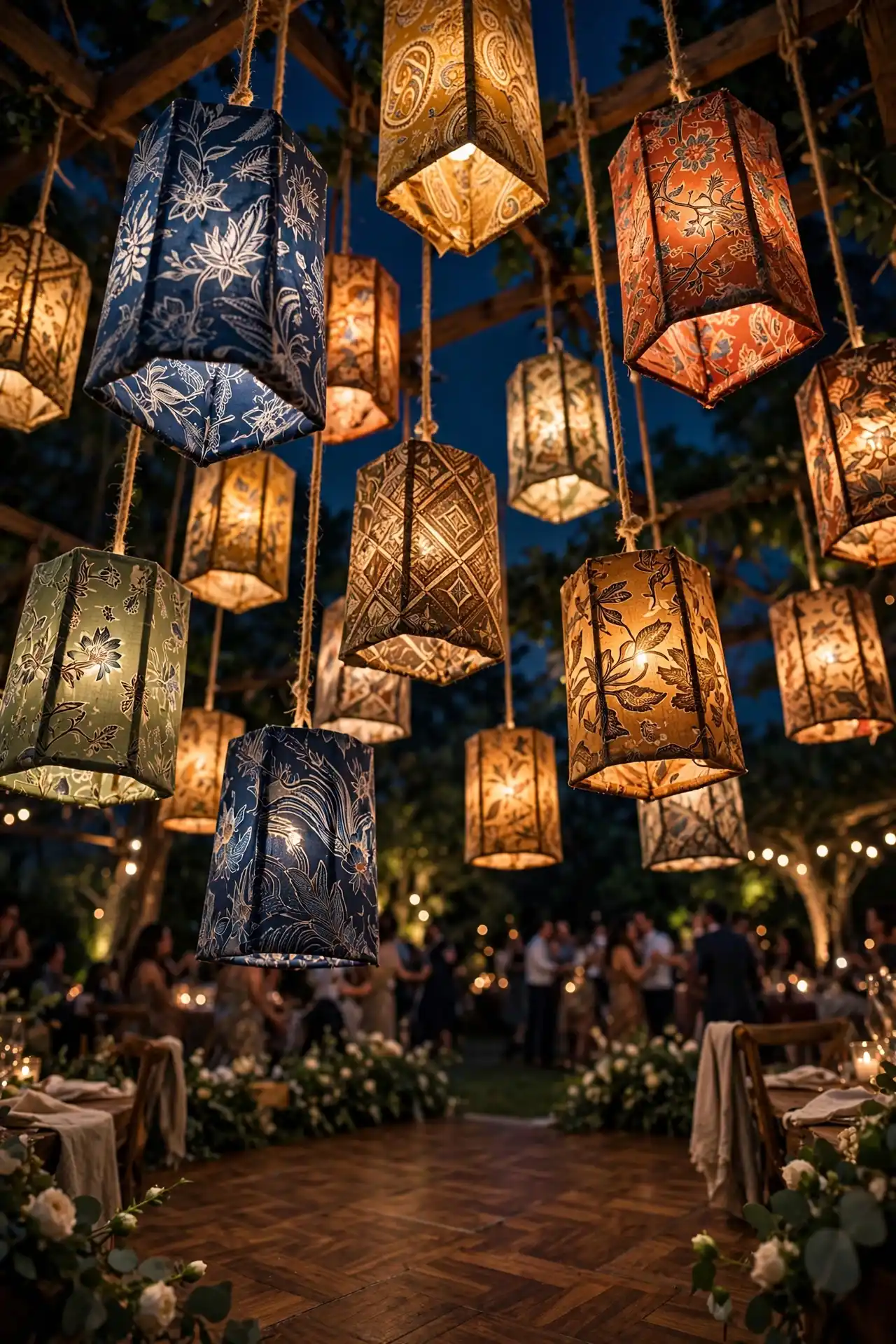
Overhead string lights are everywhere now, which is exactly why a batik lantern setup stands out.
Batik, with its wax-resist pattern, glows differently than plain fabric once a light source sits behind it, casting soft shapes instead of a flat wash of color.
Hanging a handful at varying heights over the dance floor changes the whole feel of the evening.
The difference shows up most once the sun goes down and the rest of the room dims around them.
Plain string lights strung overhead, the same as every other reception.
Batik lanterns at varying heights, casting soft patterned light over the floor.
14. Pick Your Pan-African Colors Before You Pick Anything Else
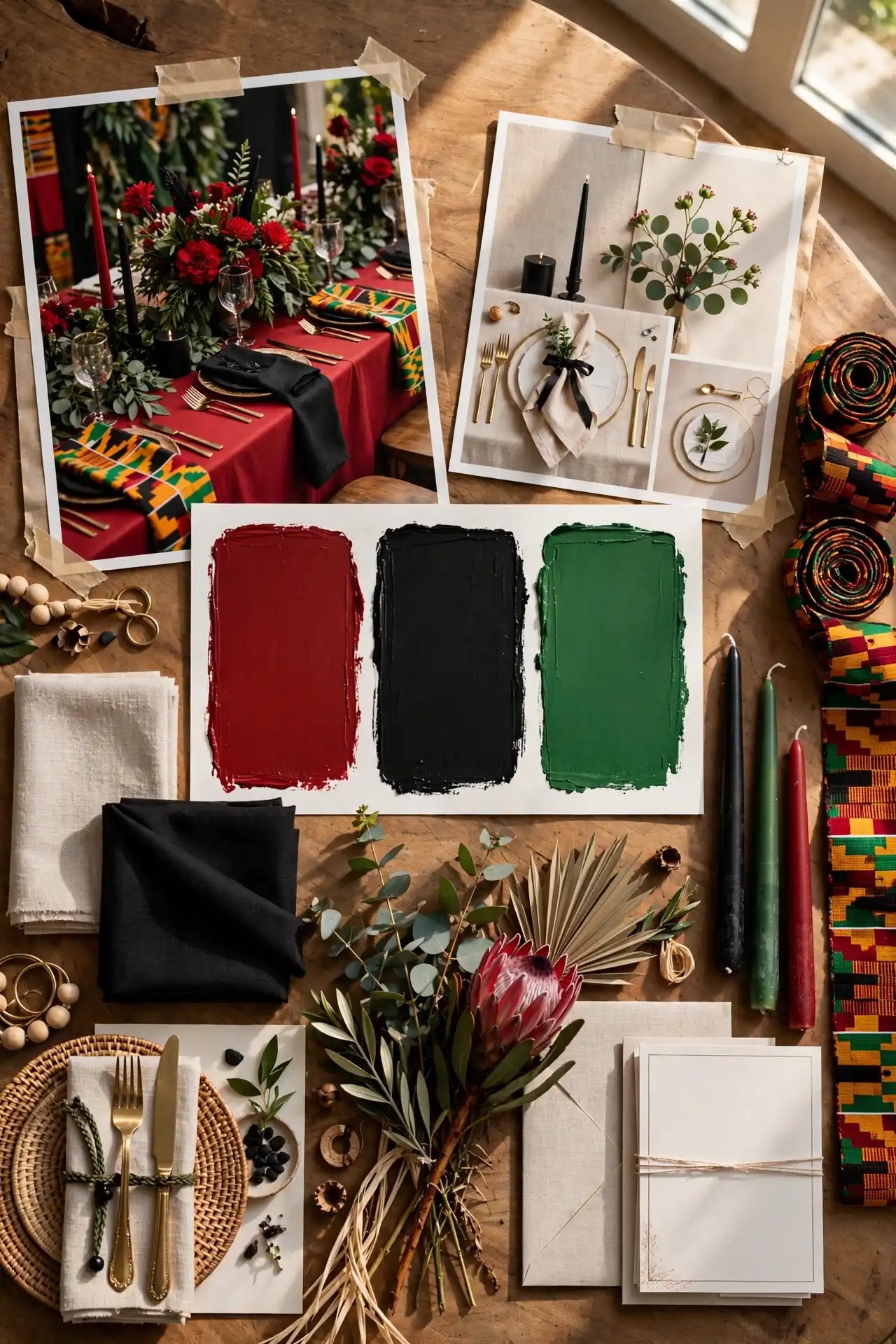
Red, black, and green, the Pan-African colors, carry meaning tied to bloodshed, unity, and land across the diaspora.
Deciding early whether you want to build your whole palette around them, or use them only as accent touches, saves you from a mismatched mix of fabrics and florals later in the planning process.
This decision should come before you book a florist or order linens. Once the base palette is locked, every other choice, from kente trim to table candles, gets easier because you already know what has to match.
💡 Quick Tip
Lock your color palette before booking a florist or ordering linens, everything downstream gets easier once this one decision is made.
15. Gold-Toned Tableware Inspired by Ashanti Goldwork
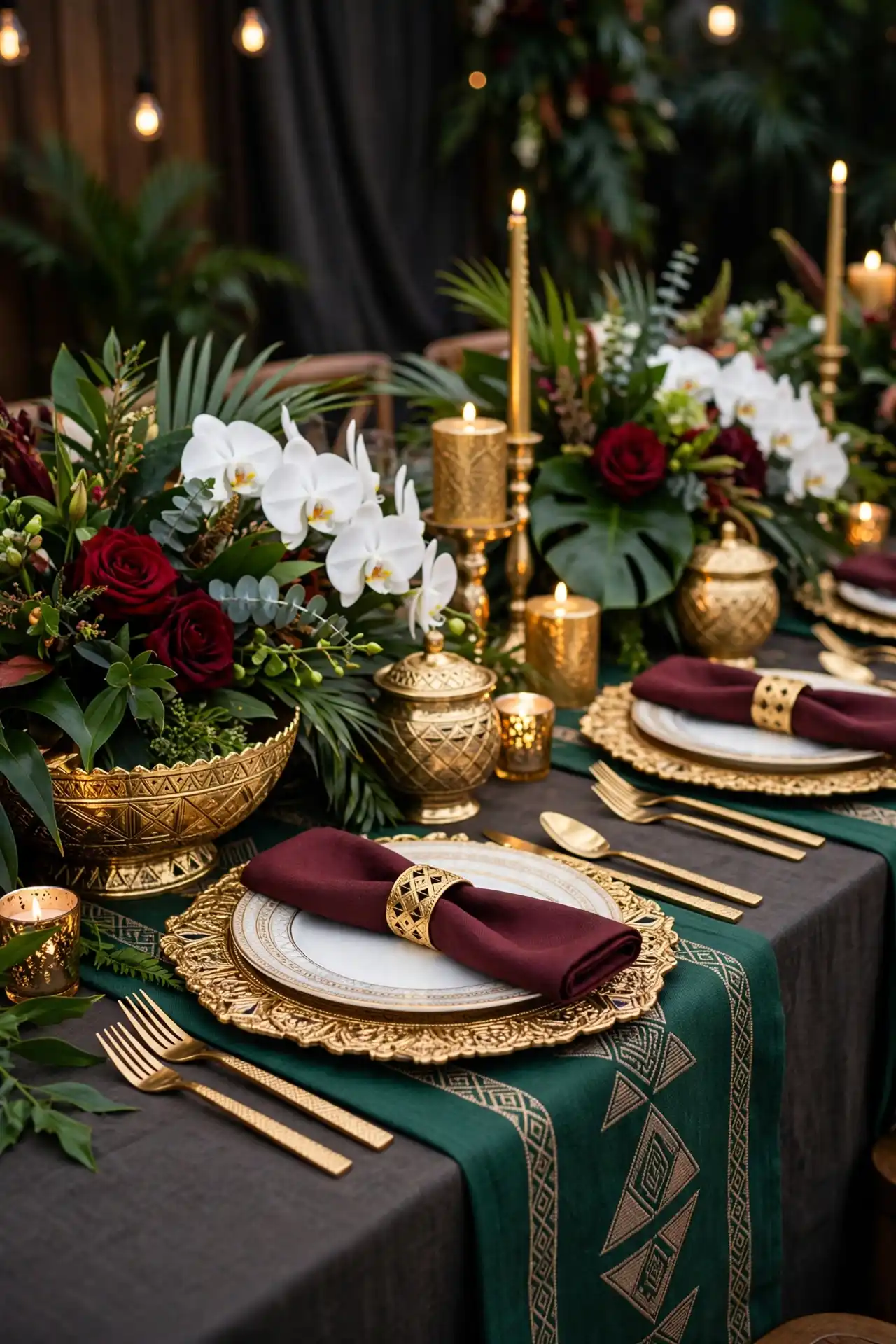
Ashanti goldwork, historically tied to Ghanaian royalty and status, is where a lot of the gold-accented tableware trend actually traces back to, whether people realize it or not.
Leaning into that history on purpose, rather than picking gold flatware just because it is popular right now, gives the choice more weight. Pair it with deep, rich table colors so the gold has something to stand out against.
Matte gold tends to photograph better than high shine under mixed reception lighting, worth testing both under a lamp before you commit to a full order.
16. Raffia Fringe on Chairs, Tables, or the Cake Stand
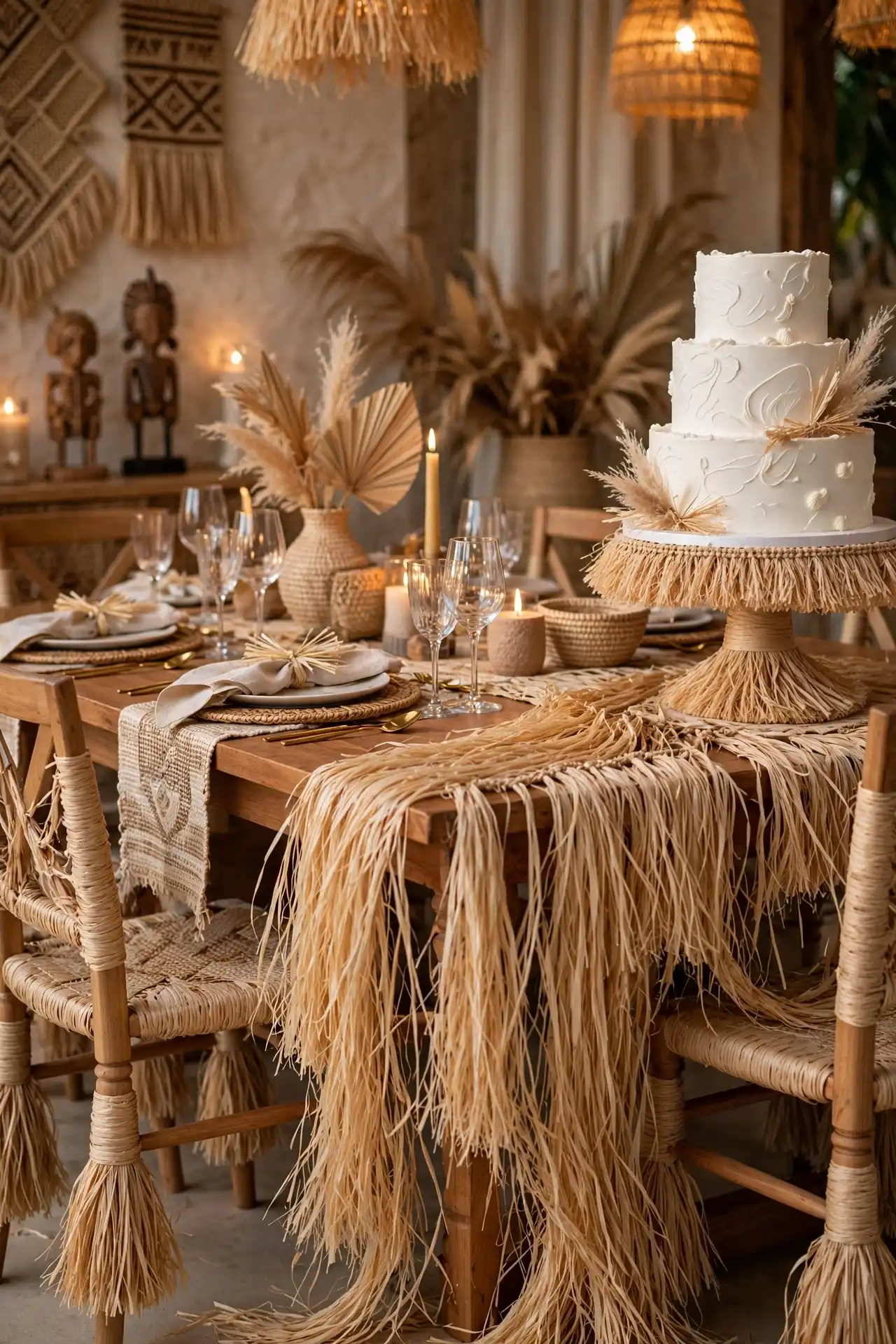
Raffia, the natural palm fiber, brings texture without adding another color to compete with your palette.
Wrapped around chair legs, tied into a table skirt, or layered around the base of a cake stand, it reads as earthy and handmade in a way that manufactured trim never quite manages.
Comparing where to use it depends on your budget and how much impact you want in one spot.
| Raffia Fringe | Ribbon Trim |
|---|---|
| Textured, natural look, needs trimming to even lengths. | Flat, uniform, easier to buy pre-cut. |
| Best on chairs and cake stands for texture. | Best on table skirts for a cleaner line. |
17. A Griot-Style Program Card That Tells Your Story
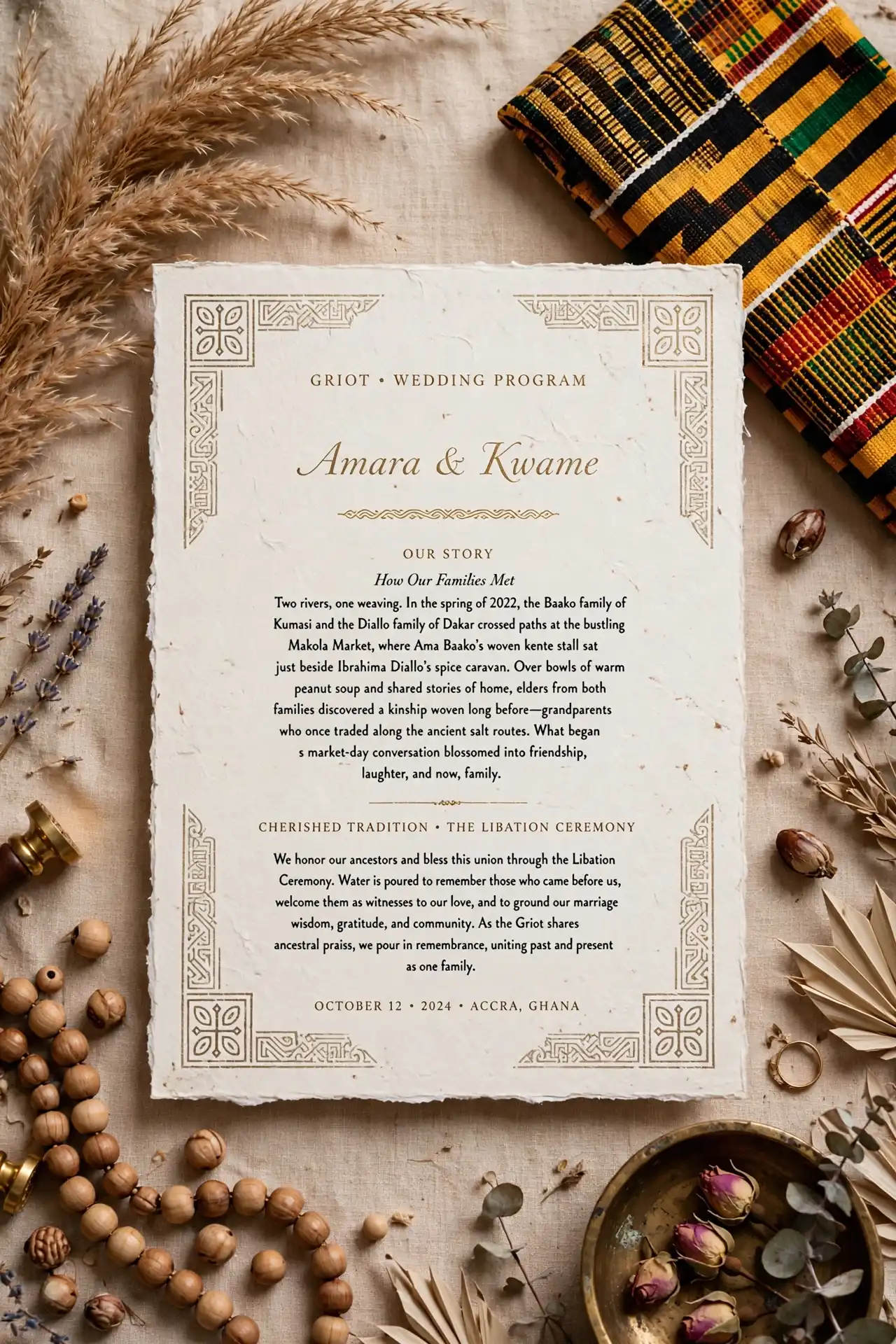
Griots have long served as storytellers and keepers of family history across West Africa.
Borrowing that spirit for your program card, a few lines about how your families met, or a short note about a tradition you are honoring that day, gives guests context instead of just a run of ceremony times.
Keep it short enough to read in under a minute, this is a program card, not a full family history.
Write two or three short lines guests can read quickly.
Mention one tradition you are honoring and why.
Cramming your full family history onto one card.
Leaving out any explanation for guests unfamiliar with the tradition.
18. Pack a Send-Off Basket With Seeds Instead of Confetti

Confetti looks nice for about ten seconds and then becomes someone’s cleanup problem.
A small woven basket filled with seed packets, native to whatever region your family traces back to, gives guests something to toss that grows into something afterward. It also skips the sweeping and vacuuming your venue will thank you for.
Gather everything a few weeks ahead so you are not scrambling to source seed packets the week of the wedding.
What to gather ahead of time
19. Beaded Details on the Cake, Bouquet, or Chair Backs
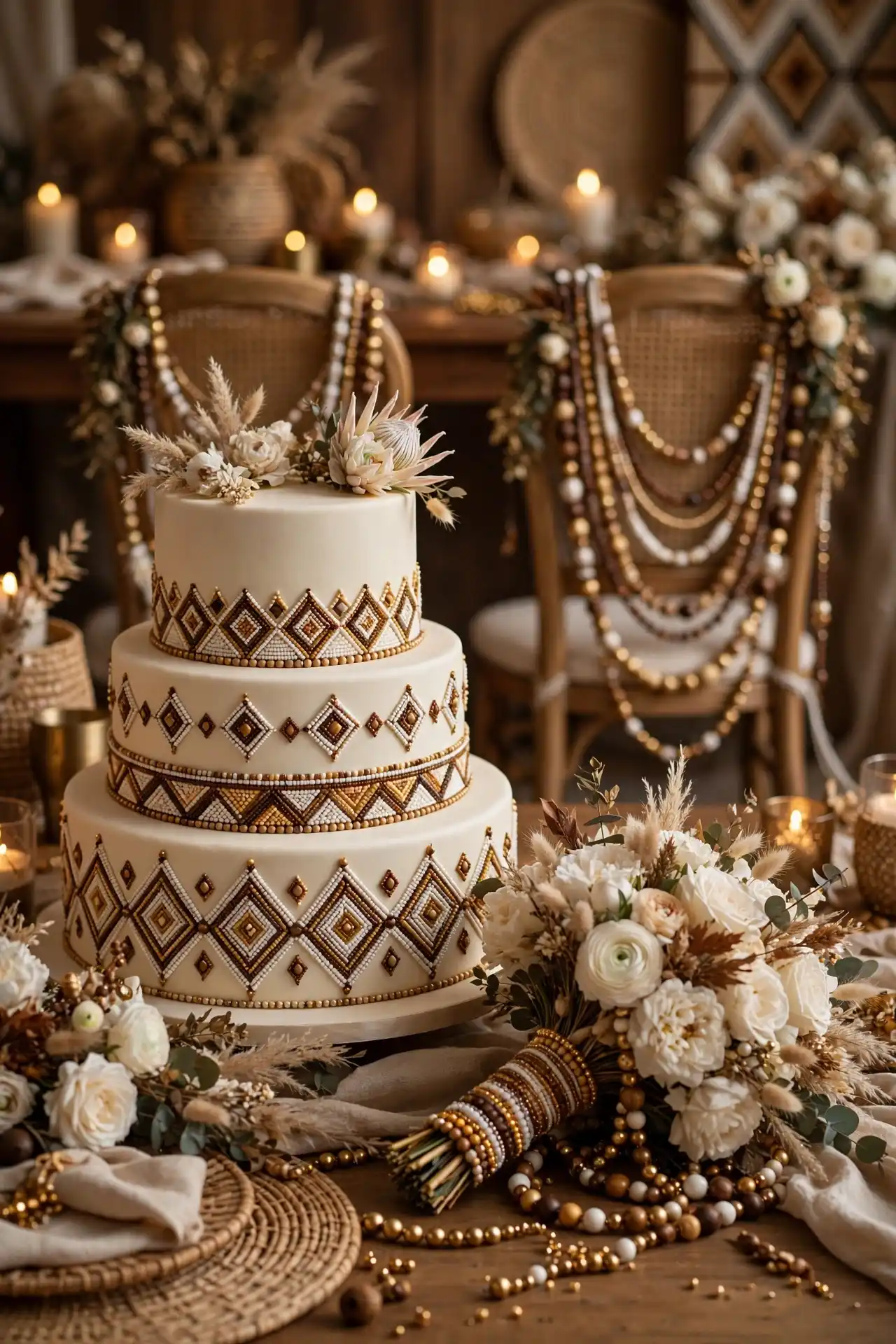
Beadwork shows up across many African traditions, often tied to status, celebration, or rites of passage.
A little of it goes a long way on a wedding day, whether wrapped around a bouquet handle, pressed into fondant on the cake, or strung along the back of the couple’s chairs.
Pick one spot to feature beading prominently rather than spreading a little bit across five different items.
One well-placed beaded detail carries more weight than scattering a little beadwork across every item.
20. Close the Night With a Bold Ankara Dance Floor Rug
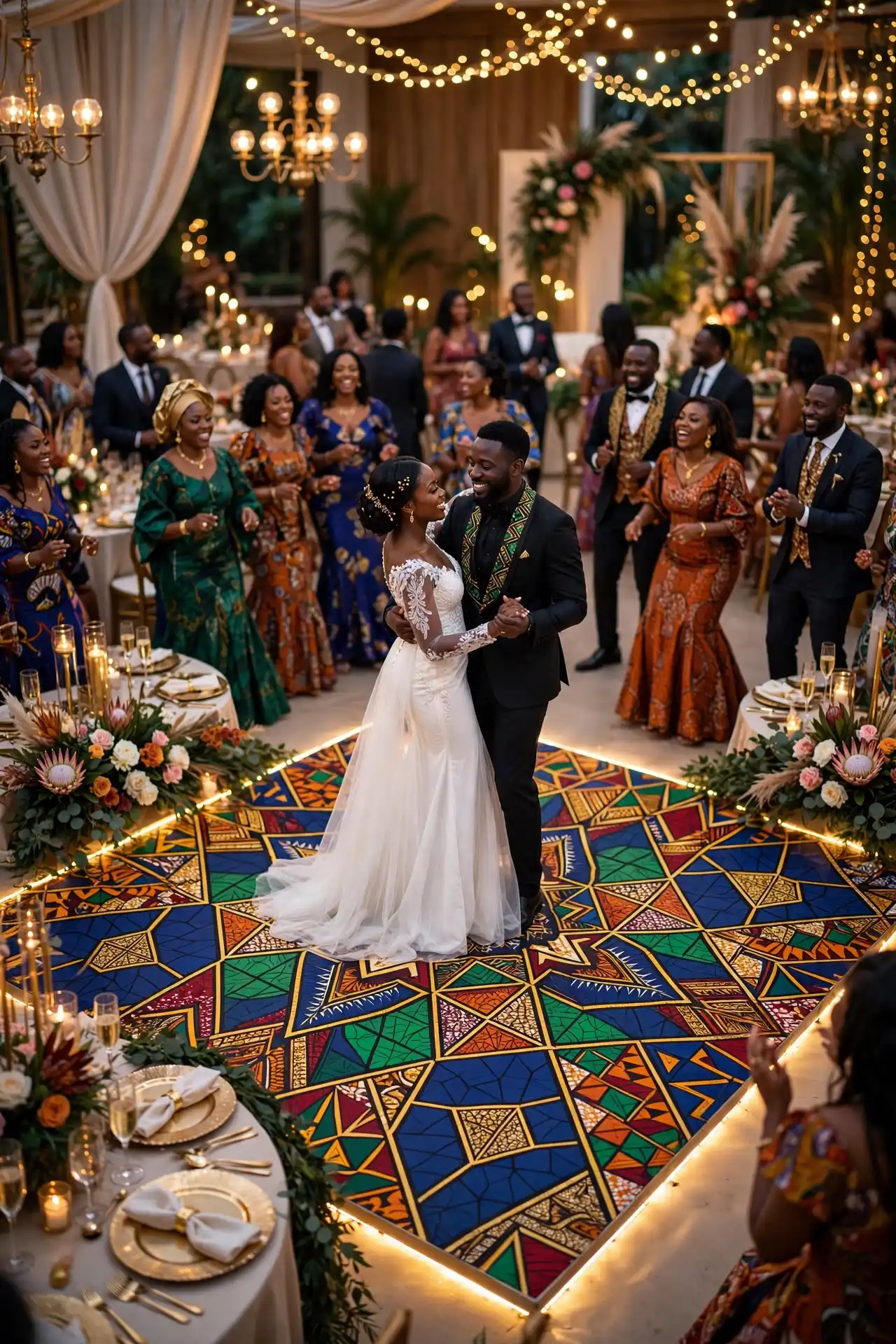
Most dance floors end the night looking exactly like they started, plain and forgettable.
A large Ankara-print rug or vinyl floor covering underneath the lighting gives your last photos of the night a completely different feel from every other reception guests have been to.
- Order the covering a few weeks early to allow for reprints if sizing is off.
- Stick to one bold print rather than layering several patterns together.
- Test the surface for slip risk before the dance floor opens.
Conclusion
Afrocentric wedding decor ideas do not need to fill every inch of a room to feel meaningful.
A single kente sash, one calabash centerpiece, or a well-placed adire backdrop can carry more weight than a table covered in pattern for the sake of pattern.
The families who pull this off best usually pick a handful of details that actually connect to their own heritage, then let those pieces do the talking.
Start with your color palette, choose one or two textiles you want to feature heavily, and build outward from there.
Save this list so you have it ready when you sit down with your florist, seamstress, or venue coordinator.