
How to Do Resin Crafts Safely in Your Bedroom or Living Room


Use a low-odor, zero-VOC two-part epoxy resin and work near an open window with an exhaust fan. Protect your surfaces with a silicone mat, wear nitrile gloves, and store curing pieces inside a sealed plastic container to block lingering smells.
You want to pour coasters or small jewelry pieces, but the chemical warning labels and lack of a dedicated garage keep stopping you. The fear of ruining your carpet or filling your sleeping space with fumes is reasonable.
Learning how to resin craft in a bedroom solves both problems. A safe indoor setup relies on trapping the mess before it spreads and forcing the air outside immediately.
This method lets you work at a standard desk or folding table. Hands-on work takes only about 30 minutes, though you will need to leave the room while the pieces harden.
What You Need
- Zero-VOC two-part epoxy resin (1 kit)
- Large silicone craft mat
- Nitrile gloves (multiple pairs)
- Respirator mask with organic vapor cartridges
- Silicone measuring cups and stir sticks
- Dual-blade window exhaust fan
- Large plastic storage tub with a tight-fitting lid
- 91% isopropyl alcohol
How Long It Takes and What It Costs
| Total time | 24 hours |
| Hands-on time | 30 minutes |
| Cost | $40 to $80 |
| Difficulty | Beginner |
Steps at a Glance
- Pick a zero-VOC resin to master how to resin craft in a bedroom
- Install a window exhaust fan to pull air outside
- Cover your workspace with a large silicone mat
- Put on your nitrile gloves and respirator mask
- Mix and pour the resin directly over the silicone mat
- Place the poured project inside a sealed plastic tub to cure
- Wipe down your tools with isopropyl alcohol
Pick a zero-VOC resin to master how to resin craft in a bedroom
Standard formulas release harsh fumes that linger in soft fabrics like bedsheets and curtains. Buy a brand explicitly labeled as zero-VOC and low-odor.
These mixtures are thicker and take slightly longer to stir, but they are the only option for an enclosed living space. Check the label to confirm the work time is at least 40 minutes.
Pro tip: Even zero-VOC resin is a chemical. Non-toxic labels only apply after the product is fully cured, not while it is liquid.
Install a window exhaust fan to pull air outside
Set a dual-blade fan in the nearest window and switch it to the exhaust setting. It must blow air out of the room, not pull fresh air in.
Turn the fan on before you open the bottles. Keep the bedroom door closed so the fan pulls air from the room and pushes it directly outside. Leave it running for at least 2 hours after you finish pouring.
Cover your workspace with a large silicone mat
Lay out a silicone mat that covers your entire working area. Cured resin peels off silicone cleanly, making spills a minor annoyance instead of a permanent stain.
Tape the edges of the mat down to your desk with painter’s tape. This stops the mat from sliding if you bump the table.
Put on your nitrile gloves and respirator mask
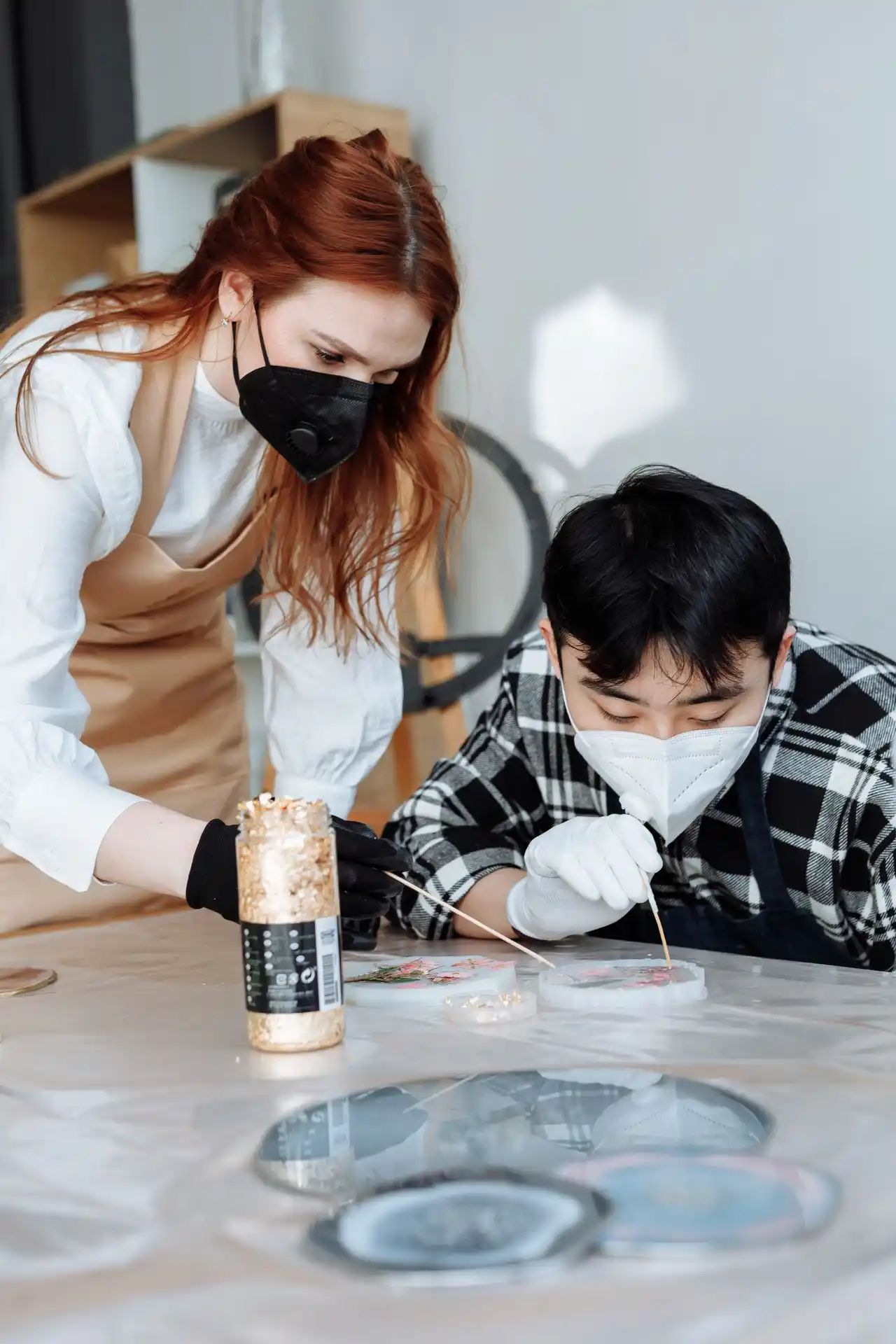
Liquid epoxy causes skin sensitization over time. Put on thick nitrile gloves before touching any bottles or cups.
Strap on a half-face respirator equipped with organic vapor cartridges. A standard paper dust mask does nothing against chemical vapors. The mask should form a tight seal around your nose and mouth.
Mix and pour the resin directly over the silicone mat
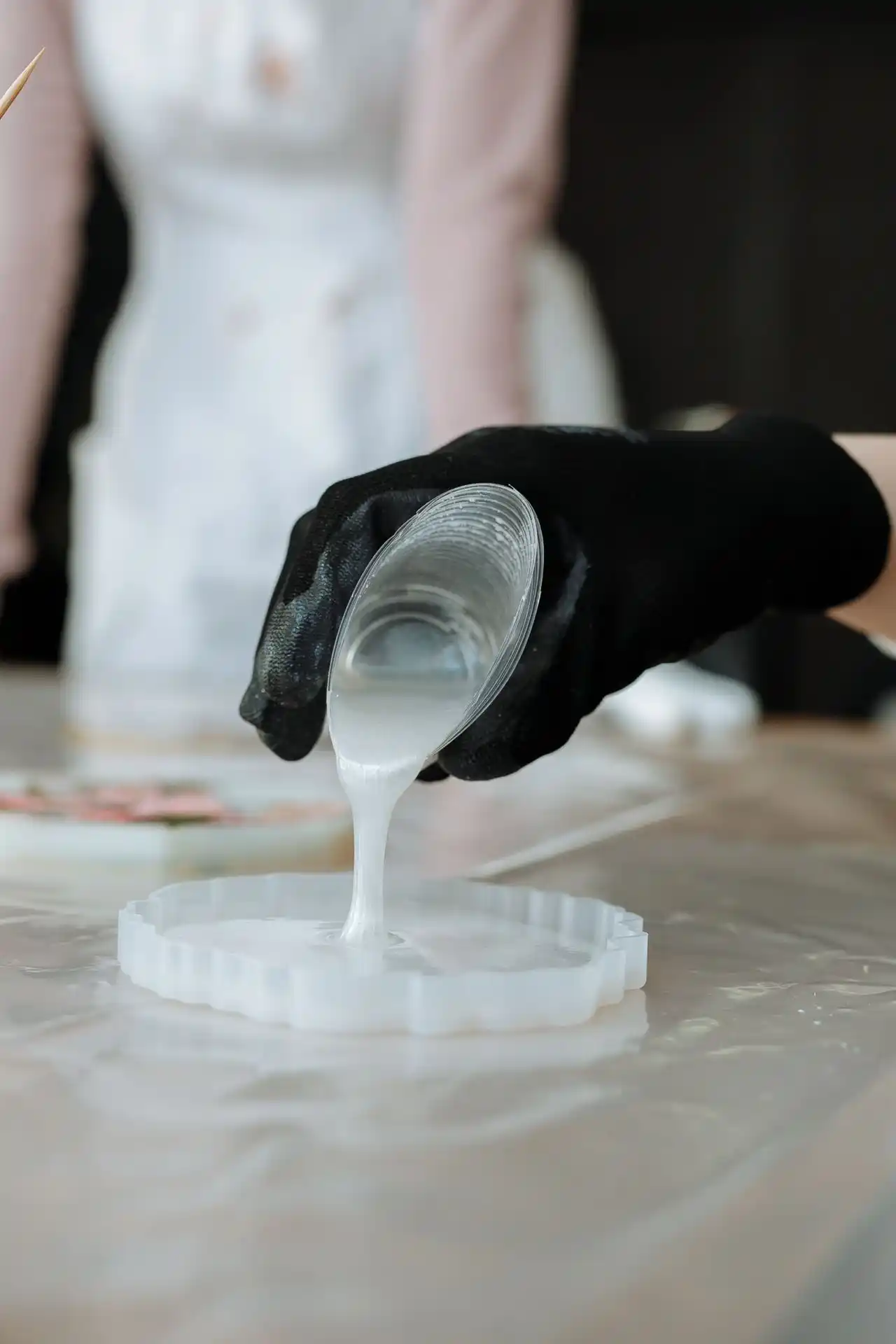
Measure equal parts into your cups. Stir slowly for 3 minutes, scraping the sides and bottom to combine everything fully.
Fast stirring introduces tiny air bubbles that are hard to pop later. Keep your hands over the mat to catch any drips while you pour the mixture into your molds.
Place the poured project inside a sealed plastic tub to cure

Move your silicone mold into the center of a large plastic storage bin. Press the lid down firmly until it snaps shut on all sides.
The sealed box acts as a secondary fume barrier and stops floating dust from landing in your wet project. Leave the box completely undisturbed for 24 hours.
Wipe down your tools with isopropyl alcohol
Pour a small splash of 91% isopropyl alcohol onto a paper towel. Wipe out your silicone cups and stir sticks immediately while the leftover mixture is still wet.
Throw the dirty paper towels into a trash bag, tie it shut, and take it to an outside dumpster. Do not leave resin-soaked trash in your bedroom bin.
Heads up: Never wash wet epoxy down a sink drain. It will cure underwater and destroy your plumbing.
Do’s and Don’ts
| Do this | Not this |
| Open a window with an exhaust fan | Rely on a ceiling fan |
| Use a silicone work mat | Use newspaper or cardboard |
| Wear a true vapor respirator | Wear a paper medical mask |
Final Thoughts
Figuring out how to resin craft in a bedroom opens up dozens of beginner projects you can make without a garage.
A few specific safety barriers and careful ventilation make the process entirely manageable. Save this guide to your DIY Pinterest board so you have the exact supply list handy for your first pour.
Frequently Asked Questions
Is it safe to sleep in the same room while it cures?
Do not sleep in the room if the project is curing in the open air. If you must sleep there, seal the piece inside an airtight plastic storage tub and keep a window cracked.
What happens if it spills on my bedroom carpet?
Liquid epoxy will permanently bond to carpet fibers. If a spill happens, soak the spot in 91% isopropyl alcohol and scrub with soap, but a silicone mat is the only reliable prevention.
Do I actually need a respirator if it claims to be non-toxic?
Yes. The non-toxic claim applies to the hardened plastic, not the liquid chemicals mixing together. Organic vapor cartridges protect your lungs during the active chemical reaction.