18 Mudcloth Decor Ideas for Every Room in the House

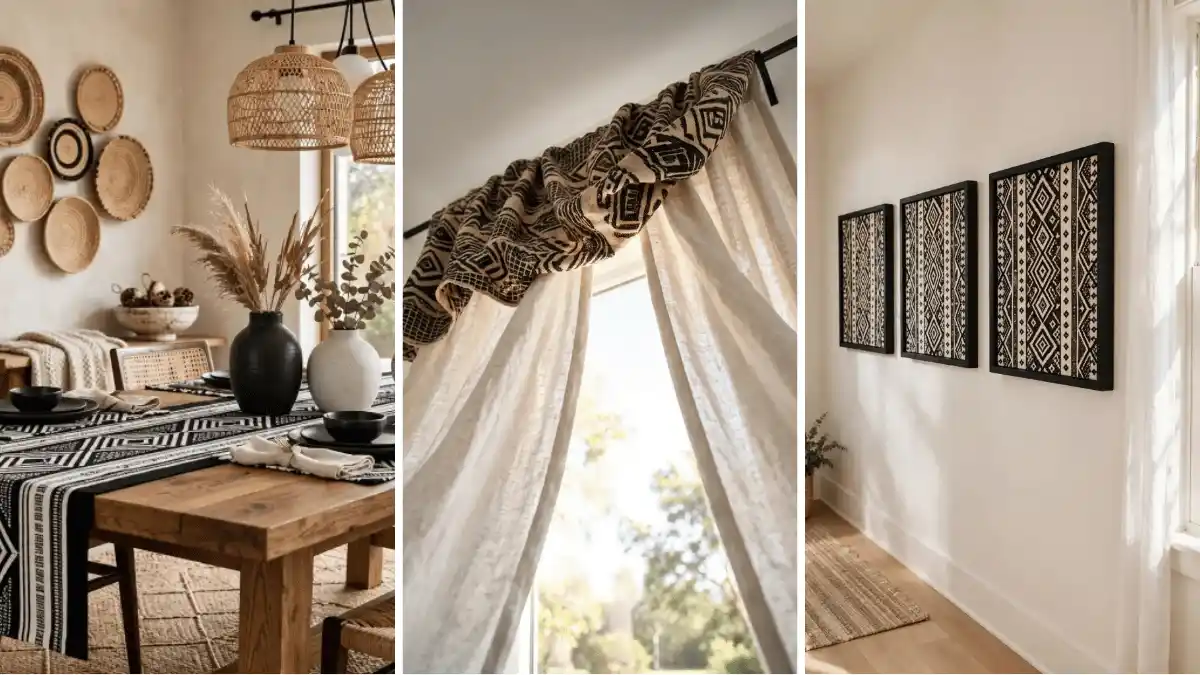
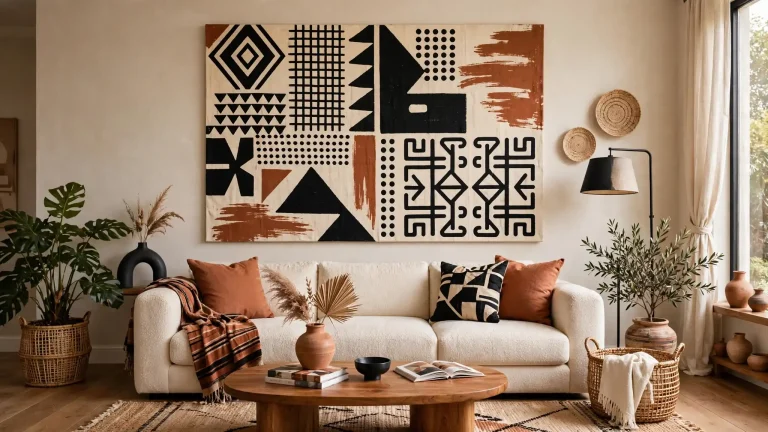
A blank wall does not stay blank because you are lazy. It stays blank because most decor advice tells you to buy more stuff instead of using what already has texture and story built in. Mudcloth solves that problem in a way most trends never do.
If you have ever bought a print that looked flat the second you got it home, you already know the issue.
Mass produced patterns rarely hold up next to real furniture, real light, and real daily mess. Mudcloth is different.
Each piece carries small irregularities, hand drawn lines, and earthy tones that read as intentional in almost any room.
This list is built around one goal: showing you mudcloth decor ideas for every room, not just the living room everyone already covers. Bedrooms, bathrooms, entryways, even a laundry basket.
Some ideas take ten minutes. Others take an afternoon. All of them are things you can actually finish, not just pin and forget.
18 Mudcloth Decor Ideas for Every Room in the House
1. Drape a Mudcloth Throw Over a Plain Sofa Back
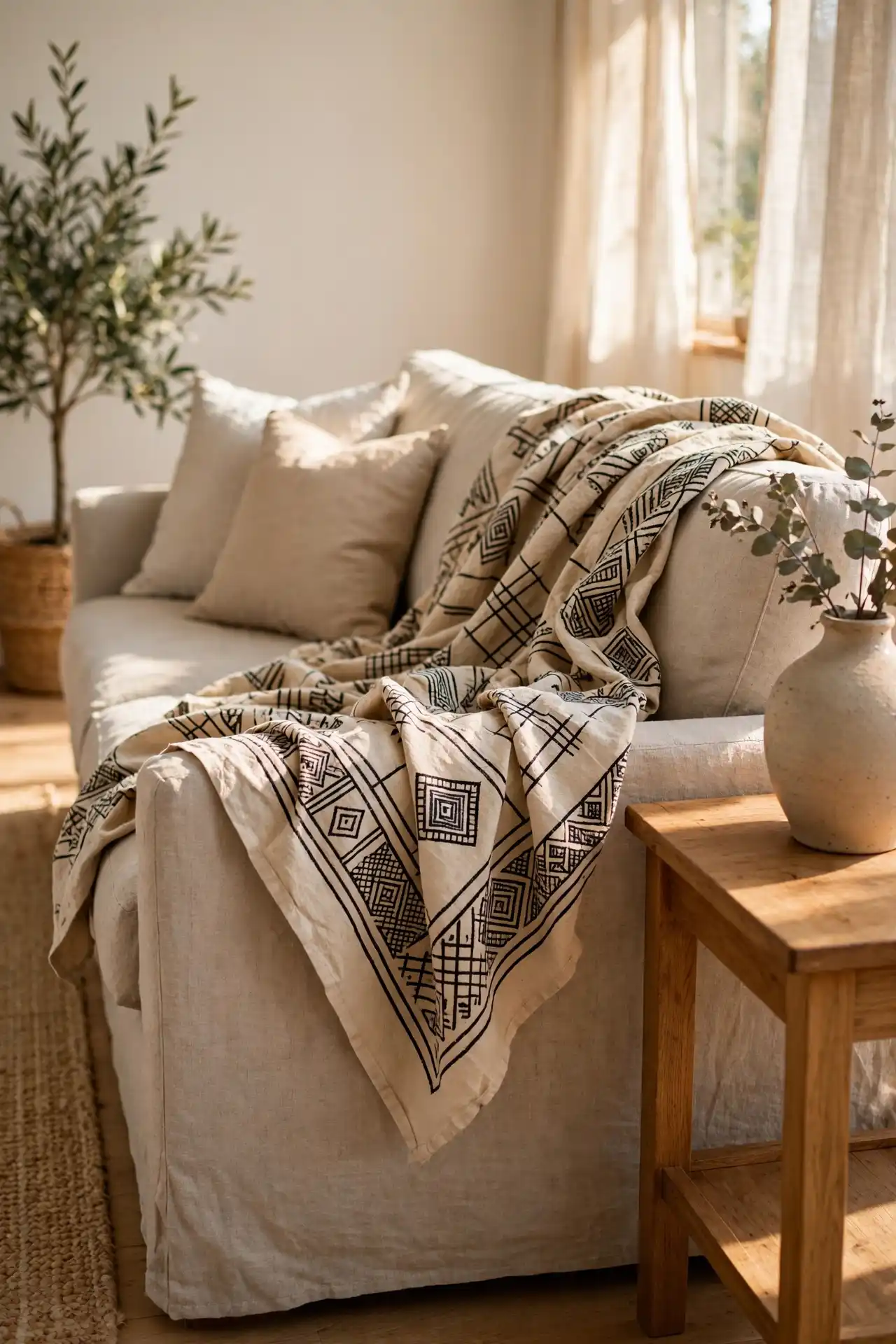
A sofa with one solid color reads flat the moment the sun goes down and the overhead light takes over.
Fold a mudcloth throw lengthwise and lay it along the back cushions instead of centering it in the middle seat.
That placement lets the bold geometric lines catch the eye first, before anything else in the room competes for attention.
Keep the fold loose. A throw that looks too perfectly arranged loses the handmade feeling that makes mudcloth worth using in the first place.
If your sofa already has a patterned pillow or two, angle the throw so the lines run a different direction than the pillow print, since two patterns running the same way tend to blur together instead of standing apart.
This is one of those small adjustments that photographs well but also just feels better to sit next to every evening.
2. Use a Mudcloth Panel as a Headboard Stand-In
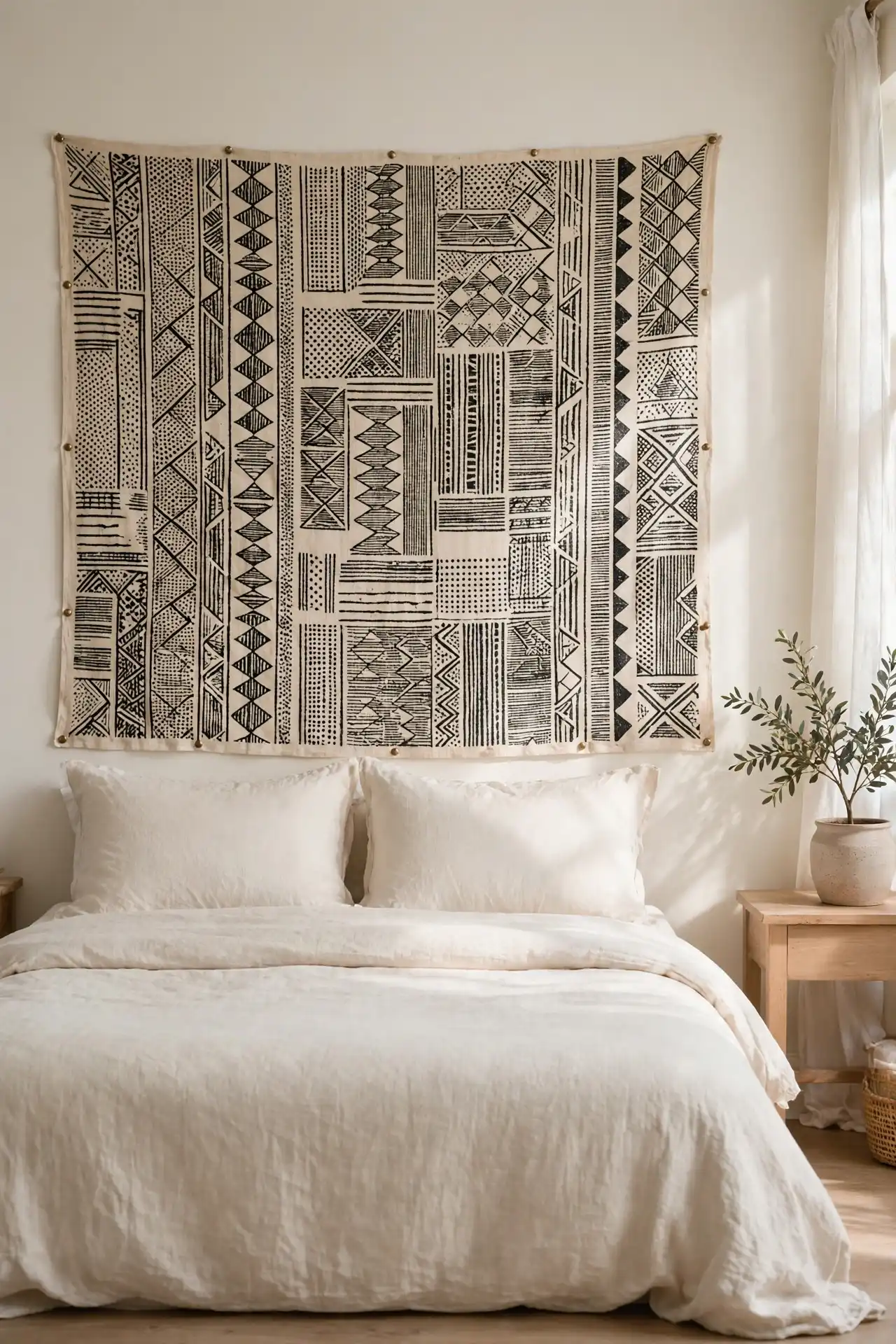
Renters get stuck here more than anyone. You cannot mount a real headboard, but a bare wall behind the bed still feels unfinished every single night.
Pin or clip a large mudcloth panel to the wall directly behind your pillows, letting the bottom edge hover an inch or two above the mattress line.
The trick most people miss is scale. A panel that only covers the width of your pillows looks like an afterthought, while one that stretches a few inches past each side of the mattress reads like it was planned that way from the start.
Steam or iron the fabric flat before hanging it, since even small wrinkles cast shadows under a bedside lamp and make the whole setup look less finished than it actually is.
- Use removable adhesive clips, not nails, if you are renting
- Choose a panel wider than the bed frame so it reads intentional
- Steam it flat first so wrinkles do not show under lamp light
💡 Quick Tip
Command strips hold better if you press the panel flat against the wall for a full ten seconds after hanging.
3. Frame Mudcloth Fabric Squares as a Wall Art Trio

Most gallery walls end up crowded with mismatched frames and no real point of view.
Buy one full mudcloth panel, cut it into three equal squares, and frame each one in the same simple black or wood frame. Hang them in a straight horizontal row instead of a scattered cluster.
The repetition is what sells it. One mudcloth print can look like a single accent, but three identical frames in a row reads like a designed set, even though it came from one piece of fabric.
Measure the wall before you cut anything, and leave equal spacing between each frame, roughly two to three inches works for most hallways.
A level makes a real difference here too, since even a slight tilt across three frames is much more noticeable than it would be with just one.
A bare hallway with fingerprint marks and one small mirror doing all the work.
Three matching frames in a row, turning a walkway into a spot people slow down for.
4. Anchor a Bare Dining Table With a Mudcloth Runner
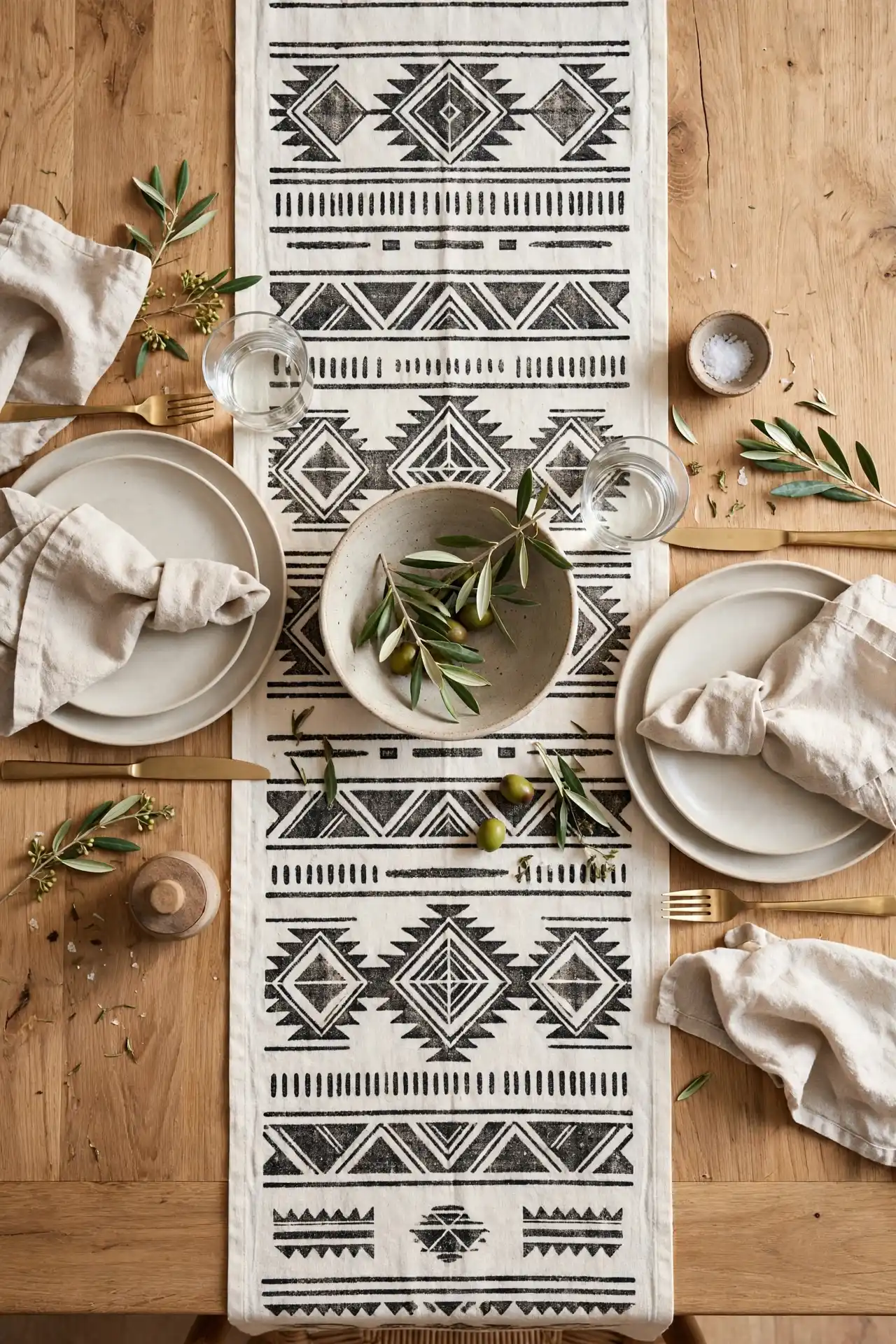
A wood table left completely bare looks unfinished the second guests sit down. Lay a mudcloth runner down the center, leaving equal overhang on both ends, then build the rest of the table around it instead of the other way around.
This changes how you set the whole table. Once the runner is down, everything else, your plates, your centerpiece, even where you place a water pitcher, starts to line up around that central strip instead of getting scattered across the wood.
It also solves a real problem: a runner protects the table surface from hot dishes and water rings, so it is doing more than sitting there looking good.
For everyday use, a shorter runner works fine, but for dinner parties, size up so the overhang reaches close to each end of the table.
Center the runner using the fabric seams, not just your eye.
Set plates so their edges just meet the runner border.
Add one low centerpiece so sightlines stay clear across the table.
5. Swap Your Bath Mat for a Mudcloth Print Rug
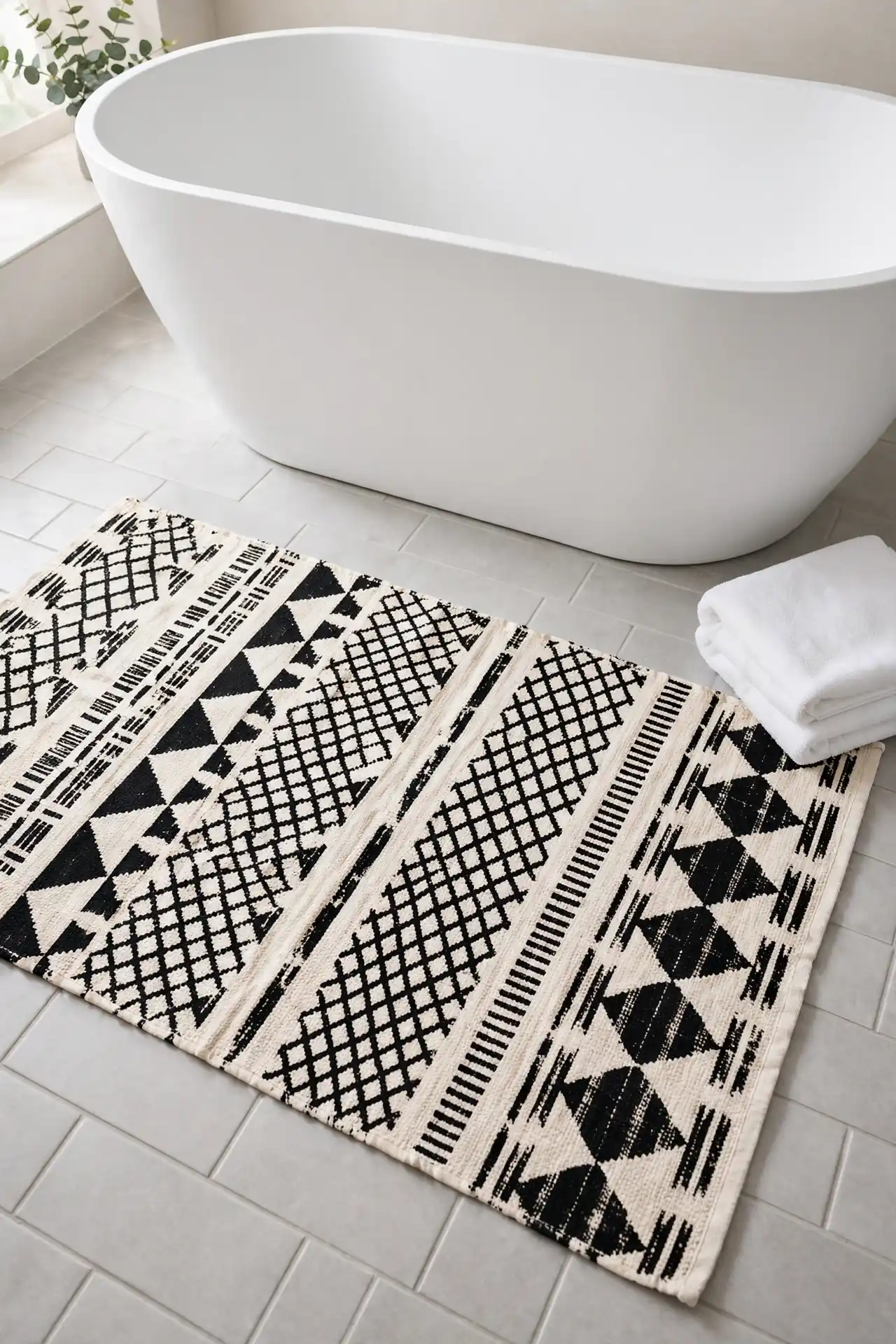
People treat bathrooms like they do not count, then wonder why the whole room feels like an afterthought compared to the rest of the house.
A mudcloth print bath rug fixes that fast, and it works with almost any tile color since the pattern is mostly neutral tones.
Look for a rug with a rubber backing made for wet floors specifically, since a decorative rug without grip turns into a hazard fast on tile.
Beyond safety, the backing also keeps the rug from bunching up near the tub, which is usually where a flat cotton mat starts sliding first.
If your bathroom already leans neutral, white tile, beige towels, this is one of the easiest ways to add real personality without repainting or retiling anything.
Wash it on the gentle cycle and let it air dry so the pattern does not fade after a few weeks of steam.
6. Mix Mudcloth Prints Into Your Throw Pillow Lineup

Pillows do most of the heavy lifting on a sofa, yet most people buy them in one matching set and call it done.
Mixing two or three different mudcloth patterns together, instead of one repeated print, gives a couch far more visual movement without adding a single new piece of furniture.
The trick is scale, not color, since most mudcloth stays in the same earthy range anyway.
Pair a large bold geometric print with a smaller, finer line pattern so your eye has somewhere to land first and somewhere to settle after.
Odd numbers work better here than even ones, three or five pillows tends to look intentional, while four often reads like a matched pair that got interrupted.
- Mix one large-scale print with one fine-line print
- Stick to odd numbers, three or five pillows
- Keep solid color pillows in between as breathing room
What to grab first
7. Turn Mudcloth Into a No-Sew Curtain Topper
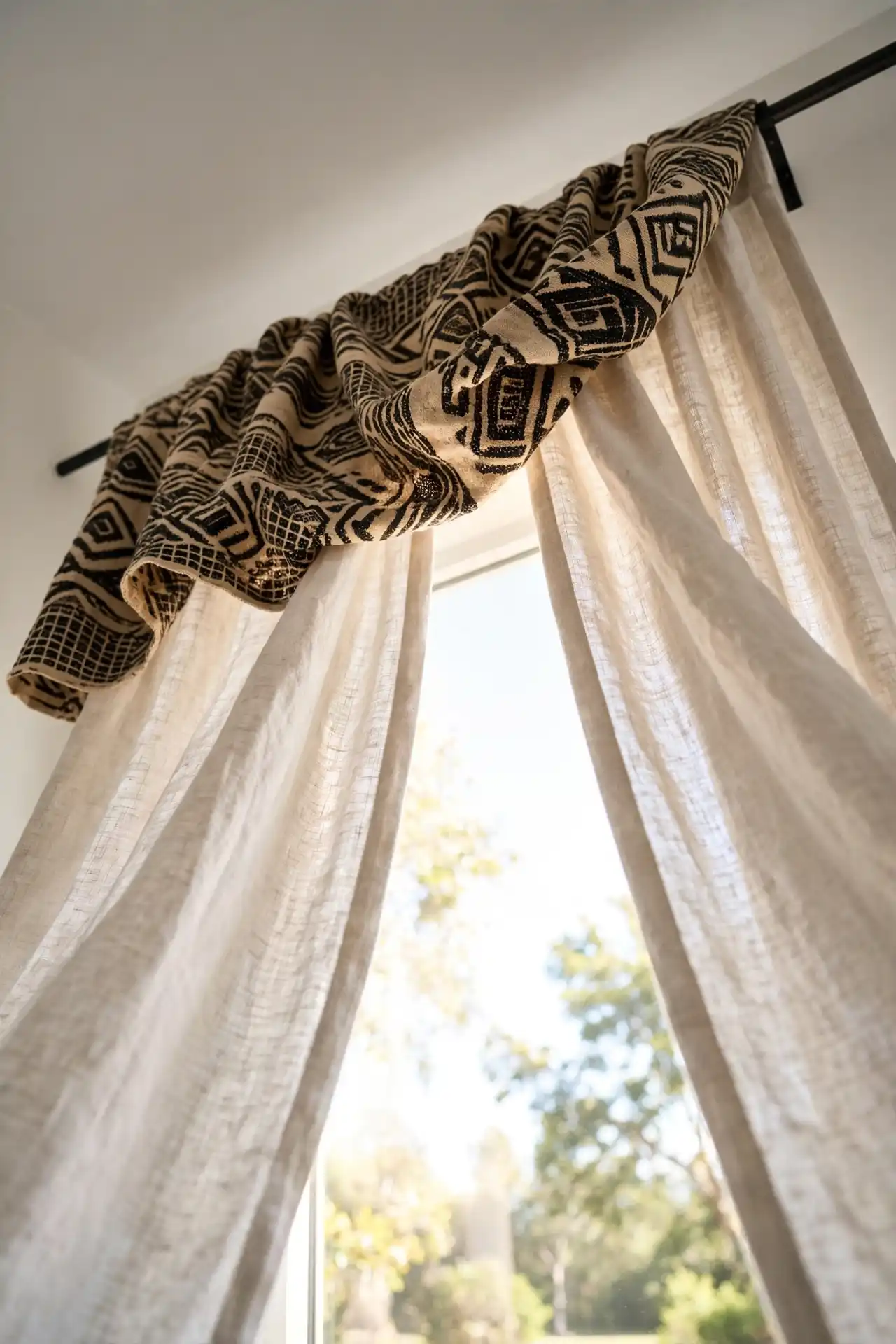
Skip the sewing machine entirely. Fold a mudcloth panel over the top of a curtain rod, letting several inches hang down in front to create a topper effect, then clip or pin the back layer so it stays in place through the season.
This works especially well over plain white or linen curtains, since the mudcloth adds pattern at the top of the window without covering the whole panel in print, which can feel heavy in a smaller room.
Measure your rod width before cutting anything, and always leave a little extra fabric on each side rather than cutting it flush, since fabric tends to pull slightly once it is hanging under its own weight.
Leave extra fabric on each side before cutting.
Pair with plain curtains underneath.
Cutting the fabric flush to the rod width.
Using a topper on already-patterned curtains.
8. Cover an Ottoman or Pouf in Mudcloth Fabric
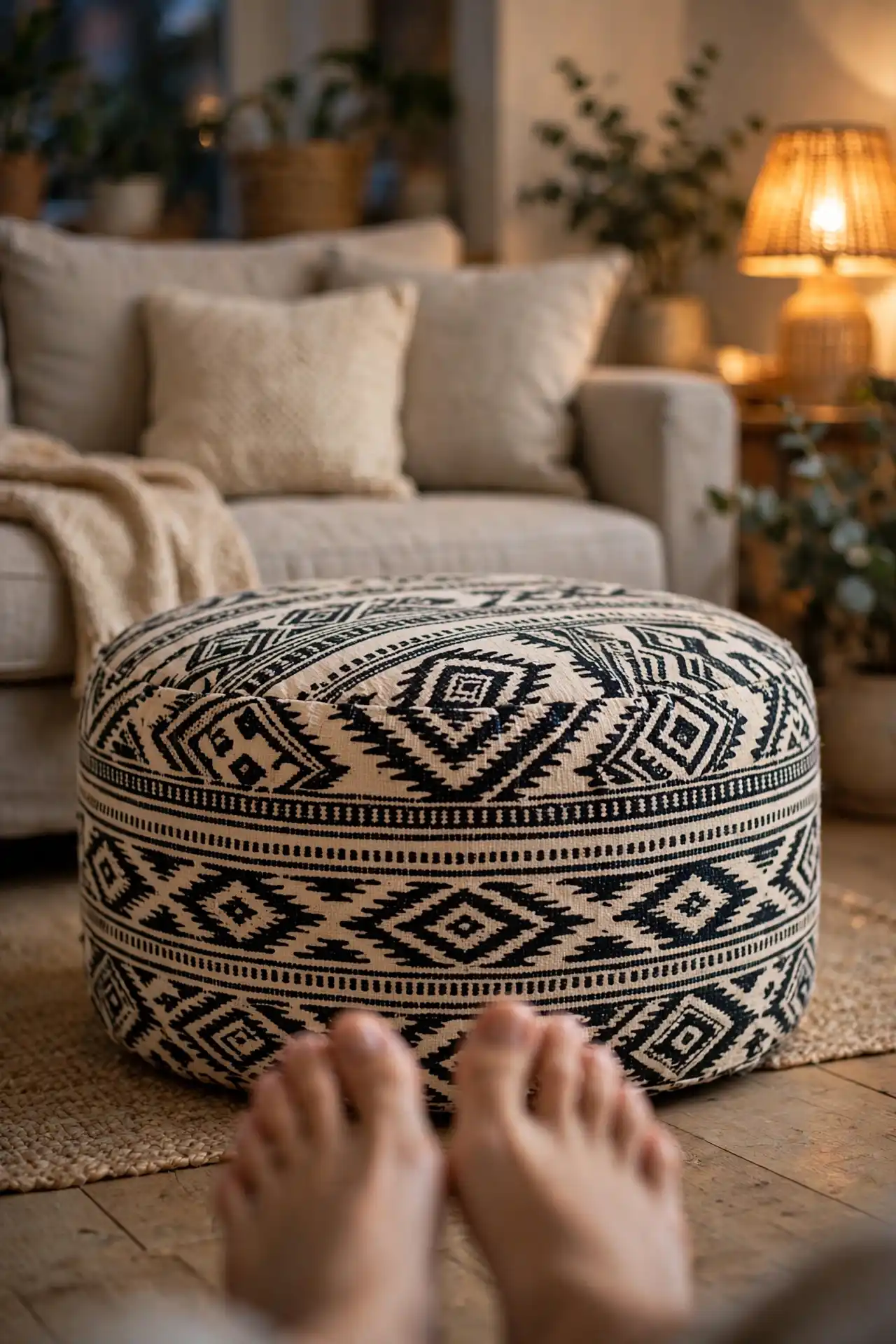
An ottoman is one of the few pieces of furniture where a cover change genuinely transforms the whole room, since it usually sits front and center where people naturally look first.
You have two real routes here, a stretch slipcover you buy pre-made, or a fabric panel you staple or tuck around the base yourself.
The slipcover route is faster and works fine for renters, but a hand-tucked fabric wrap tends to fit better on odd-shaped or older ottomans that do not match standard cover sizes anymore.
Either way, choose a mudcloth print with enough contrast to stand out against your rug, since a low-contrast print on a busy floor can end up looking muddy instead of intentional.
| Slipcover | Hand-Tucked Wrap |
|---|---|
| Faster, no tools needed | Better fit for odd shapes |
| Easy to remove for washing | More permanent, harder to swap |
9. Hang a Mudcloth Canopy Over a Reading Nook
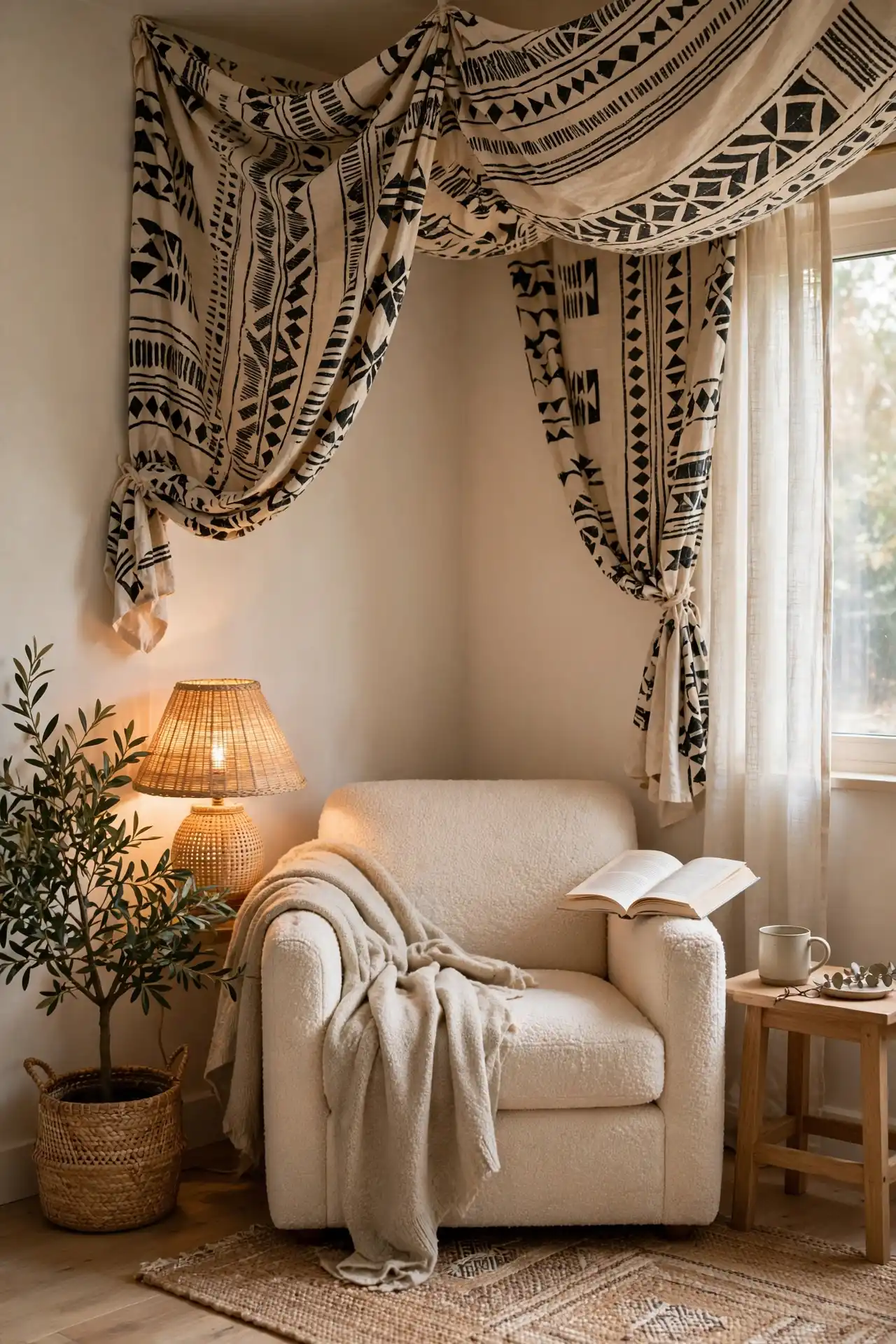
A corner with just a chair and a lamp can feel unfinished no matter how comfortable the seat actually is.
Mount a curtain rod or two hooks above the space and drape a large mudcloth panel across the top, letting the sides fall loosely down toward the floor on either side of the chair.
The effect works because it defines the space without adding walls. Suddenly the nook reads as its own little room instead of just a chair someone pushed into a corner.
Add a small clip light instead of a floor lamp if the canopy hangs low, since a taller lamp can catch on the fabric edges and pull the whole setup crooked over time.
A canopy defines a corner as its own space, even without adding a single wall.
10. Dress Up Everyday Dinners With Mudcloth Placemats
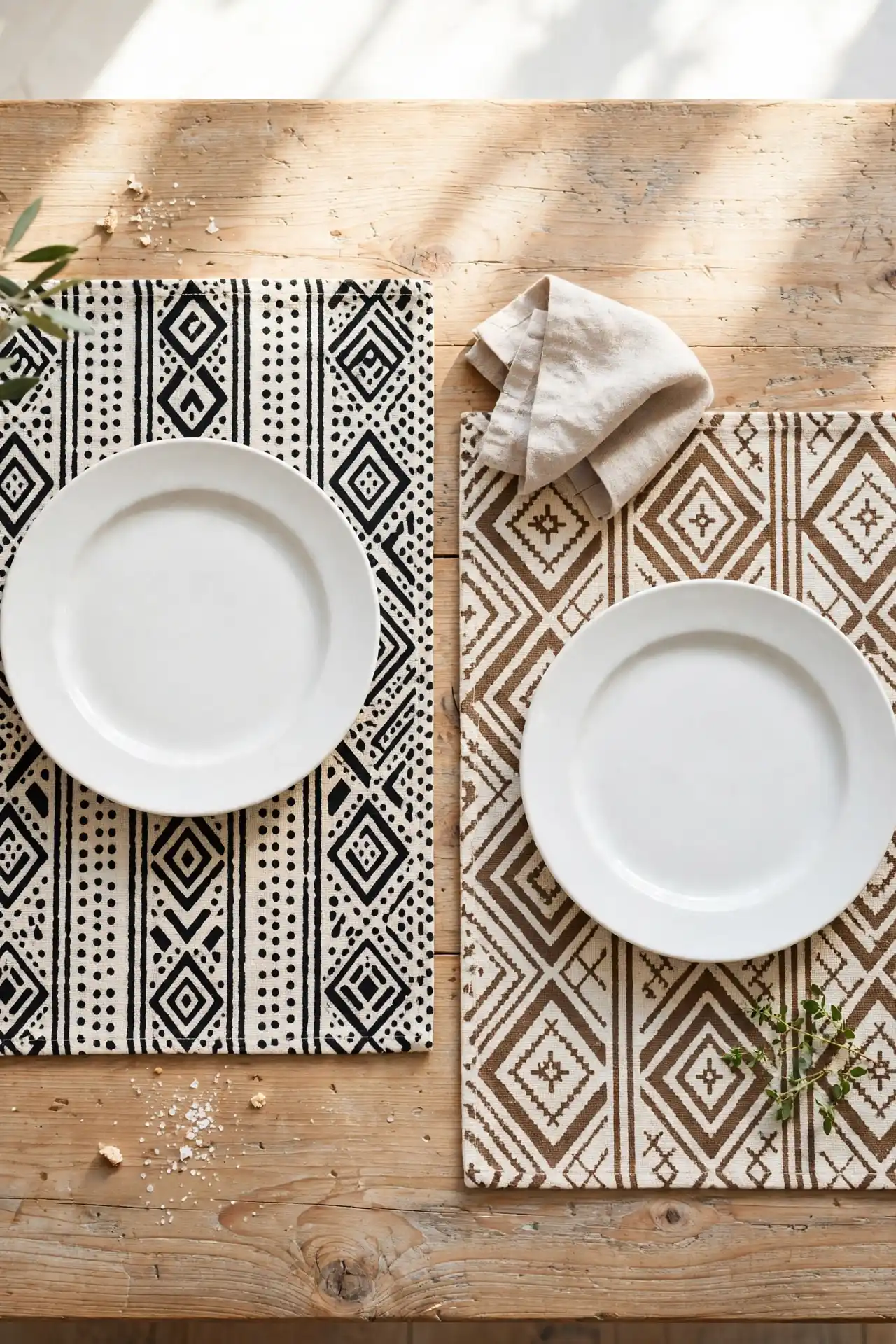
Placemats get treated like an afterthought for holidays only, which is a mistake since they are one of the cheapest ways to make a regular Tuesday dinner feel a little more considered.
Swap plain woven mats for mudcloth print ones and use them even on nights when it is just cereal or leftovers, not only when guests are coming over.
One thing people get wrong here is matching every placemat exactly. Two or three different mudcloth patterns mixed across the table actually looks more collected than four identical mats, which can start to feel like a hotel restaurant setup instead of a home.
⚠️ Watch Out
Cotton mudcloth placemats stain fast near tomato sauce or coffee. Choose a coated or laminated version if your table sees daily use.
11. Build a Mudcloth Accent Wall With Fabric Panels
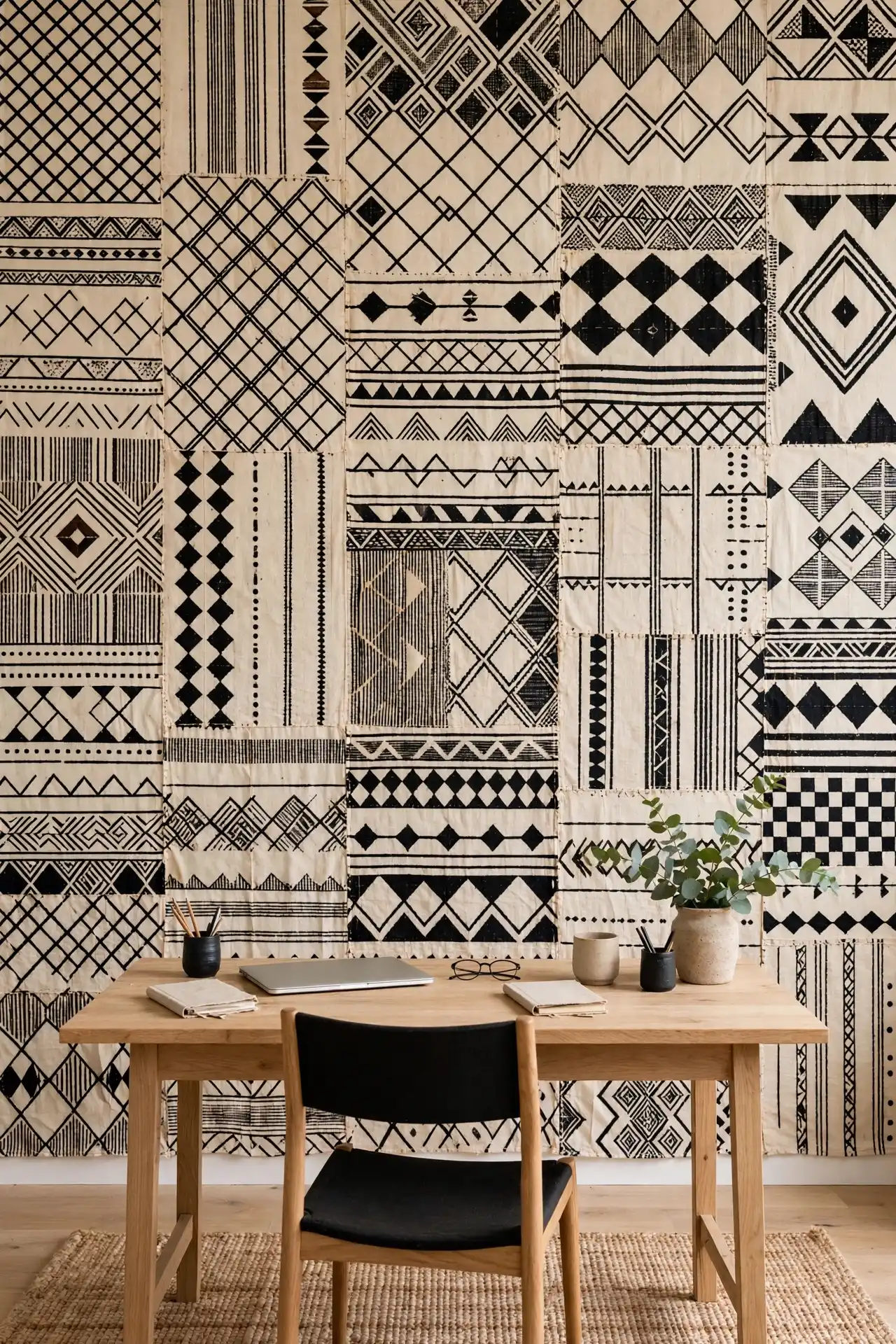
A painted accent wall takes a full weekend and commits you to one color until you repaint again.
Fabric panels solve both problems. Stretch mudcloth fabric over lightweight wood frames, or staple it directly to thin plywood boards, then mount several panels edge to edge across one wall.
This approach works especially well in a home office or bedroom where a single feature wall needs personality but you are not ready for paint.
Since the panels are removable, you can take them down and reuse the fabric somewhere else entirely if you move or just change your mind later.
Keep the seams between panels tight and aligned, since a visible gap breaks the illusion of one continuous pattern.
12. Line Open Shelving With Mudcloth Fabric Backing
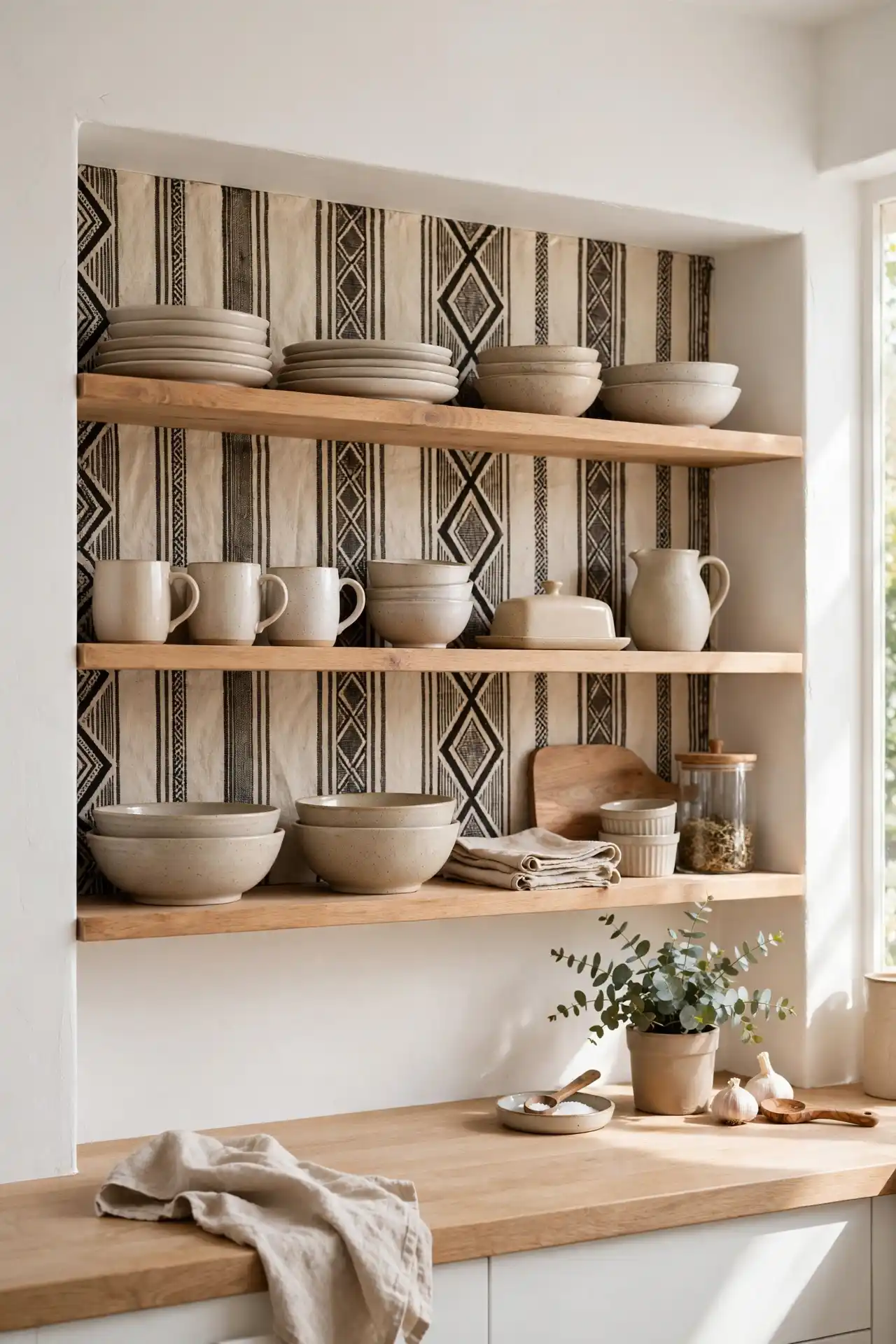
Open shelves in a kitchen or office often end up looking cluttered simply because there is nothing behind the objects to give them context.
Cut mudcloth fabric to fit the back panel of each shelf and attach it with fabric tape or a light staple along the top edge only, so it stays flat but is easy to remove later.
This small change makes even a mismatched set of mugs or books look styled, since the pattern behind them ties everything together visually.
Start with just one shelf before committing to a whole unit, since it is easier to judge whether the print reads too busy once real items are sitting in front of it.
Measure the back panel of one shelf first.
Cut the fabric with an extra half inch on each edge.
Attach along the top only using fabric tape or light staples.
13. Style a Console Table With a Mudcloth Runner
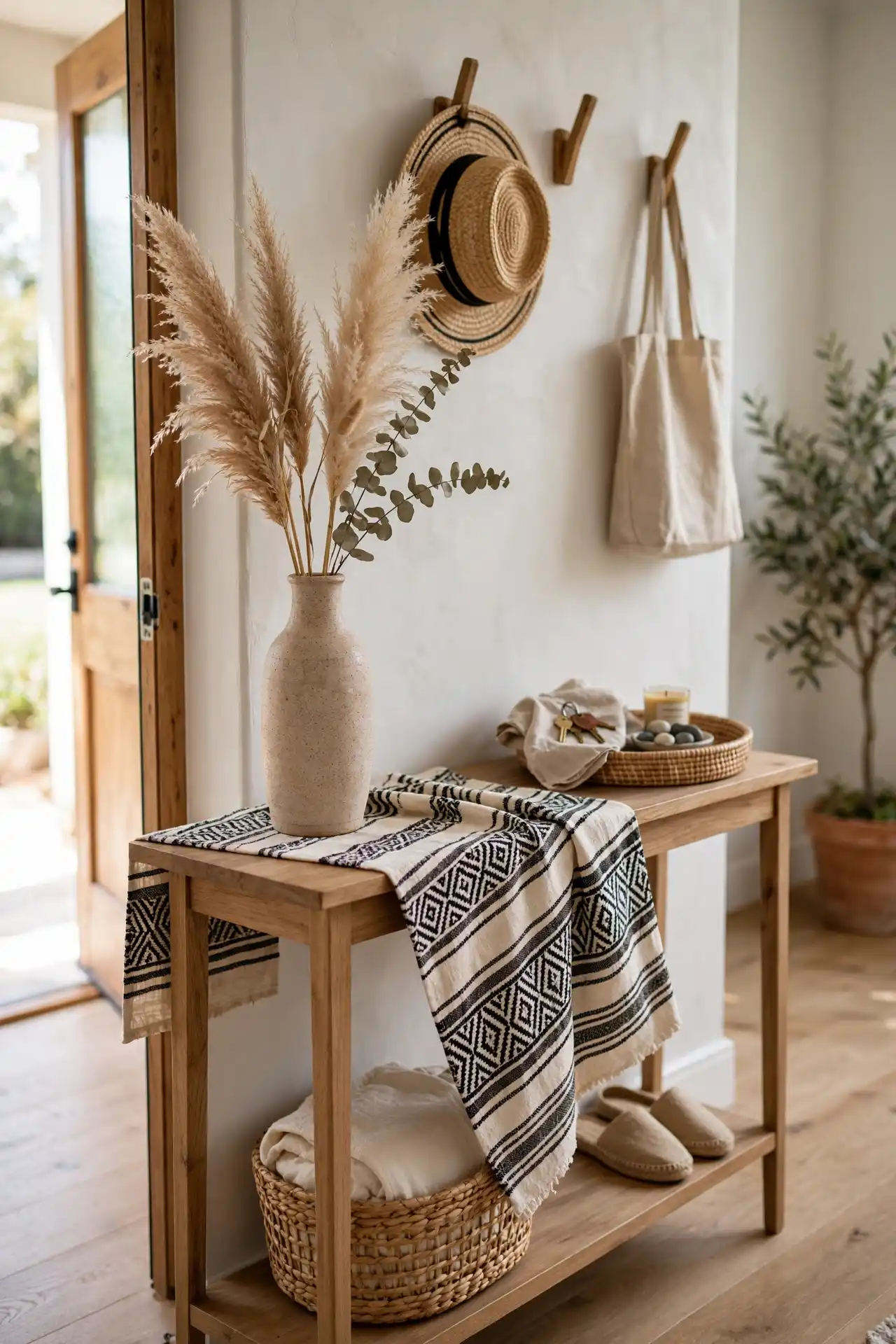
An entryway console often becomes a dumping ground for mail and keys simply because nothing on it signals that the space deserves more attention.
A mudcloth runner laid across the top, slightly angled instead of perfectly straight, gives the surface a reason to be styled rather than just used for storage.
Once the runner is down, add height variation on top of it, a taller vase on one end, a low dish or tray on the other, so your eye moves across the table instead of stopping at one flat surface.
This is one of the fastest changes on this whole list, and it tends to be the first thing guests notice walking through the front door.
A console table buried under mail, keys, and a single dying plant.
A runner, a tall vase, and a low tray turning clutter into an entry moment.
14. Reupholster a Dining Chair Seat in Mudcloth
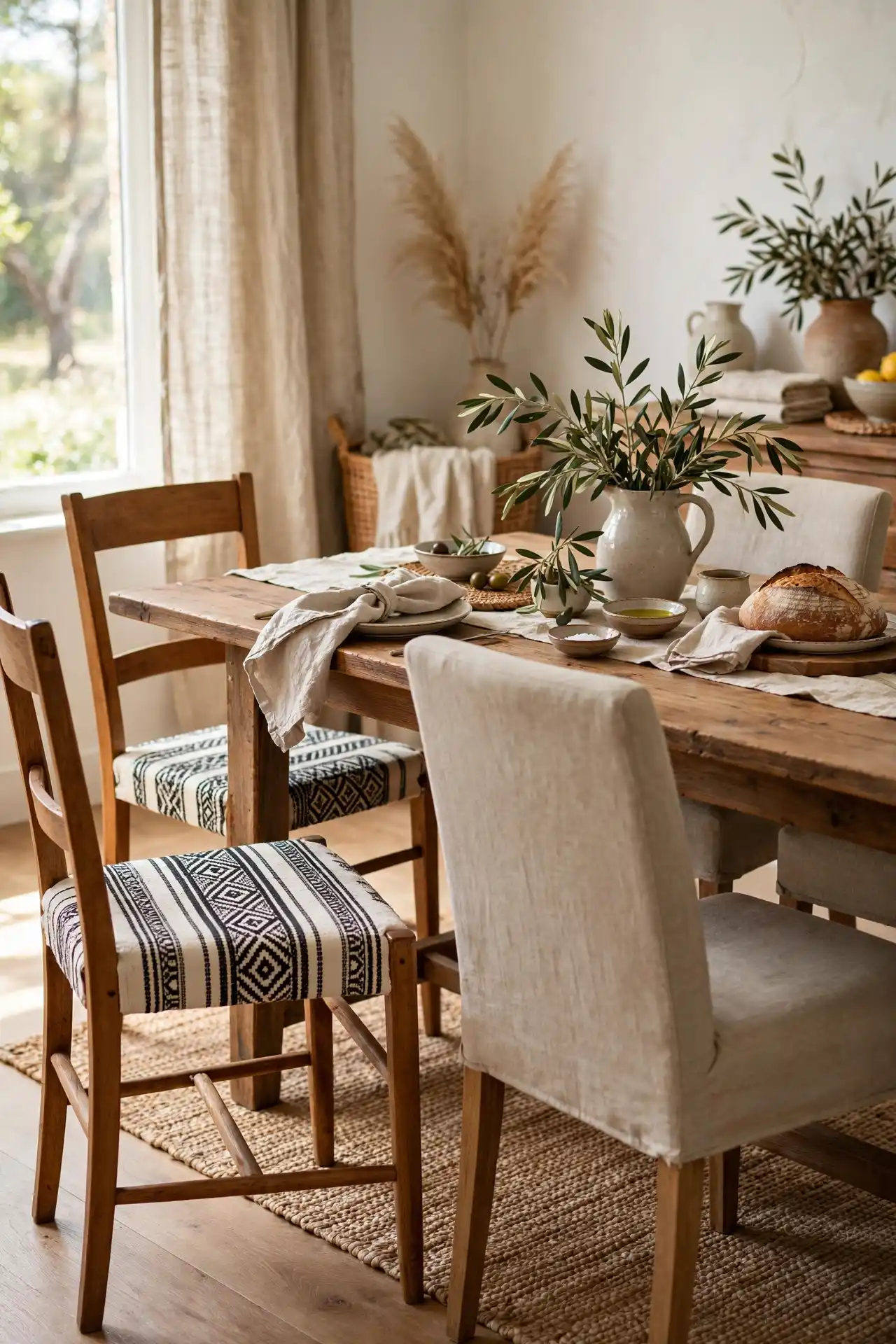
Six matching dining chairs in one solid fabric can start to feel like a hotel banquet hall after a while.
Pull the seat cushions off, staple mudcloth fabric over the existing padding, and reattach them, no need to touch the chair frame or legs at all.
You do not have to redo every chair the same way. Two chairs in mudcloth against four in a solid neutral tends to look more collected than a full matching set, especially at the head of the table where a little contrast draws the eye naturally.
A basic staple gun and a flathead screwdriver to remove the old seat screws are really the only tools this project needs.
- • A staple gun and flathead screwdriver — that is truly all you need.
- • Mixing two accent chairs with solid ones creates a more collected, curated look.
- • Leave the chair frame and legs untouched — no stripping or painting required.
15. Layer Mudcloth Floor Poufs in a Kids’ Play Corner

A play corner needs seating that can survive juice spills and being climbed on, which rules out most delicate decor.
Mudcloth floor poufs solve this well, since the fabric hides everyday marks better than a solid pastel would, and the low height keeps the whole area feeling kid scaled instead of borrowed from the living room.
Group two or three poufs of slightly different sizes instead of matching ones in a row.
That size variation gives kids more to climb on and rearrange, and it keeps the corner from looking like leftover furniture nobody wanted upstairs.
16. Wrap a Mudcloth Panel Around a Planter or Plant Stand
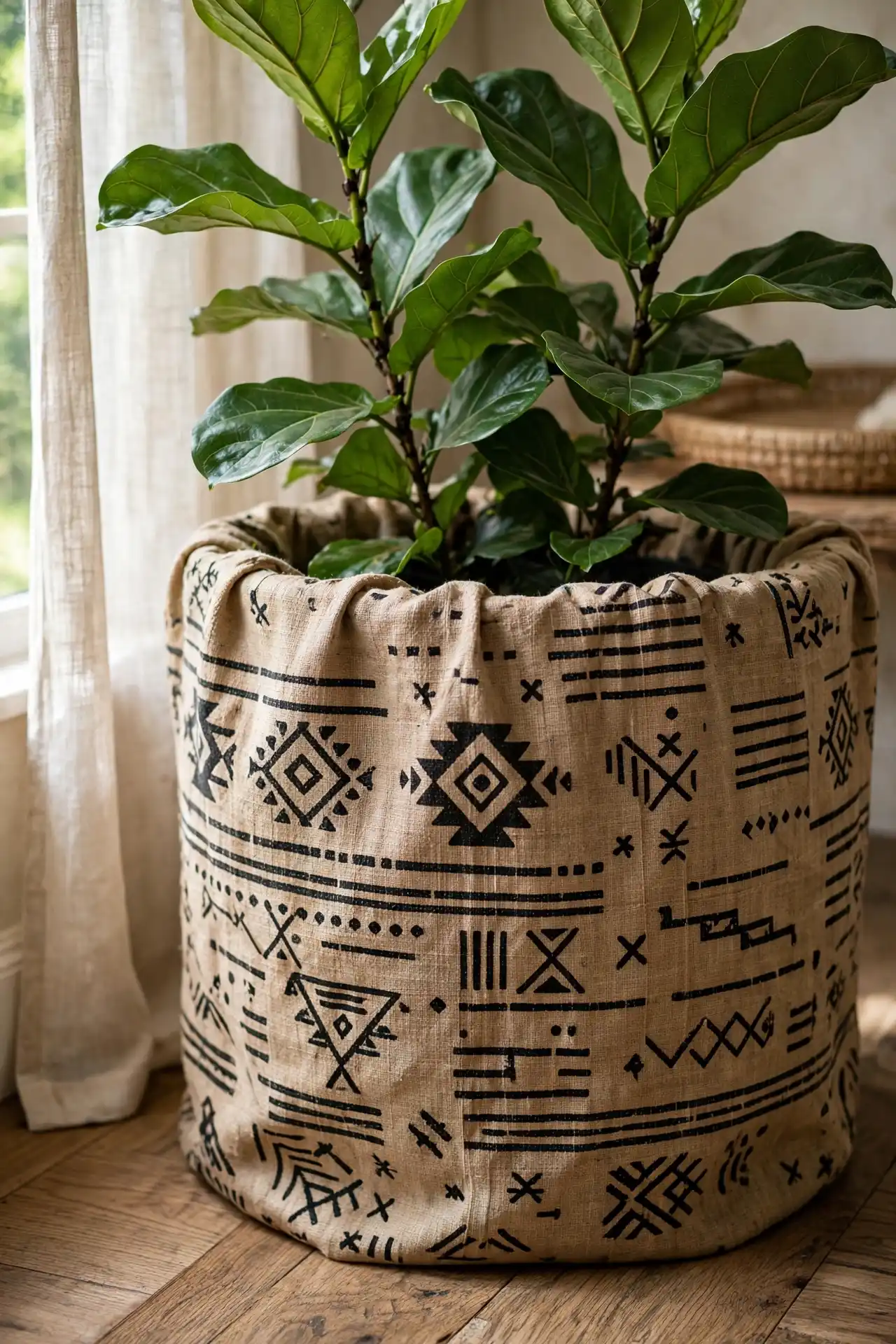
A plain terracotta or plastic planter can look unfinished sitting next to furniture that already has texture and pattern going on.
Wrap a small mudcloth fabric panel around the outside of the pot, securing it with fabric glue or a hidden strip of hook and loop tape along the seam.
This works best on larger floor planters rather than tiny tabletop ones, since the pattern needs enough surface area to actually read as intentional rather than just a scrap of fabric someone taped on.
Trim the fabric so the top and bottom rims of the pot stay visible, which keeps the wrap looking finished instead of like a loose cover that might slip.
What to grab first
17. Line a Staircase Landing With a Mudcloth Table Runner

A staircase landing rarely gets decorated because it feels like a passthrough space rather than a room.
If yours has a small flat surface, a windowsill ledge or a narrow shelf built into the wall, a mudcloth runner laid across it turns that overlooked spot into a small styling moment people notice on the way up or down.
Keep whatever you place on top minimal, one or two small objects at most, since a landing is narrow and cluttering it defeats the purpose of drawing the eye there in the first place.
This idea costs almost nothing if you already have a runner leftover from another room in the house.
Keep styling minimal, one or two objects.
Reuse a runner from another room.
Piling multiple objects on a narrow ledge.
Choosing a runner too wide for the space.
18. Use Mudcloth Fabric to Line a Laundry or Storage Basket

A laundry basket sitting in the open, in a mudroom or bedroom corner, becomes a lot less of an eyesore once it is not just plain woven wicker or plastic.
Cut a piece of mudcloth fabric to fit inside as a liner, folding the top edge over the rim so it stays put without any glue or stitching involved.
This is one of the simplest projects on this whole list, and it works on more than laundry too, a magazine basket, a toy bin, or an entryway catch-all all benefit the same way.
Choose a slightly heavier weight fabric if the basket holds anything with weight to it, since a thin liner can sag or tear faster than expected.
📌 Good To Know
A heavier cotton or canvas-backed mudcloth liner holds its shape far longer than a thin, lightweight print.
Conclusion
The best part about working mudcloth into a house is that it never asks you to redo a whole room to matter.
A folded throw, a runner, a wrapped planter, small moves like these add up room by room without a single trip to a paint store.
That is really the point of these mudcloth decor ideas for every room: low effort, real texture, and a look that still feels like yours a year from now.
Start with whichever room bothers you most right now. You do not need all eighteen ideas at once, just one that fits your afternoon and your budget.
Save this list for the next time a room needs a little more warmth than a blank wall gives it.